by Our Correspondent in Colombo
Acting Inspector General of Police (IGP) Priyantha Weerasooriya has revealed that Sri Lanka is grappling with a serious organized crime issue involving 58 criminal gangs and approximately 1,400 affiliated members.
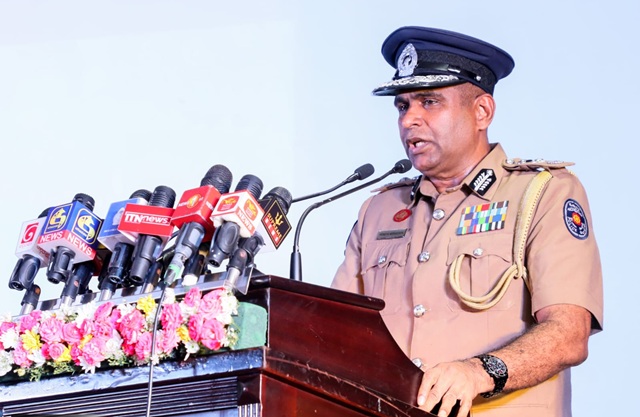
Speaking at a special media briefing held at the Department of Information today, Acting IGP Weerasuriya highlighted the growing unrest among these underworld groups as authorities ramp up efforts to dismantle their operations. “These groups are concerned because the political protection they once enjoyed has now been dismantled,” he stated.
Weerasuriya pointed out that, historically, notorious underworld figures like Gonawala Sunil, Julampitiya Amare, Wambotta, and Beddagane Sanjeewa had thrived due to political backing. In some cases, gang members even infiltrated the Sri Lanka Police Sub-Service to secure protection.
However, the landscape has drastically changed. “Organized crime no longer has the shield of political protection. Many criminals have fled the country, while others have been arrested,” the Acting IGP declared.
A Surge in Violent Crimes and Swift Law Enforcement Actions
According to official data, 75 shootings were recorded in 2024, alongside 18 cases of amputation. In early 2025, authorities have already logged 22 violent incidents—17 shootings and 5 stabbings—of which 17 cases have been solved.
Weerasuriya also disclosed that some crimes were facilitated by members of law enforcement and the armed forces. “We have identified these individuals and initiated actions without any obstacles,” he affirmed. So far this year, investigations have implicated 9 tri-force members, including one active army officer and one serving air force member, while others were former service members.
Seizure of Weapons and Narcotics in Historic Raids
Since the government’s crackdown began in September 2024, authorities have confiscated an alarming cache of weapons: 13 T-56 rifles, 21 pistols, 15 revolvers, an AK-47, 805 shotguns, 75 12-bore guns, 10 flintlocks, 7 repeaters, and 4 other firearms.
The government’s aggressive anti-narcotics campaign has led to the largest drug seizures in Sri Lanka’s history. Confiscated substances include 309 kilograms of heroin, 97 kilograms of cannabis, 123 kilograms of Kerala cannabis, 383 kilograms of crystal meth (ice), 312 cannabis buds, and 6,430 liters of illegal alcohol.
International Cooperation and Strengthened Crime Prevention
The crackdown has also seen international collaboration, leading to the extradition of 19 wanted criminals. Interpol notices have been issued for numerous offenders—199 red notices, 90 blue notices, and 4 yellow notices.
New crime data systems have been installed at airports and other entry points, improving law enforcement’s ability to track and apprehend suspects. Despite intensified efforts, authorities acknowledge that some criminals continue to operate from within prisons. In response, recent raids in correctional facilities have uncovered 239 phones, 245 SIM cards, 46 chargers, 70 batteries, 20 data cables, and three hands-free devices.
Enhancing Security Measures Against Extortion and Maritime Escapes
Weerasuriya emphasized that local police have been directed to take decisive action against extortionists, especially those targeting businesses through fake phone calls.
Criminal activities have been particularly concentrated in the Western and Southern provinces, where security measures have been heightened. Plans are underway to provide permanent security in courts, replacing private security services currently in place.
Authorities are also collaborating with the Navy and Coast Guard to prevent criminals from escaping the country by sea.
“This is a decisive moment for law enforcement in Sri Lanka,” Acting IGP Weerasuriya concluded, pledging a continued crackdown until the organized crime network is dismantled entirely.