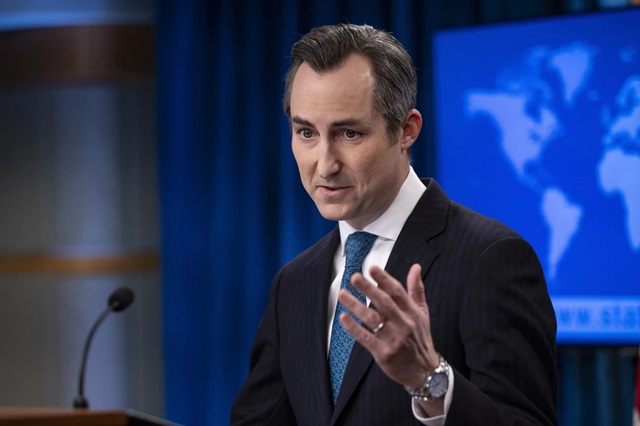
The United States has acknowledged Bangladesh’s recent push for significant constitutional changes, including the controversial proposal to remove secularism from the nation’s constitution. The comments came during a Tuesday press briefing when U.S. State Department spokesperson Matthew Miller responded to a question about the call made by Bangladesh’s Attorney General, Mohammad Asaduzzaman.
When asked by Indian news agency ANI about Asaduzzaman’s remarks advocating the removal of the term “secular” from Bangladesh’s Constitution, Miller said, “I’ll take that back and see if we have anything to say about it.” This brief response came as the international community closely watches the growing political and social tensions in Bangladesh, which have been exacerbated by recent violence against religious minorities.
Asaduzzaman’s call for constitutional changes is part of a broader debate within Bangladesh, where the Attorney General has suggested eliminating secularism, socialism, and the concept of Bengali nationalism from the foundational document. He also proposed removing the title of “Father of the Nation” from Bangabandhu Sheikh Mujibur Rahman, one of the country’s most revered figures. According to reports from United News of Bangladesh (UNB), Asaduzzaman believes that the principles of secularism and socialism no longer reflect the realities of a Muslim-majority nation and advocated for a shift towards a more faith-based system.
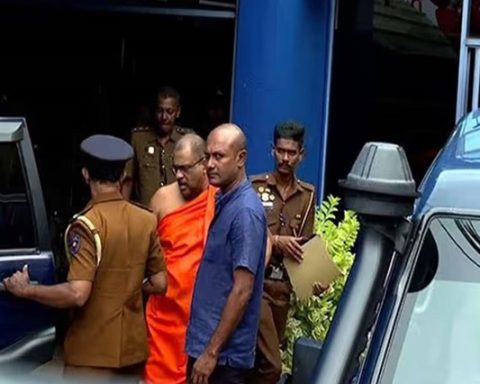
His comments come amid severe unrest in Chittagong, where violent clashes erupted between law enforcement and the Hindu community following incendiary social media posts targeting Hindu religious organizations. On November 6, attacks on the Hindu community, including the looting of properties and businesses, sparked widespread condemnation from various quarters, including neighboring India.
The U.S. State Department also issued a statement emphasizing its position on the recent violence. In response to the violence in Chittagong, Miller reaffirmed the U.S. government’s commitment to supporting peaceful protests, stating, “We have made it clear to the government of Bangladesh, as we do to countries around the world, that we support the right to peaceful protest and that no government should engage in violent crackdowns on peaceful demonstrations.” This statement comes after the joint police and army operations in Chittagong, where blank shots were reportedly fired during the clashes.
The unrest in Chittagong, fueled by religious tensions, led to significant international concern, particularly in neighboring India. India’s Ministry of External Affairs strongly condemned the attacks on the Hindu community and urged Bangladesh to take decisive action to ensure the safety of its minority groups. Spokesperson Randhir Jaiswal said, “We have observed that there have been attacks on the Hindu community in Chittagong. Their properties and business establishments have been looted following incendiary posts on social media targeting Hindu religious organisations.” Jaiswal called on Bangladesh to address extremist elements that instigated the violence, adding, “We once again urge the Government of Bangladesh to take strong measures to ensure the safety of Hindus and act decisively against extremist elements.”
The violence and political rhetoric surrounding the constitutional changes have raised questions about Bangladesh’s democratic values and its commitment to pluralism. Asaduzzaman has argued that secularism and Bengali nationalism are outdated and do not reflect the current political landscape, where the vast majority of the population is Muslim. He criticized the 15th Constitutional Amendment, which abolished the caretaker government system and granted Mujibur Rahman the title of “Father of the Nation.” Asaduzzaman contended that the amendment had contributed to political instability and division within the country, accusing it of undermining democratic principles.
Further fueling the controversy, Asaduzzaman called for the reinstatement of referendums, which were removed by the 15th Amendment, asserting that their elimination had diminished democratic accountability. He also condemned the use of language as a basis for national identity, arguing that it has created divisions in society.
As tensions continue to rise in Bangladesh, both domestically and internationally, the debate over the country’s constitutional framework is likely to remain a focal point in the coming weeks. The U.S. and other international actors are closely monitoring the situation, particularly as concerns grow about the treatment of religious minorities and the suppression of dissent. The outcome of this political debate could have significant implications for the future of Bangladesh’s democracy and its international relationships.