US President Joe Biden found himself at the center of attention during the G20 summit in Rio de Janeiro after missing the first group photo on Monday due to a late arrival. The “family portrait” session, a tradition at major international summits, had already taken place without Biden and Canadian Prime Minister Justin Trudeau, who also arrived after the scheduled photo shoot.
Biden’s absence from the initial photo prompted some light-hearted commentary online. Columnist S. L. Kanthan shared the truncated image on X (formerly Twitter), remarking, “Biden was late, and the group decided to not wait for him! Welcome to the multipolar world!” In the photo, French President Emmanuel Macron and German Chancellor Olaf Scholz were seen relegated to the second row, while leaders from Brazil, India, South Africa, and China were positioned at the front.
A senior US official later attributed Biden’s absence to “logistical issues,” without providing further details. Trudeau’s absence was similarly blamed on logistical challenges, and Italian Prime Minister Giorgia Meloni was also missing without any given explanation.
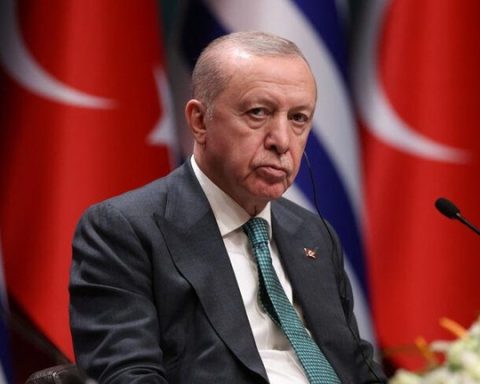
However, on Tuesday, Biden rejoined his counterparts for a second “family photo,” positioned front and center between Trudeau and Indian Prime Minister Narendra Modi. Meloni was seen standing to Trudeau’s right, next to Turkish President Recep Tayyip Erdogan, who had secured a front-row spot in both photographs.
While the mix-up was described by the Associated Press as “farcical,” with some suggesting it symbolized Biden’s diminishing global influence as the world prepares for the potential return of former US President Donald Trump, others saw it as an incidental moment during a summit that otherwise progressed positively.
On the diplomatic front, Russian Foreign Minister Sergey Lavrov, who represented Moscow at the summit, hailed the event as “very positive.” He also noted that the West had failed to push its “Ukraine agenda” in the final communique. Lavrov confirmed that the G20 had agreed to establish a new body aimed at combating global hunger and poverty, with Russia joining this initiative. Furthermore, Lavrov presented President Vladimir Putin’s “Greater Eurasian Partnership,” which aims to enhance connectivity between Europe and Asia while promoting stability and security.