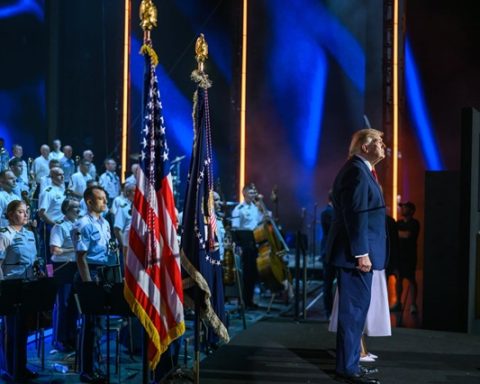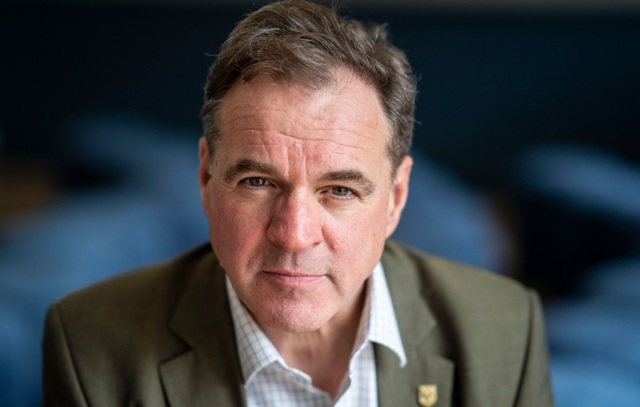
Sir Niall Ferguson, the Scottish historian and prominent academic, has made a surprising pivot in his view of former U.S. President Donald Trump. Once a staunch critic who branded Trump a “demagogue and would-be tyrant” following the events of January 6, 2021, Ferguson now acknowledges a more nuanced perspective. This shift became evident after he attended a dinner at Trump’s Mar-a-Lago estate last month, where he witnessed a jubilant Trump basking in his political resurgence.
Ferguson, who attended the event to support a conservative education charity, described Trump’s demeanor as “beatific,” a marked contrast to the contentious image he previously held. Speaking to The Times (UK), Ferguson reflected on Trump’s remarkable comeback, drawing parallels to a figure rejuvenated by adversity. “What doesn’t kill him makes him stronger,” he remarked, emphasizing the resilience Trump has demonstrated in his political journey.
Despite his change in tone, Ferguson remains ambivalent about Trump’s character and leadership style. While critical of Trump’s actions during the Capitol riots, he now views the event as part of a broader “pandemic-induced madness” rather than a calculated coup. This reassessment includes acknowledging the failures of law enforcement during the riots and the polarizing atmosphere of the lockdown era. “The mob at the Capitol was amateurish,” Ferguson opined, adding that the historical significance of January 6 may have been overstated.
Ferguson’s reassessment of Trump is also shaped by what he perceives as the shortcomings of Trump’s Democratic counterparts, particularly Vice President Kamala Harris. He believes that Trump’s victory over Harris was ultimately the better outcome for conservative values and governance, despite Trump’s flaws. “Donald Trump has a unique ability to galvanize conservative voters and appeal beyond the Republican core,” Ferguson noted, describing Trump’s political resurgence as unparalleled in modern history.
The historian’s admiration for innovation and disruption extends to his relationship with Elon Musk, whom he compares to Napoleon for his transformative influence on technology and society. Ferguson credits Musk’s acquisition of Twitter with fostering free speech and countering the censorship that followed the Capitol riots, a move he believes played a pivotal role in Trump’s resurgence. However, he expressed reservations about Musk’s reported financial support for Nigel Farage and Reform UK, cautioning against undue influence in British politics.
Ferguson’s commentary extends to global issues, including the ongoing conflict in Ukraine. He supports Trump’s assertion that Putin would have been deterred from invading Ukraine had Trump been in office, citing Trump’s unpredictability as a strategic advantage. Ferguson envisions potential peace talks under a future Trump administration but warns that any ceasefire would likely be fragile and temporary.
As an academic with dual affiliations at Harvard and Stanford, Ferguson is no stranger to challenging conventional wisdom. He attributes his evolving views on free speech to the influence of his wife, Ayaan Hirsi Ali, a vocal advocate for women’s rights and a survivor of Islamist threats. Ferguson’s academic pursuits also continue unabated, with a forthcoming biography of Henry Kissinger and a series of essays for The Times planned for the year.