In a series of joint statements issued this year, Sri Lanka and Thailand reaffirmed their unwavering support for China’s core interests, although their positions diverged on sensitive matters such as Tibet (Xizang) and Xinjiang. These reaffirmations, made during separate high-level visits, underline the importance of China’s diplomatic relationships with its Buddhist neighbors, both of which have significant Muslim populations.
On January 16, 2025, during President Anura Kumara Dissanayake’s visit to Beijing, Sri Lanka issued a strong joint statement with China. Sri Lanka reiterated its strong commitment to the One-China Policy, recognizing the Government of the People’s Republic of China as the sole legal government representing all of China. The statement emphasized that Taiwan is an inalienable part of China’s territory. Additionally, Sri Lanka expressed its full support for China’s efforts toward national reunification, opposing any form of “Taiwan independence.” Importantly, Sri Lanka also reaffirmed its stance on China’s internal matters, firmly backing Beijing on issues related to Tibet and Xinjiang. The statement made it clear that Sri Lanka would not allow its territory to be used for any anti-China or separatist activities.
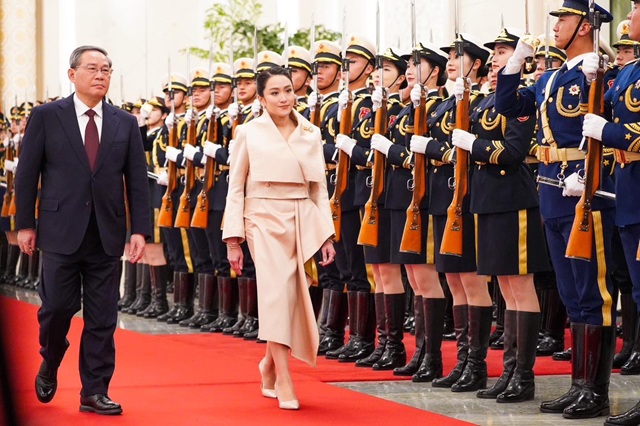
In contrast, a second joint statement was issued on February 8, 2025, during Paetongtarn Shinawatra’s visit to Beijing. Thailand, while fully endorsing the One-China Policy and recognizing Taiwan as part of China, chose not to delve into the contentious issues surrounding Tibet and Xinjiang. While reaffirming its opposition to any form of Taiwanese independence, Thailand focused its statement more broadly on national sovereignty, independence, and territorial integrity. The Thai government also expressed its support for China’s “One Country, Two Systems” policy and praised China’s efforts to enhance its role in global and regional affairs.
Both Sri Lanka and Thailand, with their shared Buddhist heritage and sizable Muslim populations, have long-standing ties with China. While Sri Lanka’s statement took a more direct and expansive approach in supporting China on its sensitive internal matters, Thailand’s statement took a more cautious stance, deliberately avoiding the issues of Tibet and Xinjiang.