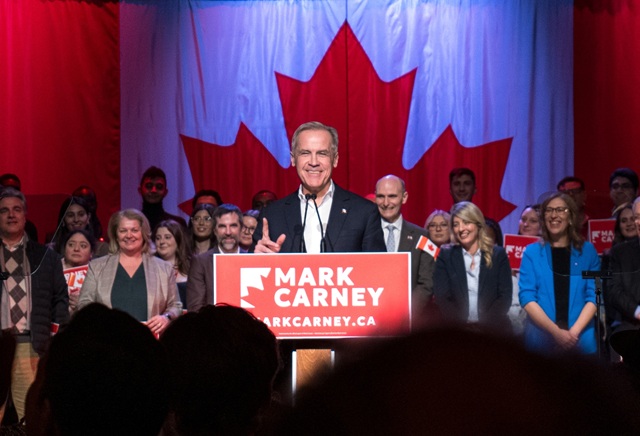
Prime Minister Mark Carney announced on Thursday that Canada’s longstanding relationship with the United States is “over,” vowing a “broad renegotiation” of the two allies’ trade agreement in response to escalating tensions with U.S. President Donald Trump.
Speaking after a meeting with provincial premiers, Carney emphasized that the tariffs imposed by Trump’s administration will force Canada to rethink its economic strategy and seek out more “reliable” trading partners. “The old relationship we had with the United States, based on deepening integration of our economies and tight security and military cooperations, is over,” Carney told reporters.
Carney’s remarks, originally reported by the Financial Times, cast doubt on the future of the U.S.-Mexico-Canada Agreement (USMCA), which was renegotiated under the previous Trump administration and remains one of the world’s most significant trade deals. The prime minister made it clear that Canada would respond to American tariffs with its own retaliatory measures designed to have “maximum impact in the U.S. and minimum impacts in Canada.”
The announcement follows Trump’s decision on Wednesday to impose a 25 percent tariff on imports of foreign-made cars, a move aimed at bolstering the U.S. auto industry. While USMCA-compliant components are temporarily exempt from the tariffs, industry analysts believe the measure could have a severe impact on Canada’s economy, particularly its auto sector. The markets reacted sharply, with shares in General Motors dropping by 7.4 percent and Ford by about 4 percent.
Carney warned that Canada must take bold steps to shield its economy from further disruptions, particularly in critical industries such as auto manufacturing. “We are gonna have to do some things very differently. We’re gonna have to make some big changes,” he said, suggesting that the sector would need to “reimagine the auto sector and rebuild [and] retool” to remain competitive.
With the Canadian national election approaching on April 28, Carney confirmed that he plans to speak with Trump in the coming days to address the trade dispute. He also argued that Trump’s tariffs would ultimately harm American workers and consumers, reinforcing the urgency of Canada’s shift toward a new trade strategy.