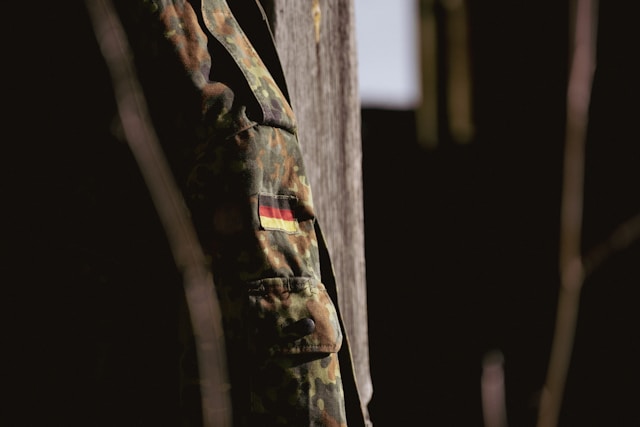
As Germany ramps up efforts to rebuild its armed forces in response to growing geopolitical threats, the country’s business leaders are raising red flags over the impact of military recruitment on an already strained labor market. While many companies support bolstering national defense, they fear that proposals such as voluntary conscription and expanded reservist programs could make it even harder to find skilled workers.
In comments to the Financial Times, Steffen Kampeter, head of the BDA, Germany’s largest employers’ association, said, “Yes, we need more active soldiers. Yes, we need to expand the system of reservists. But only a strong economy can make that possible.” He stressed that while Germany’s security situation is “dramatic,” the military’s growing personnel needs will inevitably compete with civilian demand for labor.
Defense Minister Boris Pistorius has outlined a new voluntary conscription plan that would see around 5,000 18-year-olds join the Bundeswehr annually. However, he acknowledged that this model might not suffice to meet NATO obligations and floated the possibility of returning to a broader, mandatory conscription scheme — a system Germany scrapped in 2011.
Pistorius has pointed to Sweden’s hybrid model, where about 10 percent of young people are drafted each year following a selection process, as a potential template. But he has yet to detail how such a system might work in Germany.
Germany’s new chancellor, conservative Friedrich Merz, has emphasized the need for more workforce participation to drive economic revival. With Germany already facing acute shortages in sectors like healthcare, education, and engineering, industry leaders worry that pulling young people into military service could deepen existing labor challenges.
“If the necessary personnel are pulled away from us, that means issues like weekly working hours, the length of the working life, better integration of part-time workers into the labour market — all of those topics become even more important,” Kampeter told the Financial Times.
A separate business association representative, speaking anonymously, added: “There are two conflicting goals — economic prosperity and defence.”
A study commissioned by the German finance ministry and conducted by the Ifo Institute in Munich found that a well-designed voluntary service model would be more economically viable than forced conscription. The study suggested that attracting 5 percent of each year’s cohort — roughly 39,000 individuals — through competitive pay could cost the government €1.5 billion annually, but would minimize economic disruption by avoiding delays to education and employment.
“Different people are good at different activities,” said study co-author Panu Poutvaara. “If you have conscription, which is not voluntary, it would force people who are not good at being in the military to serve in the military.”
Germany’s military aims to expand by roughly 80,000 troops over the next decade to meet NATO expectations. In addition, it wants to grow its civilian reservist corps to 200,000, a significant leap from current levels. Chancellor Merz, who has cultivated a pro-business image, has called on companies to make sacrifices in support of national defense.
Some businesses are already stepping up. Jens Günther, who runs a 20-person interior design company, was honored by the defense ministry for allowing a carpenter on his team to serve 15–20 days a year as a reservist. “I get a motivated employee who broadens his own horizons and brings things back into the company,” he said. Still, he warned that accommodating more than one or two reservists would be unsustainable.
Despite industry unease, some experts say the fears may be exaggerated. Carlo Masala, professor of International Politics at the Bundeswehr University Munich, noted that even under a revived conscription model, only about 25,000 young people would likely be called up annually — far fewer than the 200,000 drafted at the Cold War’s peak.
“My general feeling is that the German business community has realised that they need to be involved in some positive way in the issue of defence,” Masala told the Financial Times. “At the end of the day, they have to accept it.”