India is working on a plan to strengthen its defenses in space by developing satellites capable of protecting its orbiting spacecraft from potential threats, according to a Bloomberg report citing people familiar with the matter. The move follows a recent near miss in orbit that exposed vulnerabilities in New Delhi’s satellite security.
Prime Minister Narendra Modi’s government is exploring so-called “bodyguard satellites” designed to identify and counter hostile maneuvers from foreign spacecraft. The effort comes amid rising concerns over national security in space, especially after a satellite from a neighboring country came within one kilometer of an Indian Space Research Organisation (ISRO) satellite in mid-2024. The close approach occurred at an altitude of 500–600 kilometers, an increasingly congested orbital zone populated by commercial constellations such as Elon Musk’s Starlink network.
Although the two satellites did not collide, the unusually close encounter may have been a show of strength or a test of capabilities by the other nation, Bloomberg reported. Neither ISRO nor the Department of Space has commented on the incident.
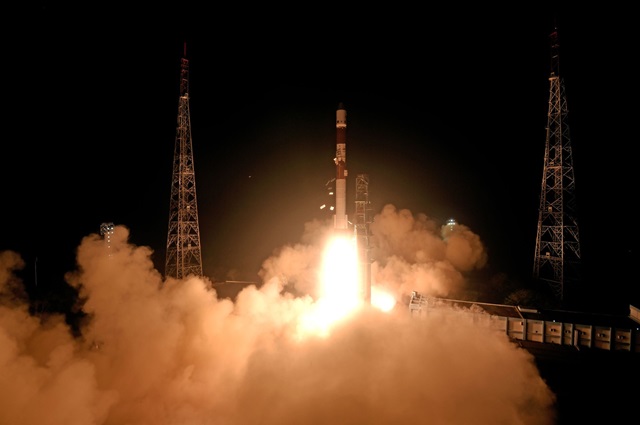
The satellite-defense initiative forms part of a broader program by New Delhi to expand its orbital security infrastructure. The government is pursuing a 270 billion rupee ($3 billion) plan to deploy around 50 surveillance satellites, with the first expected to launch next year.
India has a long history of conflict with both Pakistan and China, nations with diverging space capabilities. Pakistan operates just eight satellites compared with India’s 100-plus, while China maintains more than 930, according to data from tracking website N2YO.com. Beijing’s expanding satellite fleet and its potential military applications have drawn warnings from Indian and U.S. defense officials alike.
Indian defense planners are also considering Light Detection and Ranging (LiDAR) satellites as part of the strategy to detect threats quickly, allowing ground teams time to reposition vulnerable spacecraft. Experts say this would need to be paired with advanced ground-based radars and telescopes for round-the-clock monitoring.
ISRO’s role in national security has already been tested. During an armed conflict with Pakistan in May, more than 400 scientists worked around the clock to ensure Earth observation and communication satellites supported India’s defense operations, ISRO chairman V. Narayanan said earlier this month. Reports also suggested that China provided satellite support to Pakistan during the hostilities.
With increasing risks in orbit and rising geopolitical tensions, India’s planned “bodyguard satellites” could mark a significant step in bolstering its space security posture.