Fears of a military confrontation between Israel and Turkey are growing after Israeli Prime Minister Benjamin Netanyahu ordered air strikes on the Abu Al-Duhur airbase in northwest Idlib province, close to the Turkish border. The eight strikes on Tuesday were presented by Netanyahu as a warning to Ankara against expanding its military presence in Syria or assisting in the rebuilding of the Syrian armed forces.
Netanyahu’s office said Israel and Syria had agreed to “a status quo in security matters”, which Damascus was “on the verge of breaching” by permitting Turkish troops to deploy at the airbase near Aleppo. Israel had repeatedly warned Syria, the statement said, that such a deployment would threaten its security.
The following day, Netanyahu described the strikes more directly as a “message” to Turkey. Israel, he said, would not tolerate a Turkish military entrenchment in Syria that “advances southward, because it threatens us”.
“We conveyed that message: don’t,” Netanyahu told Israeli Army Radio. “But apparently they didn’t hear it, so we made sure they understood it better”.
The strikes immediately raised concerns in Washington. The United States expressed “deep concern” over what it described as Israel’s “unnecessary escalation”. The absence of advance notice from Israel was particularly significant because Israeli aircraft suddenly appearing on Turkish air-defence radars near the border could have prompted a military response.
Tom Barrack, the US special envoy for Syria and Iraq and ambassador to Turkey, said the Turkish military – the second-largest in Nato – “observed the aircraft heading north towards its territory and therefore could have reasonably prepared its own response.”
The possibility of an unintended confrontation is not theoretical. In 2015, Turkey shot down a Russian fighter jet after it appeared to threaten an intrusion from Syrian airspace. The memory of that incident underscores the risks created when military aircraft operate in a crowded and contested environment close to national borders.
Asli Aydintasbas, a Middle East fellow at the Brookings Institution, said Turkey and Israel might have no intention of entering a direct military confrontation, but could nevertheless “easily slide into one. Accidentally. Suddenly.” She described Tuesday’s incident as dangerous for precisely that reason.
Barrack, together with Turkish and Syrian officials, also challenged Israel’s initial description of a build-up involving “Turkish proxies” around Aleppo. “The [Syrian] government has neither adopted a predatory posture nor maintained proxy forces,” Barrack said in an earlier social media post. “It has, in fact, repeatedly indicated a preference for de-escalation with Israel”.
At the heart of the dispute is the unresolved question of who will shape Syria’s military future following the fall of the Assad government.
Turkey has operated scores of military facilities across northwest Syria since intervening in the country’s civil war in October 2017. Yet after rebels led by current President Ahmed al-Sharaa toppled the Assad government in December 2024, Turkish forces have not expanded their geographical footprint, according to observers.
Ankara briefly considered deploying forces to an airbase in central Syria after the takeover. That plan was abandoned after Israeli strikes hit the facility in March and April 2025, following visits by Turkish military delegations.
Those events helped establish an informal division of influence. Israel, which occupied part of southwest Syria soon after Assad’s fall, retained “freedom of action” over the southern half of the country, while the north became Turkey’s sphere of influence.
The strike on Abu Al-Duhur therefore represented more than an attack on a military facility. Rich Outzen, a non-resident senior fellow with the Atlantic Council’s Turkey programme, said Netanyahu was now “asserting an Israeli security zone that stretches to the Turkish-Syrian border”, describing the move as “not wise”.
The incident has also intensified questions over whether the competing security interests of Israel and Turkey can coexist inside a Syria whose political and military structures remain in transition.
Nir T. Boms, a counterterrorism expert and research fellow at Tel Aviv University’s Moshe Dayan Centre, said the strikes had increased the risk of confrontation, although he believed “there is a long way to go” before a direct conflict erupted. In his assessment, the action was also intended as a signal to Damascus, particularly because of Turkey’s growing role in shaping Syria’s military.
Israel, Boms said, was “concerned about this direction”, especially because of Turkey’s “track record of support for groups that have taken a very brazen line against Israel”.
Shaiel Ben-Ephraim, an Israeli-American geopolitical analyst and outspoken critic of the Netanyahu administration, similarly believed the strikes had increased the possibility of an inadvertent confrontation. But he said, “I don’t think that Israel wants a full-out war right now”.
Ben-Ephraim also viewed Netanyahu’s escalation partly through the lens of domestic politics, suggesting it could serve to rally right-wing support ahead of October’s general election. “The typical use of security is to frighten voters into voting for the right,” he said.
Yet the danger, he argued, extends beyond electoral calculations. There is a “genuine risk” that miscalculation could trigger a wider confrontation because “there are no clear borders for Turkish or Israeli influence in Syria and for Turkey this seems to be a primary interest”.
Giorgio Cafiero, CEO of the Washington-based risk consultancy Gulf State Analytics, said tensions between Turkey and Israel had been rising for years, particularly since Ankara began filling a major vacuum in Syria after Assad’s ousting in late 2024.
The latest strikes, conducted within 45 miles (72km) of the Turkish border, were “a troubling development”, Cafiero said, because they demonstrated that Israel “does not want to see Syria, under any leadership, rebuild itself militarily”.
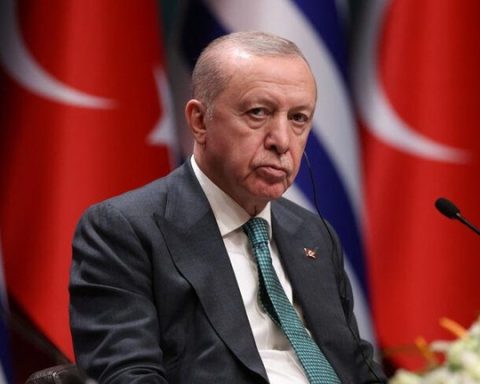
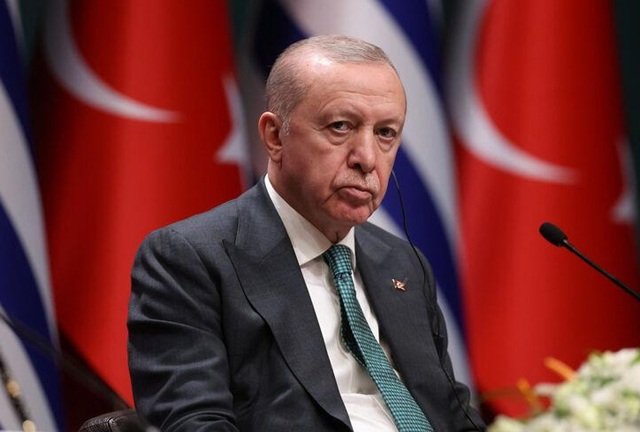
For now, Ankara has responded with relative restraint. Turkish President Recep Tayyip Erdogan rejected Netanyahu’s claims of a military build-up as “untenable” on Wednesday, arguing that they “stem from Netanyahu’s intent to pursue expansionist and destabilising policies in the region ahead of the elections in Israel”.
Yet Turkey’s response may not resolve the deeper dispute. Even if Netanyahu were replaced, analysts doubt that Israel’s concerns over Ankara’s expanding role in Syria would necessarily disappear, particularly because Netanyahu’s leading rivals share concerns about Turkey.
Ben-Ephraim expects “a long, tense confrontation between Turkey and Israel as Turkish ambitions increase while US power wanes” in the Middle East, Israel “grows more isolated” and Iran rebuilds.
Boms offers a more cautious possibility. A “real change” in the Israeli government, he said, could “open a new slate” for different relationships across the region, Turkey included.
But diplomacy would require both sides to participate. “But it takes two to tango and it does not seem that Erdogan is in a dancing mood,” Boms said.
The strikes have therefore left Syria facing a particularly sensitive new reality: competing Israeli and Turkish military interests operating in close proximity, without clearly defined boundaries between their respective spheres of influence. The immediate crisis may pass without a direct clash, but the episode has demonstrated how quickly a warning intended for one government can become a potential confrontation between two regional powers.