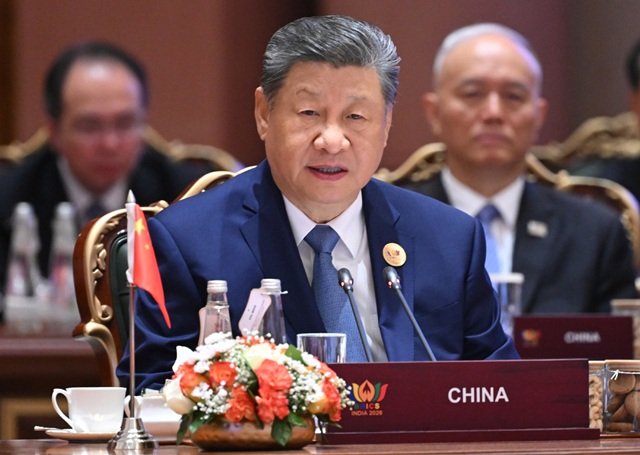
Chinese President Xi Jinping has called on BRICS countries and the wider Global South to take a greater role in shaping the future of artificial intelligence, urging governments to develop the technology “for the positive and for good” while accelerating efforts to establish a global framework for AI governance.
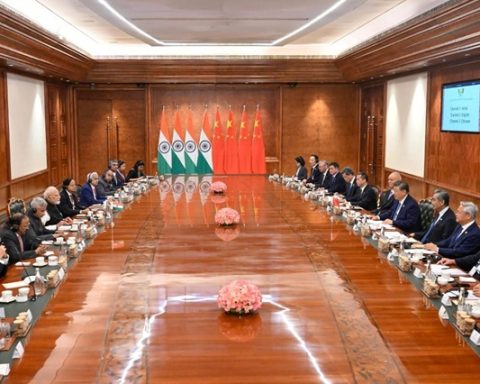
Speaking at the 18th BRICS Summit in New Delhi on September 13, Xi said the world was undergoing profound change and that the collective rise of the Global South had become “a key driver of world multipolarity”. But he warned that the international system remained “volatile and fraught with risks and challenges”.
“To bring stability to the world and make it a better place,” Xi said, “BRICS countries must seize the historical initiative, rally the Global South, be an active, stabilizing and positive force in international affairs, and advance the well-being of all humanity.”
Xi framed his appeal around what he described as the need for a stronger international rules-based system. “A world without rules is like a crossroads without traffic lights, where chaos and disorder are all but guaranteed,” he said, arguing that international rules should be developed collectively.
“Fairness and justice is a universal aspiration, and international rules must be written by all countries,” Xi said. “The logic of ‘might makes right’ does not hold, and should have been discarded long ago.”
He called on Global South countries to defend sovereign equality, non-interference in internal affairs and the peaceful settlement of disputes, while ensuring that international law and international rules were applied universally and “free from double standards”.
Xi also linked technological development to his broader vision of people-centred economic growth. “To achieve great things, one should always put the people first,” he said, calling on Global South countries to remain committed to a “people-centered development philosophy” and work towards the 2030 Agenda for Sustainable Development.
On AI, he urged countries to adopt a similarly people-centred approach. “We should take a people-centered approach, develop AI for the positive and for good, and work faster to evolve a consensus-based global AI governance framework,” he said, adding that new technologies should “light the way toward shared prosperity”.
Xi then placed AI at the centre of a series of five initiatives intended to deepen BRICS cooperation in technology, trade and industrial development.
His first proposal was an “open source and inclusive AI initiative”. “China will be a pioneer in establishing a BRICS AI open source community,” Xi said. Beijing would support cooperation in developing and applying large language models, organise specialised AI seminars and training courses, and build “an open ecosystem for AI”.
The proposal formed part of a wider technological programme. Xi proposed a BRICS digital ecosystem cloud platform, saying China would promote “digital skills training, technological exchange and industrial alignment” to enable the development of the digital economy.
He also proposed an intelligent manufacturing initiative under which China would assist fellow BRICS countries in building smart factories and developing standards and norms, with the objective of jointly promoting manufacturing transformation and upgrading.
A further proposal would establish a BRICS engineer cultivation alliance to jointly develop engineers and achieve mutual recognition of competency standards. China would also launch a BRICS youth exchange programme for scientific and technological innovation, which Xi said would help “cultivate more high-caliber talent”.
Beyond technology, Xi called for stronger economic integration among emerging markets and developing countries. He urged BRICS members to “uphold open cooperation for mutual benefit, safeguard stable and smooth industrial and supply chains, and foster a large integrated market”.
China also proposed establishing a BRICS special economic zone partnership, under which countries could “set up an intelligent portal, coordinate policies, and build a new frontier for open development”.
Xi presented the proposals as part of China’s broader development strategy. “This year marks the launch of China’s 15th Five-Year Plan for economic and social development,” he said. “It is both a blueprint for China’s development and a cooperation list for the rest of the world.”
He said China would continue to “advance high-quality development, expand high-standard opening up, implement the Global Development Initiative, and promote high-quality Belt and Road cooperation to share opportunities and prosper together with all countries”.
Xi also highlighted what he described as the international reach of China’s development initiatives. Since the launch of the Global Development Initiative five years ago, he said, China had implemented “over 2,000 projects in partnership with others” and provided training for “more than 200,000 professionals”, benefiting people in more than 120 countries.
He said China was “opening its door ever wider to the world” and had granted zero-tariff treatment to all 53 African countries with diplomatic relations with Beijing.
For Xi, however, the technological agenda cannot be separated from the broader question of who sets the rules of the emerging global order. He called for greater representation of developing countries in international institutions, saying that “all countries, regardless of their size, strength or wealth, are equal members of the international community”.
He urged the Global South to “hold high the banner of multilateralism” and uphold the authority and role of the United Nations, while supporting reforms to multilateral institutions and ensuring “the equal participation of all countries in international affairs”.
His message to BRICS was therefore both technological and geopolitical: AI should become more open and inclusive, developing countries should have a greater voice in governing it, and technological cooperation should reinforce rather than widen global inequalities.
“Let us work as one to promote greater BRICS cooperation and write a new chapter of strength through unity for the Global South!” Xi said.