On September 8, 2026, Khurshid Pandrani Raisani was shot dead by Islamic State Pakistan Province (ISPP) terrorists in the Kank Ziarat area of Mastung District in Balochistan. While claiming responsibility for the attack, ISPP alleged that Raisani was an intelligence informant for Security Forces (SFs).
On April 12, 2026, unidentified gunmen opened fire on Shia Hazara vegetable vendors in the Sabzi Mandi area of Hazarganji town in Quetta, the provincial capital of Balochistan, killing four members of the community and injuring several others. ISPP claimed responsibility for the attack.
On March 7, 2026, a Hazara Shia man, Jan Ali, was shot dead by unidentified armed men in the Hazarganji town of Quetta. ISPP claimed responsibility for the killing.
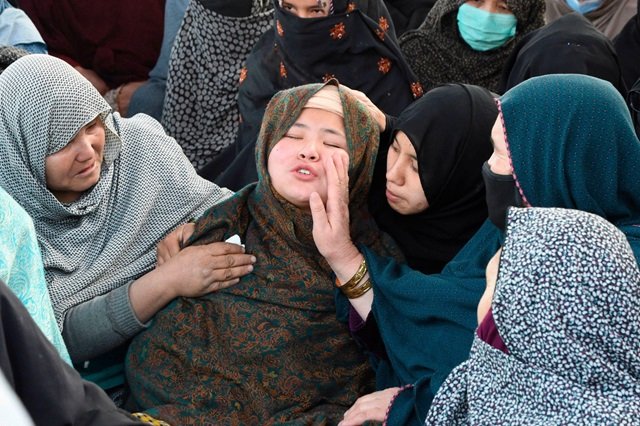
On February 6, 2026, at least 32 Shia worshippers were killed, and more than 169 were injured, when a suicide bomber blew himself up at the Khadijah al-Kubra Imambargah (Shia place of worship) in the Tarlai area of Islamabad capital territory. ISPP claimed responsibility for the attack, adding that Saifullah Ansari carried out the suicide bombing.
According to data compiled by the Institute for Conflict Management (ICM), since its inception in May 2019, ISPP has orchestrated 15 attacks, resulting in 81 deaths and at least 282 injuries in Pakistan. In Balochistan, Quetta District recorded the highest such casualties, with 23 killed and 73 injured, followed by Killa Saifullah District (12 killed, 14 injured), Mastung District (4 killed, 19 injured), Sibi District (4 killed, 5 injured), Pishin District (2 killed, 2 injured) and Nushki District (2 killed). Islamabad recorded 32 deaths and 169 persons injured – all in the Khadijah al-Kubra Imambargah attack.
ISPP is the Pakistani faction of the Islamic State/Islamic State of Iraq and Levant /Islamic State of Iraq and Syria/Daesh (ISIS). It was formed in May 2019, when it separated from the Islamic State Khorasan Province (ISKP). “Since its formation, ISPP has carried out approximately 100 attacks, more than two-thirds of which occurred in Balochistan. These attacks include three suicide bombings targeting Afghan Taliban members, police, and SFs in Balochistan,” Al Jazeera reported on February 7, 2026, quoting Sayed, the founder of the Oxus Watch research platform.ISPP has also conducted occasional operations in urban centres like Islamabad. The group has reported links into Iran’s Sistan and Baluchistan province and maintains some networks in Khyber Pakhtunkhwa, especially Bajaur District. ISKP and ISPP share overlapping networks, ideology, and fluid cadre loyalties, which makes a strict separation between the two groups difficult in practice, particularly in Balochistan. Public information on ISPP’s leadership is limited. Daud Mehsud, a former TTP member, was its founding Amir, and continued in this position till 2021. In July 2021 Abu Mahmood was appointed as ISPP’s Wali. It is not clear whether he replaced Mehsud, or worked with him. There is no public information regarding the group’s leadership thereafter.
ISPP relies on encrypted communications, urban and rural covert networks, and overlaps with residual anti-Shia sectarian elements historically linked to Lashkar-e-Jhangvi (LeJ). Its modus operandi emphasises targeted killings (especially of Shia Hazaras, Jamiat Ulema-e-Islam (JuI) activists, security personnel, and alleged informants, using improvised explosive devices (IEDs) and occasional suicide attacks. Propaganda is disseminated via official propaganda channel, Amaq News Agency and specialised magazines. ISPP launched its English-language magazine Invade on February 11, 2026. Its other propaganda publications and platforms include Yalghar, launched in April 2021; Voice of Khorasan, launched on January 12, 2022; and Nashir Pakistan, which was active in 2024–2025.
The group’s parent organization, ISKP was formally announced on January 26, 2015, by Daesh’s central leadership through its ‘spokesperson’ Abu Muhammad al-Adnani. Before any later organisational splits, ISKP oversaw Islamic State activities across both Afghanistan and Pakistan. It drew primarily from defectors of the Tehreek-e-Taliban Pakistan (TTP), disaffected Afghan Taliban elements and other local militants. Its first Amir (Chief) was Hafiz Saeed Khan, a former TTP ‘commander’ from Orakzai Agency in Pakistan’s former Federally Administered Tribal Areas (FATA). Early leadership included other TTP commanders who gave the group strong cross-border networks. Originally, about 70 per cent of its cadres were defectors from TTP. Over a period of time, LeJ and other sectarian groups also joined the ISKP.
ISKP initially sought territorial control in eastern Afghanistan, particularly Nangarhar and Kunar provinces. Its first major claimed attack occurred on April 18, 2015, in Jalalabad, the capital of Nangarhar in Afghanistan, when a suicide bomber on a motorcycle detonated explosives outside a bank, killing at least 33 people and injuring more than 100. By 2016, ISKP established a presence in Balochistan, Peshawar, Bajaur, Bannu, Waziristan, Orakzai, and other parts of Pakistan. After heavy losses from U.S., Afghan, and later, Taliban operations, the group shifted strategy toward high-impact urban attacks, propaganda and external operations. It retained primary responsibility for Afghanistan and the Khyber Pakhtunkhwa province of Pakistan, though it has conducted or inspired attacks beyond the region, including in Iran, Russia and plots in Europe.
According to data compiled by the South Asia Terrorism Portal (SATP), since the beginning of 2026, at least 10 incidents linked to ISKP have been recorded in Pakistan, in which 44 civilians, three SF personnel and one terrorist were killed, compared with five incidents in the corresponding period of the previous year that left two civilians, two SF personnel and one terrorist dead. Since its formation, a total of 47 incidents has been recorded, resulting in the deaths of 71 civilians, 12 security-force personnel and seven terrorists.
Both ISKP and ISPP are branches and sub-branches of ISIS,which emerged from the remnants of Al-Qaeda in Iraq and Syria. In June 2014, under Abu Bakr al-Baghdadi, it declared a caliphate in Iraq and Syria after capturing significant territory, including Mosul. Its ideology combines Salafi-jihadism, extreme anti-Shia sectarianism, rejection of existing nation-states, and a vision of global expansion through autonomous “provinces” (wilayats). After losing its core territory in Iraq and Syria by 2019 due to sustained military campaigns, ISIS shifted to a decentralised model of autonomous provinces and online propaganda. It expanded into Africa (including its ‘West Africa Province’ and Somalia), the Caucasus, South Asia, and Southeast Asia, through local pledges of allegiance, recruitment of existing militants, and directed external operations. South Asia became a key focus because of pre-existing jihadist networks, porous borders, and deep sectarian fault lines.
Since its formation the most significant ISPP attacks include:
- On September 2, 2025, a suicide bomber attacked a Balochistan National Party (BNP) rally at Shahwani Stadium in Quetta city, Balochistan, killing at least 15 persons and injuring 72. ISPP claimed the attack, naming the bomber as Ali Al-Muhajir.
- On June 21, 2025, an activist from the Jamiat Ulema-e-Islam (JUI) party was killed, and two persons were wounded, in a targeted attack in the Tora Shah area of Pishin District in Balochistan. ISPP officially issued a statement claiming responsibility for the attack
- On March 17, 2025, unidentified assailants opened fire and assassinated a member of JUI-F, identified as Mawlana Abdul Baqi Noorzai, near the Airport Road area of Quetta city in Balochistan. ISPP claimed responsibility for the attack in a statement.
- On February 7, 2024, at least 12 people were killed, and 14 sustained injuries, in an explosion near the central election office of JUI-F in the Killa Saifullah town of Killa Saifullah District in Balochistan. ISPP claimed responsibility for the attack.
ISPP is generally assessed as smaller and less capable of large-scale operations than ISKP. While combined regional estimates for ISKP and related South Asian affiliates have ranged in the low thousands, precise figures for ISPP itself remain unpublished. Unlike ISKP, which has had identifiable successive Amirs (including Hafiz Saeed Khan and later Shahab al-Muhajir), ISPP presently has no widely confirmed Amir, Wali or senior public figure consistently identified in open sources. At the present stage, ISPP prioritises sectarian polarisation and low-to-medium intensity operations, rather than sustained territorial control.
The continued attacks demonstrate that ISPP remains a persistent, albeit limited, security threat in Pakistan. Its emphasis on sectarian targeting, political violence and selective assassinations enables it to exploit existing fault lines. Despite lacking immediate territorial ambitions and a visible leadership structure, its links with ISKP and transnational networks could sustain its operational resilience and destabilising potential.