Parliament on 9 Sept. passed the Chief of Defence Staff (Repeal) Bill, over one and half years after the last Chief of Defence Staff (CDS) General Shavendra Silva retired.
The wartime General Officer Commanding (GoC) of the celebrated 58 Division (former Task Force 1) bid farewell to the Sri Lanka Army (SLA) on 1 January, 2025, following some record breaking achievements, leading his troops from the front in the final phase of the war to eradicate the Tiger terrorists.
Following the debate on the second reading of the Bill, on 9 Sept., the Bill was passed without a division. It clearly indicated that the Samagi Jana Balawegaya (SJB)-led Opposition wasn’t at least interested in making an obvious issue out of it. The Bill has been introduced to repeal the Chief of Defence Staff Act, No. 35 of 2009, enacted in 2009, to carry out functions, including the coordination of activities among the Armed Forces and the Ministry of Defence.
Pointing out that the relevant Bill had been enacted after the conclusion of the war, the National People’s Power (NPP) government declared in Parliament that the abolition of the Office of the CDS wouldn’t harm national security. The NPP emphasised that the Mahinda Rajapaksa administration created that post to accommodate war-winning Army Commander Lt. Gen. Sarath Fonseka after he firmly turned down the offer to accept a non-military post as Secretary to the Sports Ministry.
Amidst rapidly deepening turmoil within the government, Fonseka received the appointment as the first CDS on 15 July, 2009, in terms of the newly enacted Act. It would be pertinent to mention that the government had no option but to placate Fonseka by establishing the Office of CDS through a parliamentary Act to ensure the change of command take place, as planned.
The writer was among those assigned to cover Fonseka receiving the appointment as CDS and Maj. Gen. Jagath Jayasuriya taking over the command of the war-winning Army from Fonseka. This was against a background of Fonseka wanting Chief of Staff Maj. Gen. G.A. Chandrasiri succeeded him. Instead, the Rajapaksas brought in Maj. Gen. Jagath Jayasuriya as Fonseka’s successor. Chandrasiri was made to retire and those who had been senior to Jayasuriya sidelined as the government tightened its grip on the Army. Therefore, the creation of the Office of the CDS to accommodate Fonseka should be considered in the appropriate context.
But, Fonseka quit the CDS post in November 2009 after reaching a consensus with the UNP-JVP combine to contest the presidential election. Air Chief Marshal Roshan Goonetileke succeeded Fonseka as CDS, on 16 November, 2009, while continuing his duties as the Commander of the Air Force.
The NPP, at the inception of its administration, quite clearly wanted to abolish the post of CDS. Silva, who received the appointment as Acting CDS, on 1 January, 2020, while serving as the Commander of the Army, relinquished the substantive post on 1 June, 2022. That happened in the wake of the 9 May countrywide systematic violence unleashed by those spearheading the high profile project to oust President Gotabaya Rajapaksa after the increasingly humiliated SLPP by the siege laid by Aragalaya activists on important government institution with a foreign dictated agenda, ordered a goon attack on those Galle Face protesters.
Retired Maj. Gen. K.B. Egodawele, former Minister Wimal Weerawansa, foreign affairs commentator Asanga Abeyagoonasekera and Prof. Sunanda Maddumabandara, who authored books on the 2022 regime change project, all pointed to external hands in the mayhem. Abeyagoonasekera went to the extent of alleging direct Central Intelligence Agency (CIA) role in the operation, while Prof. Maddumabandara named then Indian High Commissioner Gopal Baglay as the one who asked Speaker Mahinda Yapa Abeywardena to take over the presidency, along with the backing of the likes of Omalpe Sobitha thera. That brought an end to the repeated attacks on US Ambassador Julie Chung over an alleged meeting with Abeywadena on the eve of President Rajapaksa being forced to flee the country.
India never challenged Prof. Maddumabandara’s declaration, widely believed to be based on revelation made by Abeywardena.
A significant visit
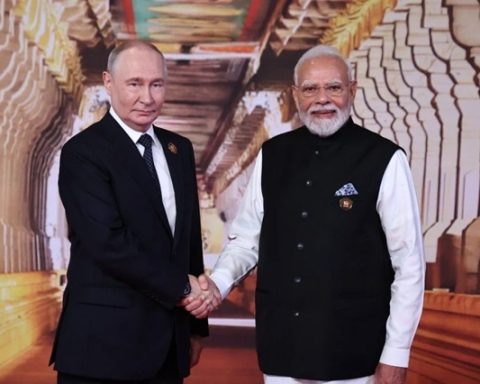
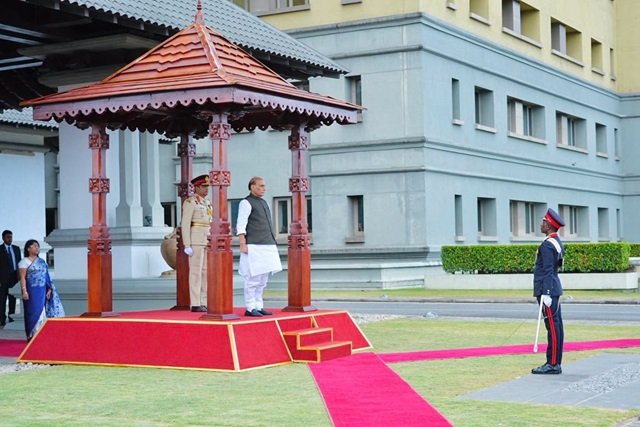
Indian Defence Minister Rajnath Singh’s historic three-day official visit to Colombo coincided with the House passing the Chief of Defence Staff (Repeal) Bill. What a coincidence it was!
A rapidly deepening partnership spanning defence, economic aid, and regional connectivity under India’s Neighbourhood First policy dominates bilateral relations.
Singh, a senior member of the ruling Bharatiya Janatha Party (BJP), laid a wreath at the Indian Army memorial, in Pelawatte, Sri Jayewardenepura, on 9 September, on the second day of his visit, as the Parliament announced the repealing of the Bill. The memorial is a stark reminder of a despicable Indian destabilisation project directed at smaller, economically weak Sri Lanka in the 80s.
Singh, who is on his second term as Defence Minister, would go down in history as the first Indian Defence Minister to pay respect at the memorial built in memory of Indian Army officers and men killed in Sri Lanka. Having established a large scale terrorist project in Sri Lanka, the Congress government destabilised Sri Lanka to facilitate signing of the so-called Indo-Lanka Peace Accord after the arm twisting by its infamous ‘parippu’ drop over Jaffna, humiliating and bringing to its knees the then ‘all-powerful’ JRJ government when its powerful friends in the West turned their backs on their perennial vasal here, dubbed the ‘20th Century Fox’. The deployment of the Indian Army followed, beginning 29 July, 1987, on a mission to ostensibly disarm terrorist groups, including the Liberation Tigers of Tamil Eelam (LTTE).
The then Indian Defence Minister K.C. Pant visited Colombo on May 30-June 1, 1988, in the run-up to the presidential election at the time the Indian Army was engaged in operations against the LTTE. India never sent another defence minister here even after Sri Lanka built a memorial near Battaramulla, in August 2008. It had been put up on a recommendation by the late Gen. Lionel Balagalle, Commander of the Army and CDS following an official visit to New Delhi in Dec., 2003.
Indian High Commissioner Ashok Kantha was the first top Indian government representative to pay floral tribute at the memorial on 15 August, 2010, over a year after Sri Lanka brought the once Indian sponsored war to a successful conclusion.
There is another Indian Army memorial in Palaly, Jaffna, built by the Indian Army in memory of 33 officers and men killed in a disastrous heli-borne assault on the LTTE, based in the Jaffna University. That assault took place on 12 Oct., 1987, at the onset of Indian operations. However, among the Indian dead inscribed on the memorial was Lieutenant Colonel Arun Kumar Chhabra who served the 10 Para (SF), elite battalion of the Parachute Regiment involved in the Jaffna University assault. Chhabra died on 14 Oct., 1989, during a gun battle with the LTTE.
The point is whatever various interested parties say today about the Indian intervention here, the truth is Premier Indira Gandhi destabilised this country in line with her strategy meant to address separatist sentiments in Tamil Nadu. India cannot absolve itself of the responsibility for the massive death and destruction caused not only in Sri Lanka but also the assassination of former Prime Minister Rajiv Gandhi who advanced his slain mother’s strategy by deploying the Indian Army here.
Indian trained terrorists, the People’s Liberation Organisation of Tamil Eelam (PLOTE), almost succeeded in overthrowing Maldivian President Maumoon Abdul Gayoom in Nov., 1988. Two boat loads of PLOTE terrorists passed under the nose of the Indian Navy, at that time responsible for controlling all movements within Sri Lanka territorial waters, to reach the Maldives. The Indian intervention in the Maldives to save the Gayoom’s administration was hailed as a spectacular Indian military operation. No one found fault with India for sponsoring PLOTE. In fact, the PLOTE, widely believed to have been disarmed by the Indian Army in line with the Indo-Lanka peace accord signed under duress, retained weapons to mount the operation. That proved the much publicised project to disarm terrorist groups, including the LTTE and PLOTE, was more a farce than anything else.
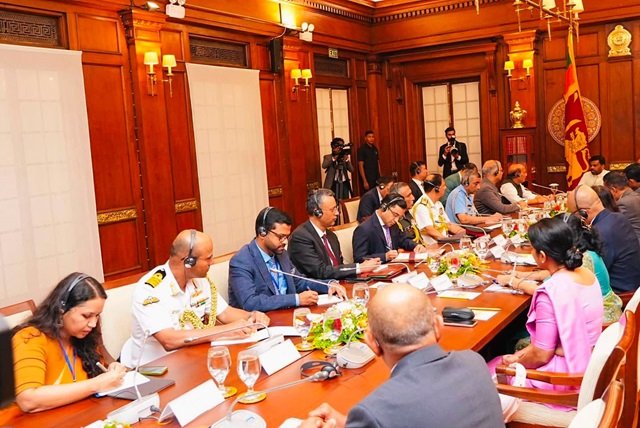
The top BJPer’s, who recently concluded his visit to Colombo, emphasised the nearly four decades long absence of an Indian Defence Minister paying respects at the Jayewardenepura monument. Interested parties have sought to depict the monument as a testament to India sacrificing life to protect Sri Lanka. But, the truth is the monument reminds the world of a politically motivated terror project that ruined Sri Lanka, caused deaths of at least 1,200 Indian military personnel, and paved the way for a coup attempt in the Maldives. Names of 1169 Indians, including 55 officers, are inscribed therein. The catastrophic Indian project also led to the invention of suicide attacks (human bombs), a tactic now practiced in different parts of the world. India experienced the horrors of suicide bombing when a Sri Lanka woman blew up Rajiv Gandhi at Sriperumbudur, Tamil Nadu, on 21 May, 1991, over a year after India pulled out its Army from Sri Lanka.
Two Battaramulla memorials
Sri Lanka and Indian media reported Defence Minister Singh’s visit to the Indian Army memorial at Battaramulla. Unfortunately, print, electronic and social media failed to mention that the National War Memorial, with names of nearly 29,000 officers and men, who paid the supreme sacrifice, inscribed, is situated a walking distance from the Indian Army memorial. Perhaps the Indian Defence Minister should have laid a wreath at the National War Memorial, a gesture that may have somewhat atoned for an utterly irresponsible and reckless political decision.
The two memorials situated just 1.1 kms apart underscore the horrors of conflict engineered and sustained by regional power that almost destroyed Sri Lanka. Sri Lanka was trapped in separatist terrorism and a simultaneous insurgency in the South that ripped the country apart.
Sri Lanka transformed its ceremonial armed forces to a worthy fighting formation over the years. The Office of the CDS had been in place throughout the war though it was not constituted by a specific law (Chief of Defence Staff Act, No. 35 of 2009).
As the armed forces expanded, the country needed a headquarters for better coordination among the armed forces and police. The Joint Operations Command (JOC) was established in 1985. In 1999, during the tenure of President Chandrika Bandaranaike Kumaratunga, the JOC was replaced by Joint Operations Bureau (JOB), a civilian led set up that failed miserably to meet the challenging task. In the same year, Kumaratunga, in her capacity as the Defence Minister, did away with the JOB and established Joint Operations Headquarters.
Kumaratunga created the Office of CDS in 2000 ahead of major northern battles. That functioned till the end of the war in May, 2009, and no one ever thought of enacting a specific Bill to constitute the Office of CDS. The NPP told Parliament, on 9 September, that a staggering Rs 8.7 bn had been spent on the Office of CDS, since 2009.
The Indian political establishment largely ignored the humiliating loss of lives suffered during the mission in Sri Lanka. They conveniently forgot the disastrous intervention though the High Commissioner here visited the Battaramulla memorial in 2010. However, Modi, having captured power at the 2014 general election, initiated his own strategy. He first visited the Battaramulla memorial, in March, 2015, less than a year after becoming the Premier. He again visited the memorial in April, 2025, when he visited Colombo to sign seven Memorandum of Understanding (MoUs), including one on defence.
Having backed Gotabaya Rajapaksa’s ouster in 2022, Modi (Rajnath Singh served as the Defence Minister during the US-Indian operation in Colombo) endorsed the candidature of Anura Kumara Dissanayake, in February, 2024, by extending an official invitation to the leader of the NPP, as well as the JVP. Dissanayake was given the opportunity to meet External Affairs Minister S. Jaishankar and National Security Advisor Ajit Doval. The message from New Delhi was loud and clear. Although Al Jazeera described the Indian move as an unlikely invitation, those who have carefully analyzed New Delhi’s actions here may realise the importance of the unexpected rescue of Somawansa Amarasinghe, in the early 90s, as the UNP government was about to capture him. Had Amarasinghe ended up in the custody of the military, the same fate that befell other party seniors, including Rohana Wijeweera, too, would have been his.
The UNP showed no mercy at all to the JVPers. Amarasinghe escaped with Indian help in February, 1990, three months after the Army executed Wijeweera. Although some speculated about a possible Indian role in saving Amarasinghe, no one could prove it. Then, unexpectedly, Amarasinghe himself, at a rally held in Kalutara, in late 2001, disclosed how India saved his life. The revelation was made at the first rally he addressed after returning home, following a 12-year exile.
Dissanayake received a second invitation from New Delhi after his historic unlikely victory achieved, thanks to outside machinations, mainly by the West ,in the run up to the Sept. 2024 presidential election. Modi announced their consensus on entering into MoU on defence at the conclusion of Dissanayake’s Dec. 2024 visit, though the joint statement didn’t say so. India swiftly moved to finalise the Defence MoU along with six other MoUs in the first week of April 2025 when Modi visited Colombo.
By then even the JVP/NPP had forgotten that the JVP waged insurgency against the UNP over the signing of the Indo-Lanka Accord. The emergence of the NPP as the undisputed political power in Colombo has facilitated the Indian strategy here. It also facilitated US strategy, as well as joint US-Indian scheme, the future of it now very much in doubt, especially with erratic actions of President Trump.
Immediately after Modi concluded his April 2025 visit, the Colombo West International Terminal (CWIT), Sri Lanka’s first fully automated container terminal with an $800 million investment, officially commenced operations. The project that offered a significant boost to the maritime economy marked a major milestone in India–Sri Lanka infrastructure collaboration.
By then, India has secured the controlling interests of the Colombo Dockyard Limited (CDL), a move facilitated by Japan. Although the announcement regarding Japan’s Onomichi Dockyard parting with its 51% of shares to India’s state-owned Mazagon Dock Shipbuilders Limited, supplier of warships to India et al. It was India’s first-ever acquisition of a foreign shipyard.
India never had such a hold on Sri Lanka during the war of post-conflict period. In fact, the current Indo-Lanka partnership or whatever you choose to call it seemed to be fait accompli.
The way forward
‘Yankie Dicky’s’ (JRJ was known as Yankie Dicky because of his ardent pro-American stands) nephew Ranil Wickremesinghe, in his capacity as President and Defence Minister, declared a moratorium on foreign scientific research vessels during 2024. Wickremesinghe, struggling to cope up with economic difficulties amidst being at the mercy of US and India, announced the moratorium on such ship visits. It was meant to deprive Sri Lanka of the opportunity to receive Chinese vessels. Wickremesinghe’s announcement came in the wake of US backed Indian protests over Chinese vessels Yuan Wang 5 and Shi Yan 6 vessels visiting Sri Lanka. But, Wickremesinghe’s moratorium still remains in force as the incumbent government shied away from making its position known to the public. China, having acquired the strategically situated Hambantota Port and Colombo International Container Terminals (CICT), South Asia’s premier deep water terminal, Beijing consolidated its position here. Perhaps many people do not remember that the Colombo Terminal project was awarded to a consortium involving China, in Sept, 2010, then a joint venture established under a 35-year Build–Operate and Transfer (BOT) project in 2011 and the facility inaugurated in August 2013 though construction continued till April 2014.
The Hambantota Port was acquired in 2017 during the Yahapalana government, in the wake of the Colombo Port City controversy. In spite of issues, China has established control over Colombo Port City, CICTT, as well as the Hambantota Port.
Sri Lanka may overtly take a stand that may see us as bei pro-India but at the end of the day whoever wielded political power as well as those in the Opposition wouldn’t be able to disregard Chinese interests. President Gotabaya Rajapaksa realised his folly when he declared intention to renegotiate the Hambantota Port deal. China simply dismissed the President’s proposal. The President was compelled to issue a clarification at his own expense.
The recent statement attributed by the Defence Ministry to Defence Secretary AVM (retd) Sampah Thyuyakontha regarding Sri Lanka’s readiness to seek NATO assistance drew a sharp response from General Secretary of the Communist Party of Sri Lanka Dr. G. Weerasinghe. Thuyakontha made the statement during a recent visit to Canada where he represented the government at the 28th Annual Indo-Pacific Chiefs of Defence (CHOD) Conference, held in Victoria, Canada, from 31 August to 2 September 2026.
There hadn’t been a previous instance of Sri Lanka seeking NATO assistance. The CP Chief questioned Sri Lanka’s unexpected declaration while examining post-2024 presidential polls developments. It would be pertinent to mention that it was Mahinda Rajapaksa who first entered into ACSA (Acquisition and Cross-Servicing Agreement) in March, 2007. The CP, without hesitation, criticised President Rajapaksa’s action. President Sirisena extended that agreement in 2017 though he pretended he didn’t approve it. Since the change of government in 2024, the NPP has enhanced defence relations with the US and the next year’s extension of ACSA is a foregone conclusion. Sri Lanka is set to go ahead with US-India strategies though China remains a factor that cannot be ignored, under any circumstances.