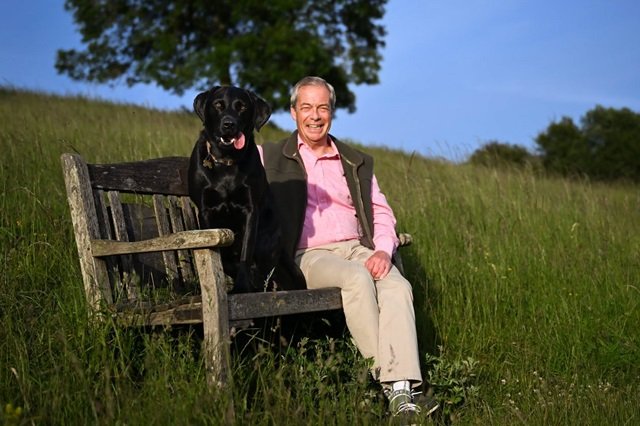
Nigel Farage and the rise of Reform UK are becoming a significant factor in the constitutional debate across the United Kingdom, with new polling indicating that support for Scottish independence could rise sharply if Farage became prime minister. A Norstat survey commissioned by the pro-independence organisation Believe in Scotland found that 52% of respondents would vote for independence in a referendum held today. When asked how they would vote if Reform UK won the next UK general election and Farage became prime minister, support for independence increased to 65%, against 35% for remaining in the United Kingdom.
The poll comes as nationalist forces in Scotland, Wales and Northern Ireland have increased cooperation. On 14 September, leaders of the Scottish National Party, Plaid Cymru and Sinn Féin met in Cardiff and signed an agreement intended to coordinate efforts towards constitutional change in their respective nations. The arrangement brings together three parties pursuing different constitutional objectives: independence for Scotland and Wales, and reunification with the Republic of Ireland for Northern Ireland. The agreement calls for cooperation and for the UK government to prepare for constitutional change.
The political forces behind that cooperation have also strengthened their positions in devolved politics. The SNP won the Scottish elections on 7 May with 58 seats, while Reform UK tied Labour on 17 seats, although Labour received a slightly higher share of the vote. In Wales, Plaid Cymru became the largest party for the first time and formed the devolved government with 43 seats. Reform UK won 34, while Labour suffered a major decline, losing 35 seats and retaining only nine. The results have placed nationalist parties and Reform UK among the principal competing forces in the political debate in both nations.
For James Kanogoosoriam, director of research and analysis at polling company Focaldata and the researcher who coined the term “red wall”, the constitutional question is closely connected to the political identity of left-wing unionist voters. “The key to understanding the constitutional dilemmas north of the border at any given time lies in determining whether, for left-wing voters who support the Union, their own ideology or unionism is more important,” he wrote recently. He argued that the prospect of a Reform UK government could lead some unionists to give greater priority to their left-wing beliefs than to remaining within the United Kingdom. The implication is that some voters who traditionally support the Union could instead support independence as a response to a Reform-led government.
The Labour Party has itself displayed uncertainty over how to handle the constitutional issue. Prime Minister Andy Burnham recently suggested in Parliament that, as in Northern Ireland, another Scottish independence referendum could be held if polling indicated that public opinion demanded one. The suggestion was quickly rejected by Downing Street, with Burnham subsequently telling Scottish First Minister John Swinney that the issue “was not on the table”. The 2014 Scottish independence referendum ended with 55% voting against independence.
Northern Ireland presents a different constitutional mechanism. The Good Friday Agreement provides for a referendum on Irish reunification, with the decision resting with the secretary of state for Northern Ireland, who can assess whether opinion polls or public sentiment indicate that a majority favours reunification. The political effects of Brexit have added another dimension to the debate. The Northern Ireland Protocol placed the region, while remaining part of the United Kingdom, within the EU’s internal market and common customs area. Since 2024, Sinn Féin has also held the position of first minister in Northern Ireland’s devolved government.
Martin Burns, an activist and organiser of reunification campaigns, described the changing argument in Northern Ireland as a choice between remaining within a United Kingdom shaped by Farage and Reform UK or joining the Republic of Ireland and remaining part of the European Union. His description reflects the increasingly explicit connection between constitutional identity, Brexit and the rise of Reform UK.
The confrontation was visible in Scotland’s Parliament at Holyrood in September. The SNP introduced a non-binding motion stating that Scotland has the right to decide its future. Labour’s 17 MSPs voted for it, while new Scottish Labour leader Michael Marra added an amendment stressing that child poverty and other immediate domestic problems required urgent attention. The amended motion passed 84 to 18. Reform UK’s 17 MSPs left the chamber rather than participate in the final vote.
The episode illustrated the emerging division in Scotland: nationalist parties seeking constitutional change on one side and Reform UK opposing the independence debate on the other, while Labour attempted to support the principle of Scotland’s right to decide without allowing the constitutional question to displace its emphasis on issues such as child poverty.