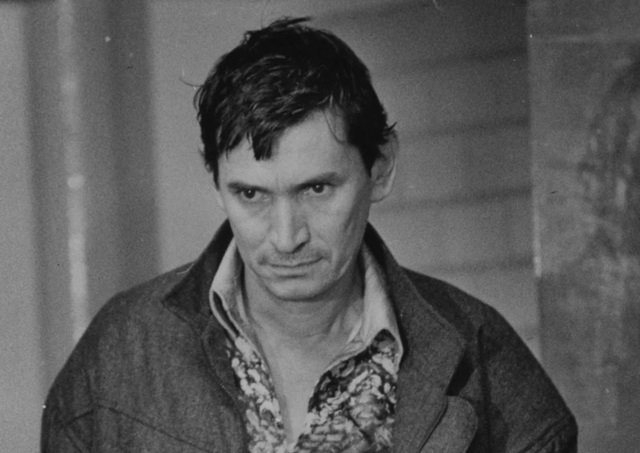
Miguel Ángel Félix Gallardo, the Mexican drug trafficker known as the Jefe de Jefes, or Boss of Bosses, has died aged 80, closing the life of a man whose criminal organisation helped establish Mexico as a major transit point for cocaine moving from Colombia to the United States. The founder of the Guadalajara Cartel died on Sunday at a private hospital in Guadalajara after being transferred there from Puente Grande prison in Jalisco. The state security authorities confirmed that the cause of death was multiple organ failure.
Félix Gallardo had been imprisoned since April 1989, serving two sentences totalling 76 years for organised crime and the brutal murders of US Drug Enforcement Administration agent Enrique “Kiki” Camarena and Mexican pilot Alfredo Zavala in 1985. His death came after decades of declining health, repeated legal attempts to secure his release on medical grounds and a final period of confinement in which he was blind in one eye, deaf in one ear and dependent on a wheelchair.
His arrest marked the end of a major manhunt that followed the detention of his two principal associates, Ernesto Fonseca, known as Don Neto, and Rafael Caro Quintero. Both had been arrested over the kidnapping and murder of Camarena and Zavala. Félix Gallardo, regarded at the time as the most wanted drug trafficker in the world, remained at large and was believed to be protected by a network of police officers in Jalisco and Sinaloa.
The arrest took place in early April 1989 at a house on Cosmos Street in an affluent neighbourhood of Guadalajara. It lasted approximately five minutes and was carried out without a gunshot. The operation followed sustained pressure from Washington on the Mexican government to capture the remaining figure implicated in Camarena’s murder.
Javier Coello Trejo, who became deputy attorney-general responsible for the fight against drugs in 1989, later described the operation in his memoirs. He said he assembled a team of just three people with the sole task of locating Félix Gallardo. Investigators intercepted telephone communications from prisons and spent weeks monitoring calls before tracing the fugitive to Guadalajara.
According to Coello, the breakthrough came after Félix Gallardo asked his secretary to arrange a seafood delivery following a night of partying. Investigators established themselves in a nearby house and waited. At 6.45am on 8 April, they moved in and arrested him. Coello recalled that officers placed a cloth in the drug lord’s mouth because they feared he might swallow something and attempt suicide rather than be taken alive. He was flown by helicopter to Mexico City.
During questioning at the Attorney-General’s Office, Félix Gallardo allegedly offered Coello as much as $20m in exchange for his release. The prosecutor also described the extent of the protection network surrounding the cartel, claiming that Félix Gallardo paid officials, judges, prosecutors, judicial police officers and municipal police in Jalisco and Sinaloa.
In his account, even regional representatives of the federal Attorney-General’s Office in Guadalajara and Culiacán received money from the organisation. Coello said he had kept the operation closely guarded, reporting directly to President Carlos Salinas de Gortari rather than informing the attorney-general, Enrique Álvarez del Castillo. He did not disclose the timing of the final operation even to the president until the arrest was carried out.
Félix Gallardo’s importance in the history of Mexican organised crime lay partly in his role in connecting trafficking networks in Colombia with routes into the US market. The Guadalajara organisation helped establish the structures through which cocaine could be transported across Mexico, making the country a central corridor in the international drug trade. His network and its relationships with officials also illustrated how criminal organisations could operate through a combination of trafficking, business interests and institutional protection.
Unlike Don Neto and Caro Quintero, Félix Gallardo never regained his freedom. In 2000, he was sentenced to 40 years in prison for drug-related offences, possession of firearms and bribery. It was not until 2017 that he received a further sentence of 37 years for the murders of Camarena and Zavala. Mexican courts ruled that the sentences had to be served consecutively rather than concurrently. Had he survived, he would have completed the first sentence in 2029 before beginning the second, leaving his projected release date in 2066.
His deteriorating health had prompted repeated calls for a change in his conditions of imprisonment. In 2021, José Antonio Pérez, then director-general of Social Reintegration in Jalisco, publicly argued that Félix Gallardo should be placed under house arrest because of his irreversible medical conditions, including the loss of sight in one eye and hearing in one ear, as well as gastrointestinal problems. Pérez also said that the prisoner had not been involved in altercations during his incarceration and had conducted himself respectfully inside the prison.
The following year, a federal judge in Mexico City granted him the benefit of house arrest. The decision was supported by then-president Andrés Manuel López Obrador, who said Félix Gallardo was seriously ill and could not receive adequate care in prison. However, the transfer was never implemented after the Attorney-General’s Office raised objections concerning the electronic monitoring bracelet that would have been required.
Four years earlier, Félix Gallardo had also sought a reduction in his sentence on health grounds, but the courts rejected his appeal. Despite his physical deterioration, he continued to deny the accusations against him in one of the few interviews he granted. He rejected any involvement in Camarena’s murder and denied that drug cartels had existed in Guadalajara during his time. He claimed instead to have worked in agriculture and livestock farming from childhood, while also owning pharmacies and two hotels.
The final transfer to hospital came on Friday, when his condition worsened at Puente Grande. On Sunday, at approximately 2pm, Félix Gallardo died at Country 2000 hospital, only a few kilometres from the Guadalajara neighbourhood where he had been arrested 37 years earlier.