Syria is forecasting annual economic growth of more than 8% over the next three years, while the European Union is preparing a major international investment conference in Damascus in 2027 to attract funding for the country’s reconstruction, according to a Reuters report published on Tuesday.
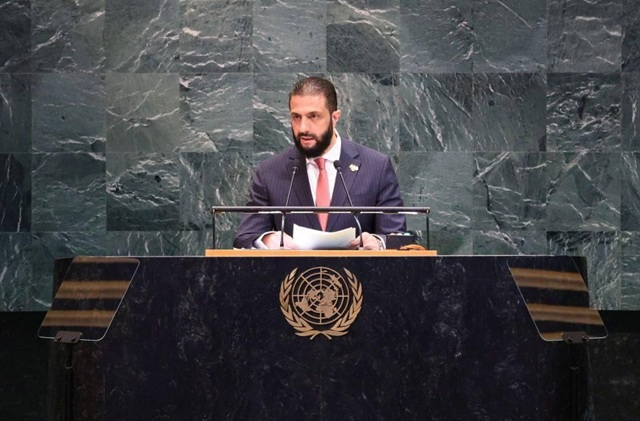
Syrian Finance Minister Yisr Barnieh presented the government’s economic projections at the Syria Partnership Cooperation Forum in Damascus, forecasting real gross domestic product (GDP) growth of 12.8% in 2026. He did not provide specific growth estimates for 2027 and 2028 or identify the principal factors expected to drive the projected expansion.
Barnieh said Syria’s nominal GDP, which is measured without adjusting for inflation, was expected to increase from $48.1 billion this year to $70.1 billion by 2029. He also outlined government targets to increase state revenue from 17% of GDP to more than 25% by 2030, while raising direct tax revenue from 2.7% to above 10%. The government also aims to halve poverty, although the minister did not explain how these targets would be achieved.
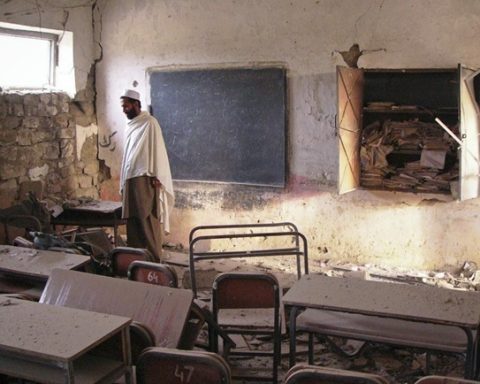
The projections come as Syria attempts to rebuild an economy devastated by 14 years of civil war, which ended with the fall of former President Bashar al-Assad in December 2024. The country’s economy more than halved in size between 2010 and 2022, while more than 90% of the population live in poverty, according to the United Nations.
European Commissioner for the Mediterranean Dubravka Šuica told Reuters that public financing alone would be insufficient to support Syria’s recovery and that attracting private investment would be essential.
“Today’s forum is preparation for next year’s great international conference, which will be an investment conference, which will be held here,” Šuica said on the sidelines of the meeting.
The EU has allocated €620 million in support for Syria for 2026 and 2027. Of this amount, €340 million will be directed towards social and basic services, including education, while the remainder will fund humanitarian assistance, Šuica said. The funding is still undergoing contracting procedures.
A separate €175 million assistance package announced in 2025 is expected to be fully contracted by the end of this year.
European support also includes infrastructure rehabilitation. Šuica said the EU was financing an €11.8 million project to rehabilitate the Deir Ali power plant near Damascus, while seeking additional investment in renewable energy, particularly solar, wind and hydrogen projects.
The Damascus forum also produced several agreements aimed at strengthening economic cooperation between Syria and the EU. The two sides launched a Technical Assistance Hub to support institutional and economic reforms, signed new EU-funded development contracts and agreed on measures to facilitate Syrian exports to European markets.
Šuica said EU foreign ministers had agreed on Monday to proceed with efforts to revive a long-delayed Association Agreement between Syria and the European Union. The agreement was originally negotiated in 2008 under Assad’s government but has remained stalled.
However, its implementation would require Syria to introduce legislation and update regulations to prepare its financial system for the agreement’s free-trade provisions.
Šuica stressed that establishing conditions for investment would be essential to attracting private capital. “Nobody will invest capital in a country where the capital is not safe,” she said.
The EU is also supporting security-sector training in Syria through a programme financing the training of 900 Syrian police officers at an academy in Jordan. The initiative, funded through an annual €4 million programme, was described by Šuica as trilateral cooperation involving Brussels, Amman and Damascus.