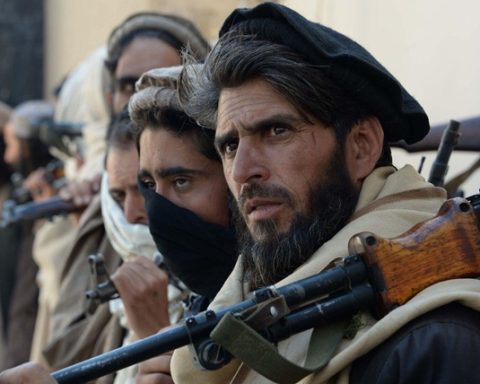
Velupillai Prabhakaran was born on 26 November 1954. His political emergence was shaped by the Sinhala Only policy introduced by the Bandaranaike government, which came to power in 1956. After founding the LTTE and becoming its leader, Prabhakaran acknowledged this on several occasions.
The Bandaranaike government, which came to power in 1956, paved the way not only for Prabhakaran’s political emergence but also for that of Lalith Athulathmudali. When Bandaranaike became Prime Minister following the 1956 general election, Lalith was a student at Oxford University in England. Unable to afford his education there, he received financial assistance through a fund arranged by Bandaranaike.
Like Prabhakaran, Lalith Athulathmudali was also born on 26 November. In 1977, when Prabhakaran took his first steps into Tamil armed politics, Lalith was elected to Parliament at the general election. After Prabhakaran launched the war in 1983, President J.R. Jayewardene appointed Lalith Minister of National Security.
The war that began in 1983 was fought between two commanders born on 26 November. Lalith commanded the State’s armed forces, while Prabhakaran commanded the LTTE. In 1987, when Lalith launched an operation to liberate Jaffna, Prabhakaran found himself in a desperate situation and sought India’s help. Had India not intervened to stop the military operation to liberate Jaffna, Lalith would undoubtedly have defeated Prabhakaran.
Prabhakaran must have understood this. Realising that Lalith, who shared his birthday, was an adversary capable of destroying him, he looked for an opportunity to eliminate him. When Lalith left the Premadasa government and became an ordinary MP, Prabhakaran struck. Lalith, born on 26 November, was killed, while Prabhakaran, who shared the same birthday, remained alive.
Similarly, two men born on the same day would go on to shake up Sri Lankan politics after 2005. One was Mahinda Rajapaksa, who was born on 18 November. Having first become Prime Minister in 2004, he went on to become President in 2005 and establish himself as the country’s dominant political leader.
Mahinda became Prime Minister in 2004 largely because the JVP worked hard to establish the United People’s Freedom Alliance (UPFA), which brought him to the premiership. The JVP’s decision to enter into an alliance with Chandrika Kumaratunga and form the UPFA government in 2004 was influenced significantly by Kumar Gunaratnam, then an unofficial leader of the JVP. The JVP joined Kumaratunga’s government primarily to bring an end to the clandestine political activities of leaders such as Kumar Gunaratnam, who had been accused of involvement in the violence of the past.
Kumar Gunaratnam was also born on 18 November, the same day as Mahinda. It was Kumar Gunaratnam and his group who mobilised the JVP to help form Kumaratunga’s government, which made Mahinda Prime Minister in 2004, and to work towards securing his election as President in 2005.
After becoming President with the support of Kumar Gunaratnam’s group, Mahinda began plotting to split the JVP, while Kumar was leading the party towards withdrawing its support for the Mahinda government.
Kumar Gunaratnam was a regional leader in charge of Trincomalee during the period when Rohana Wijeweera led the JVP. It was Kumar who established links between the JVP and Tamil leftist groups in the North and East. He was also an explosives expert. The landmine that killed 14 Indian Peacekeeping Force (IPKF) soldiers on 25 July 1989 was his creation.
At the time, the Indian High Commission and the Sri Lankan Government acted to conceal reports that the JVP had planted landmines to kill Indian peacekeeping soldiers, fearing that such revelations would give the JVP a significant political boost.
Although the Sri Lankan Army arrested Kumar Gunaratnam in 1989, he escaped from prison and went abroad. He returned to Sri Lanka only after securing guarantees of protection, following the honeymoon period between the JVP and Kumaratunga’s government.
Kumar Gunaratnam, who had mobilised the JVP to help make Mahinda President in 2005, later sought to take the party in a different direction. He wanted the JVP to abandon the nationalist image it had used to bring Mahinda to power and join hands with Tamil organisations in the North to build a common leftist movement. While Wimal Weerawansa and others fought against this move within the party, Mahinda used Basil to engineer a split in the JVP.
As Kumar attempted to rebuild the weakened JVP independently following Mahinda’s move to divide the party, Anura and his group supported the position that the JVP should rebuild itself by joining hands with the broader opposition, including the UNP.
In 2012, Kumar Gunaratnam and his group left the JVP to build a purely leftist movement, in opposition to Anura’s position. On the very day Kumar founded the Frontline Socialist Party, Mahinda used Defence Secretary Gotabaya Rajapaksa to have him arrested, with the blessings of the JVP. From that point onwards, Mahinda helped the JVP undermine the Frontline Socialist Party, fully aware of Kumar Gunaratnam’s background as a man accused of involvement in attacks on Indian troops who had escaped from prison.
Believing that every dog has its day, Kumar Gunaratnam launched the struggle against Gotabaya Rajapaksa’s government in 2022, at a time when the JVP was issuing statements urging people not to join the protest movement.
However, Kumar pushed the struggle to a point where even the JVP could no longer remain outside it. This paved the way for Gotabaya to flee the country and Mahinda to seek refuge in Trincomalee.
The man who had split the JVP in 2007 and, in 2012, had Kumar arrested and attempted to destroy his political movement was now cornered in Trincomalee by the very man whose political career he had sought to undermine. This happened as the entire country, irrespective of party or political allegiance, rallied behind the struggle Kumar had initiated.
But Kumar’s misfortune came when Anura took over the struggle he had launched and occupied the presidential seat. Anura did not become President through an ordinary political victory. He secured a two-thirds majority in Parliament for the JVP, which had previously commanded only three per cent of the vote.
Anura achieved this historic victory by taking control of the JVP that Kumar had helped build after Wijeweera and by presenting himself as the hero of the struggle Kumar had initiated.
Anura was able to wear that crown by capturing the 6.9 million votes that had previously belonged to Mahinda and the Rajapaksa family. In other words, with one stone, Anura flattened both the JVP kingdom that Kumar had hoped to rule and the Pohottuwa kingdom over which Mahinda had once worn the crown.
Earlier this week, both Mahinda and Kumar celebrated their birthdays on 18 November. Today, the two men share a common objective. Kumar wants to raise the victory flag once again over the JVP kingdom captured by Anura. Mahinda wants to raise the victory flag over the Pohottuwa kingdom that Anura has taken away.
With age, Mahinda has become physically weak and frail. But his political influence remains very much alive. Kumar, meanwhile, remains energetic and politically active.
Will Anura be able to defend his kingdom against these two men born on 18 November?