Britain continued cultivating Myanmar’s military and promoting economic relations with its government while atrocities against the Rohingya Muslim minority were escalating, according to an investigation by UK Declassified. The findings, brought into sharper focus by the International Court of Justice’s ruling that Myanmar committed genocide against the Rohingya in 2017, raise questions about the extent to which British foreign policy prioritised diplomatic engagement and commercial interests over the country’s obligations to prevent mass atrocities.
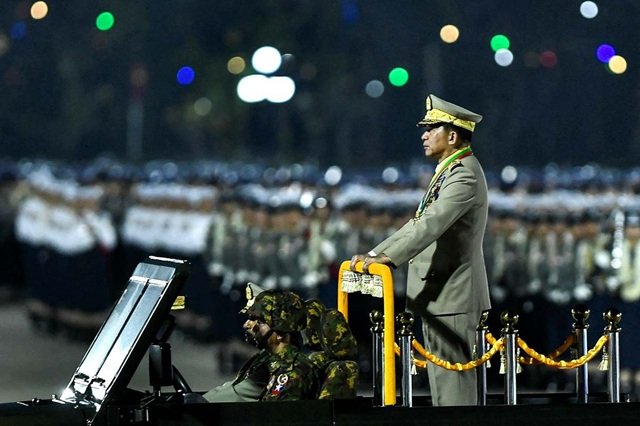
The controversy reaches back to 2013, when Myanmar’s then army chief, General Min Aung Hlaing, visited Britain and met his British counterpart, General Sir David Richards. Myanmar was emerging from decades of military dictatorship, and its limited political reforms had encouraged Western governments to pursue closer relations. Richards praised the country’s progress towards democracy and described Hlaing as “highly intelligent and well-intentioned”. The International Court of Justice has since found that Hlaing delivered speeches that fuelled hatred against the Rohingya amid or immediately after widespread violence against the community.
British military engagement followed. In 2014 alone, the UK spent £90,000 training Myanmar’s armed forces, with courses initially concentrating on international law. Intelligence training, including lectures delivered by MI5 and MI6, was also provided. Aung San Suu Kyi, whose political leadership was widely associated with Myanmar’s democratic transition, visited Britain’s Royal Military Academy Sandhurst. The following year, Richards returned to Myanmar on behalf of the Foreign Office to meet Hlaing. He later told UK Declassified that the meeting was intended to maintain relations and encourage the general to honour his commitment to democracy.
That diplomatic optimism coincided with growing concerns about the political and economic direction of Myanmar. Although the military retained substantial power, international sanctions were eased and foreign investment expanded. In 2015, the British organisation Global Witness warned that investment entering a corrupt and repressive political system risked facilitating human rights abuses and strengthening the former dictatorship. The warning highlighted a central contradiction in Western policy: economic liberalisation was advancing even as democratic institutions remained constrained and minority communities faced continuing repression.
The treatment of the Rohingya became increasingly difficult to separate from the political calculations surrounding Myanmar’s transition. During the 2015 elections, Suu Kyi’s party excluded Muslims from standing as candidates rather than confronting the military’s repression of the minority. Meanwhile, the European Union funded a police-training programme involving at least 900 Myanmar officers, covering areas including crowd control and community policing. The project was partly implemented by NI-CO, a Belfast-based company owned by the UK state, which presented its work as an effort to improve human rights and law enforcement. According to UK Declassified, the programme continued until the 2021 military coup.
Evidence of escalating violence was already emerging before British foreign policy underwent any significant change. Human Rights Watch reported that satellite imagery taken just months before Boris Johnson’s January 2017 visit showed at least 1,500 buildings destroyed by fire in Rohingya areas. An estimated 92,000 Rohingya had fled, while reports described soldiers committing rape and gang rape against women and girls, including children as young as 13.
Yet Johnson, then foreign secretary, travelled to Myanmar and pledged that Britain would continue offering its “fullest support” despite the challenges facing the country. His visit attracted attention after he was recorded reciting a colonial-era poem at a Buddhist temple. More consequentially, Human Rights Watch criticised his public praise for Suu Kyi and her government, arguing that it weakened Britain’s diplomatic leverage by overstating the achievements of democratic reform while failing to address the authorities’ inability or unwillingness to prevent, condemn or investigate security-force abuses.
The British government’s military-training programme was suspended only in September 2017, after 157 MPs raised concerns in Parliament and Prime Minister Theresa May faced pressure to act. The programme had operated since 2013, and the government acknowledged that it had not screened the human rights records of its Myanmar recipients. By the time the suspension came, the military’s campaign against the Rohingya was approaching its devastating conclusion.
Even then, Britain’s military presence did not immediately disappear. A British army colonel remained at the embassy in Rangoon as defence attaché, supported by a Ministry of Defence civil servant. An MOD spokesperson told UK Declassified in late 2017 that there were no plans to withdraw the personnel, describing their presence as important for maintaining contact. The colonel served as the embassy’s “point of contact” for Myanmar military matters and was expected to develop relationships with the armed forces and report information to London. UK Declassified subsequently reported that the defence section had been withdrawn.
Britain’s economic engagement also continued. A BBC documentary, Inside the Foreign Office, broadcast in 2018, revealed how senior diplomats approached the problem of maintaining relations with a government implicated in serious atrocities. Deborah Bronnert, then a senior Foreign Office official, described a strategy of promoting carefully managed economic links, provided that the individuals and organisations benefiting were not involved in the violence. Britain’s ambassador to Myanmar, Andrew Patrick, similarly argued that promoting trade in the appropriate circumstances could help resolve problems.
Foreign Office chief Sir Simon McDonald defended the approach, acknowledging tensions between human rights and commercial interests but arguing that trade should continue alongside human rights dialogue. A subsequent United Nations report published in 2019 revealed that British trade with Myanmar had included the supply of tens of thousands of pounds’ worth of technology to the military from a Scottish company. Meanwhile, sanctions against Myanmar’s two leading generals, including Hlaing, were not imposed until 2020. Further restrictions targeting companies connected to the armed forces followed in 2021.
The diplomatic response to the genocide was similarly delayed. The Gambia, supported by the Organisation of Islamic Cooperation, brought the case against Myanmar before the International Court of Justice. Britain, despite serving as the United Nations’ designated penholder on Myanmar, joined the legal proceedings only in November 2023, during Rishi Sunak’s premiership.
The consequences of Myanmar’s political trajectory have since become more severe. The military seized power in 2021, detained Suu Kyi, violently suppressed protests and plunged the country into civil war. Hlaing, once welcomed by Western military and diplomatic figures as a potential partner in democratic reform, is now president. Former British army chief Richards told UK Declassified in 2021 that he did not regret engaging with Hlaing, although he condemned the general’s subsequent actions.
The ICJ ruling now places Britain’s earlier decisions under renewed scrutiny. The Genocide Convention requires its signatories to take measures to prevent genocide, raising questions about whether continued military contacts, training and economic engagement were consistent with those obligations. The implications extend beyond Myanmar. As the court turns its attention to allegations of genocide in Gaza, where Britain has provided sustained military, intelligence and diplomatic support, the record of British policy towards the Rohingya offers a significant test of how consistently London applies its international legal responsibilities when strategic relationships and human rights obligations collide.