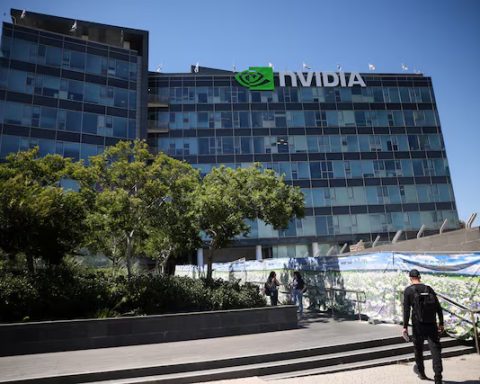
The artificial intelligence boom has created a financial dependency that increasingly resembles the vulnerabilities of the banking system: a handful of companies, enormous investment commitments and a growing network of financial relationships in which the failure of one major player could threaten the wider industry. At the centre of this expanding system stands Jensen Huang, chief executive of Nvidia, whose influence has become so extensive that even a corporate leadership crisis has drawn direct intervention from the White House.
Huang’s brief departure and subsequent return to Nvidia, following intervention by US President Donald Trump, have raised questions extending well beyond the future of one technology company. They concern the relationship between political power and corporate accountability, the financial foundations of the artificial intelligence revolution and the possibility that the United States is becoming too economically dependent on an industry it cannot afford to see collapse.
As reported by German newspaper Die Zeit, the episode illustrates how Nvidia has evolved from a leading manufacturer of artificial intelligence processors into a central financial participant in the industry it supplies. The publication places the current crisis within a wider historical pattern of technological investment booms, in which speculative excesses have frequently preceded financial collapses but also left behind infrastructure capable of supporting subsequent economic expansion.
The scale of the present investment cycle is substantial. Amazon, Alphabet, Microsoft and Meta are expected to invest as much as $700 billion in artificial intelligence data centres during the year. These facilities require enormous quantities of specialised computer chips, many supplied by Nvidia, whose individual processors can cost as much as $50,000. The concentration of demand around Nvidia has made the company indispensable to the infrastructure plans of some of the world’s largest technology businesses.
Huang’s position became particularly significant after allegations involving three personal relationships emerged, two reportedly involving Nvidia employees and another involving a woman suspected of working for Chinese intelligence. Huang resigned on 12 November but returned 11 days later, following pressure that included intervention from Trump. Vice-President JD Vance reportedly negotiated directly with Nvidia’s board over the weekend, while Attorney General Todd Blanche informed the president that the Justice Department had found no evidence of wrongdoing by Huang, although investigations were continuing.
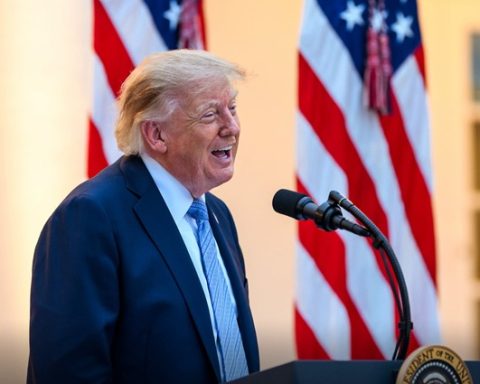
Nvidia’s board subsequently voted unanimously to reinstate him, reversing an earlier position taken by its chairman. Trump later acknowledged his involvement in an interview with CNBC, saying he had spoken to the board and persuaded its members.
The financial markets responded dramatically. Nvidia shares rose by 31.5 per cent following the announcement, adding $952 billion to the company’s market value in a single day, a record increase. The recovery reversed almost all the losses recorded during Huang’s absence, when the company’s shares had fallen by more than a quarter. Although the stock subsequently retreated by several percentage points, investor confidence in the artificial intelligence boom was restored.
The importance of this recovery extends beyond Nvidia’s shareholders. According to Die Zeit, artificial intelligence investment has become a major contributor to American economic growth. Investment in the sector represents nearly 4 per cent of US economic output, while approximately 40 per cent of economic growth is attributed to its expansion. The spending extends beyond data centres to electricity networks, power stations and other infrastructure required to operate increasingly energy-intensive computing facilities.
There is also a wider economic consequence. Rising share prices increase the perceived wealth of investors, encouraging greater consumption. The wealthiest 20 per cent of Americans own most of the country’s shares and account for approximately 60 per cent of consumer spending. A substantial stock market decline could therefore affect household expenditure and weaken economic activity. Economies dependent on American demand, including Germany’s automotive industry, would also face consequences.
Yet the most consequential vulnerability may lie in Nvidia’s financial relationships with other artificial intelligence companies. Analysts have increasingly described the chipmaker as the industry’s central bank. Huang has used Nvidia’s financial reserves to provide funding to customers and guarantee their borrowing, often in arrangements linked to purchases of Nvidia processors. The Wall Street Journal has identified more than 290 such transactions since 2023, involving sums running into tens or hundreds of billions of dollars.
The Bank for International Settlements, which advises central banks, has calculated that approximately 55 per cent of investment in artificial intelligence companies originated from other companies within the same industry. Such arrangements create financial interdependence: companies depend on one another not only for technology and customers but also for financing. If borrowers encounter difficulties, the consequences could spread through the network. Nvidia’s position as both a principal equipment supplier and a source of finance makes its stability particularly important.
This concentration of influence is also reflected in the company’s management structure. Huang personally negotiated numerous commercial agreements, travelling across Asia to persuade suppliers and secure manufacturing capacity. Delegation was limited, and an effective succession arrangement was apparently absent. During his 11-day absence, interim chief executive Colette Kress managed to secure production through multi-year agreements with Taiwan Semiconductor Manufacturing Company and Foxconn, demonstrating that manufacturing arrangements could continue without Huang. However, her announcement that future financing would be conducted in a more disciplined and selective manner was followed by an almost 14 per cent decline in Nvidia shares.
The political dimensions of the crisis are equally significant. Washington has repeatedly identified China as its principal competitor in artificial intelligence and a national security concern. Nevertheless, decisions concerning semiconductor exports have involved considerable presidential discretion. At the end of 2025, Nvidia received permission to export its H200 processors to China on condition that the US government received 25 per cent of the proceeds.
Questions have also emerged over the handling of suspected diversions of American chips to China. US authorities investigated Megaspeed in 2024 over allegations that processors could have been redirected to China. The company was nevertheless not immediately barred from receiving US exports. Treasury Secretary Scott Bessent subsequently criticised Commerce Secretary Howard Lutnick over the approval of nearly 900,000 chip exports, most involving Nvidia. The source also notes that Lutnick’s family has substantial business interests in data centres and that Trump owns Nvidia shares.
Huang is expected to testify before committees of both chambers of Congress on 1 and 3 December, with Democrats potentially assuming greater congressional influence in January. The investigations and political scrutiny could therefore intensify.
The historical comparison offered by Die Zeit draws on economist Carlota Pérez’s 2002 book, Technological Revolutions and Financial Capital. Previous investment booms, from Britain’s canal and railway speculation to the dot-com bubble, produced infrastructure that survived subsequent financial collapses. Pérez’s argument suggests that the economic benefits of technological revolutions can endure even when speculative markets collapse.
But those benefits have historically followed a period of financial correction and stronger regulation. The Sarbanes-Oxley Act, introduced after the dot-com collapse, made American corporate executives personally accountable for financial statements they signed.
The central question now is whether the artificial intelligence industry can avoid a similar reckoning. Trump’s intervention has protected a company whose stability has become closely connected to American economic performance. It has also raised the possibility that political authorities are more concerned with preserving the investment boom than confronting the financial dependencies sustaining it. A technological revolution may still emerge from the present spending spree, but the attempt to prevent its financial correction could make the eventual adjustment more difficult.