
Editor’s note: This column was originally published in Nature and It addresses an under-reported climate disaster unfolding across the Indian Ocean region.
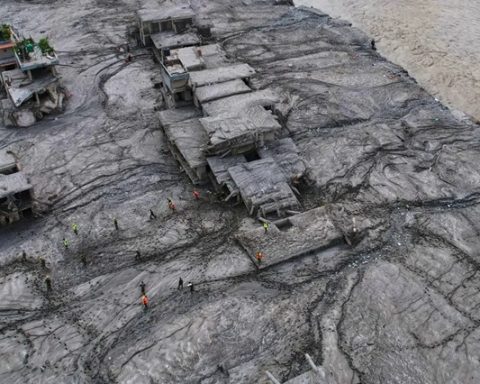
In late November, three tropical cyclones — Senyar, Ditwah and Koto — devastated cities and villages in countries around the Indian Ocean. In Indonesia’s Sumatra, Malaysia, Vietnam, Thailand, India’s Andaman and Nicobar Islands, the Philippines and Sri Lanka, torrential rains, high winds, landslides and flash floods killed at least 1,000 people, buried homes beneath metres of mud and destroyed roads and bridges.
The storms’ destructive scale is close to that of the 2004 Indian Ocean tsunami, as Muzakir Manaf, the governor of Aceh, Indonesia, said in a statement. However, the world has mostly overlooked this emergency. Millions of people have been displaced, and many are sick or starving, yet aid has been slow to arrive. Few people have recognized the cyclones’ unusual nature and what they herald for the world’s future.
The rainfall was so intense that it created ‘a rough sea on the land’, as my friend in the Sumatran city of Langsa told me before we lost contact. One week of non-stop deluges induced a powerful tsunami-like river current that washed away concrete bridges, dragged giant timber trees from encroached forests and inundated people in their homes.
But with these horrifying scenes also comes frustration. Some countries, such as Sri Lanka, have declared a national emergency and asked for international help. Others, including Indonesia, have not even acknowledged that this is a crisis. Indonesia’s President Prabowo Subianto held his first cabinet meeting about the disaster on 27 November, ten days after the first heavy rains and landslides in North Sumatra. As this article went to press, the government has still not declared a national emergency.
I’m baffled by the slow response. Many villages and cities in West Sumatra, North Sumatra and Aceh are disconnected from the rest of the world. Food is scarce and prices are soaring; hospitals have collapsed. Local governments have sent some aid, but damaged infrastructure has hampered the process.
Indonesia not declaring this to be a national emergency means international aid is slow in coming. The issue is exacerbated by the silence of much of the international community. Some world leaders have expressed condolences and the United Nations has offered help. But no word has yet come from the European Union or United States.
Perhaps one reason for the delays is the sparse coverage of the crisis in the global media, which has failed to portray the vast scale of this catastrophe. Initially, news outlets reported a series of floods on a country-by-country basis, ignoring the connection between them. The disaster is now being reported as ‘southeast Asia floods’, a shift that is welcome, but that still misses the root of the problem.
The Indian Ocean region is especially vulnerable to extreme weather, owing to a combination of climate change and severe environmental degradation, including from deforestation and mining. The fact that most international climate activists are also failing to call the situation out as a climate tragedy is another troubling omission.
In 2020, scientists used climate modelling to project that South Asian countries would face the highest increase in the chance of extreme climate-induced disasters (S. Lange et al. Earths Future 8, e2020EF001616; 2020). In the past few years, climate change has affected the Indian Ocean Dipole, a natural sea surface temperature cycle that influences global weather, including the formation of tropical cyclones. More tropical cyclones are expected around the Bay of Bengal in the future.
Until now, cyclones have been rare in the tropics, including in Indonesia. This is because the Coriolis effect — the force resulting from Earth’s rotation that spins up a cyclone — is weak close to the Equator. However, in April 2021, tropical cyclone Seroja became the first reported system to make landfall in Indonesia, causing fatalities and severe damage.
Just four years later, Indonesians are witnessing another tropical cyclone, Senyar. The Indonesian Agency for Climate Science, Geophysics and Meteorology reported that warmer seas in the eastern Indian Ocean might have boosted the intensity of rainfall in this storm in some areas to more than 300 millimetres a day — up to six times the usual rate.
Sumatra is also vulnerable to flooding because of environmental degradation. Since the 1990s, the island has lost more than 80% of its lowland forests, which made way to oil palm and pulpwood plantations, coal and gold mines and infrastructure development. Many of these sites have been built on riverbanks, affecting flood prevention. In North Aceh, locals told me that rivers now flood a dozen times a year.
Many deforestation activities have been linked to powerful people who live comfortably in megacities such as Jakarta and Singapore. But when Senyar hit, thousands of people had to pay for the impacts of environmental destruction that they had no part in. Moreover, the people who died, whose houses were buried, who are starving and cold, are not responsible for the greenhouse-gas emissions that are supercharging tropical cyclones today.
Further attention must be given to this climate tragedy, not only to apply pressure to speed up rescue and recovery, but also to recognize the planetary-scale crisis that humanity is currently facing. A new future awaits us — we need to recognize its patterns now, before more lives are lost.