The challenge of AI hallucinations, or the tendency of large language models (LLMs) to generate false or misleading information, continues to be a significant concern for researchers and developers. Despite advancements in AI technology, these errors—where the AI confidently makes up facts, references, and details—remain an inherent issue, and eliminating them entirely appears impossible. However, recent work by computer scientists is leading to promising techniques to reduce the frequency and severity of these mistakes, though the path forward remains complex.
In an interview with The Nature, computer scientist Andy Zou shared his frustrations with AI chatbots that offer references to research papers, only to provide incorrect or non-existent sources. As a graduate student at Carnegie Mellon University, Zou often relies on these tools to assist in his research but finds that the models frequently suggest inaccurate authors or fabricated papers. These “hallucinations” aren’t just a minor inconvenience—they can cause serious problems. For example, in 2023, a U.S. lawyer made an error in a court filing, citing non-existent legal cases after using a chatbot, highlighting the risks of blind trust in AI-generated information.
The term “hallucinations” in AI refers to these instances of fabrication, and while it’s not universally agreed upon as the best descriptor, it has become a widely used term in the field. In fact, Dictionary.com selected “hallucinate” as its word of the year for 2023, underscoring the growing public awareness of this issue. Despite efforts to control or reduce AI errors, these hallucinations remain an unavoidable feature of generative AI models, rooted in how these models are trained and how they function.
LLMs are not designed to output factual information per se. Rather, they generate responses based on statistical likelihoods derived from vast amounts of data. While they can reconstruct nearly all of the training data, they often lose critical details in the process, leading to responses that veer into the realm of fabrication. For example, AI models might confidently claim an incorrect fact—like mistakenly stating that NASA’s James Webb Space Telescope took the first pictures of an exoplanet—because of ambiguous phrasing in the original data they were trained on.
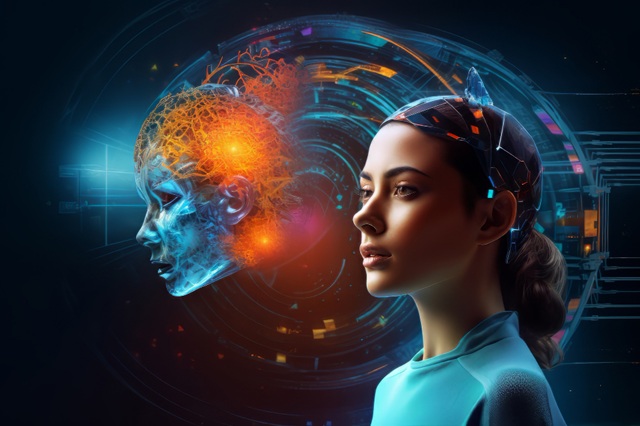
Some researchers are exploring ways to reduce the rate of hallucinations. Zou and others are investigating techniques such as external fact-checking, self-reflection by the AI itself, and even “brain scans” of the artificial neurons in these models to detect patterns of deception. This approach aims to increase the confidence of AI in its answers and improve transparency when the model is unsure about certain information.
Another method to limit hallucinations is the use of retrieval-augmented generation (RAG), which allows chatbots to consult verified sources before generating responses. This has shown promise in fields where accuracy is paramount, such as medical or legal AI applications. However, as RAG-enhanced systems still operate within a finite pool of knowledge, they are not a cure-all. Additionally, while fact-checking through internet searches can help, it’s not a foolproof solution. The web itself contains inaccuracies, which can influence even AI models that utilize these external searches.
In some cutting-edge research, AI systems are being trained to evaluate their own confidence levels when generating responses. Zou’s technique of “brain scans” looks at patterns in the model’s neural activations to identify when it is likely to be lying or fabricating details. By mapping these internal states, the goal is to develop more “self-aware” models that can recognize when they are guessing and signal a lack of certainty to the user.
Despite these advances, the problem is far from solved. Researchers are also investigating automated ways to assess the consistency of responses and the degree of confidence behind them. Techniques like checking for “semantic entropy,” or diversity in AI-generated answers, can help determine whether a chatbot’s response is likely to be hallucinated or based on solid knowledge.