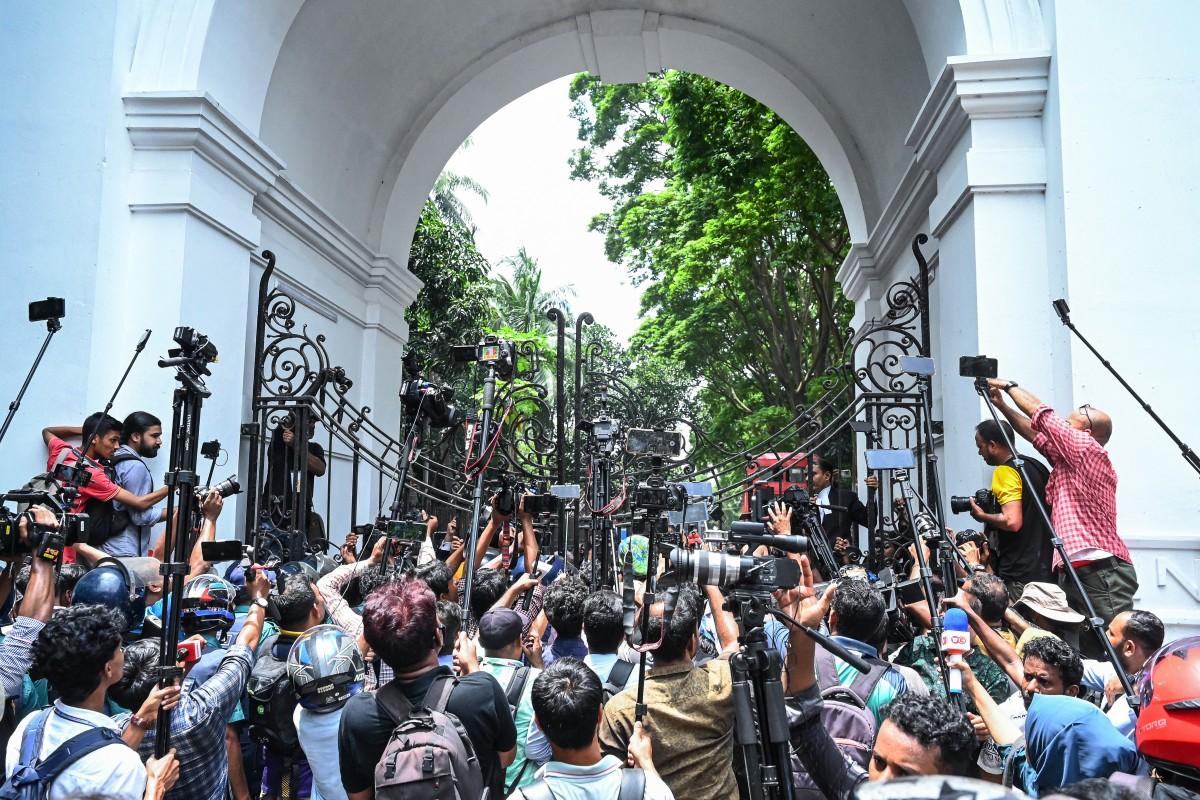
On August 29, 2026, Omar Ali Sohag, a journalist of The Daily Star was assaulted by activists of the Bangladesh Jatiotabadi Chhatra Dal – the official students’ wing of the Bangladesh Nationalist Party (BNP) – while covering a programme attended by Law Minister Mohammad Asaduzzaman in the Jhenaidah District.
On August 25, 2026, three journalists – Zahid Hasan of The Daily Star; Bidhan Majumder of News Twenty-Four Television and District Correspondent of Jago News; and Barkat Mollah, District Correspondent of Manabkantha – were beaten up in the premises of the Shariatpur Deputy Commissioner’s office in Shariatpur District.
On August 24, 2026, five local journalists – Atiquzzaman Rumi, Alamgir Hossain, Sahabuddin Ahmed, Anisur Rahman and Rahat Hossain – were attacked by miscreants for the second time in the Sharsha Upazila (Sub-District) of Jashore District. Earlier, they had been attacked while covering an event at Buruj Bagan Pilot Girls’ High School on August 23, 2026.
On August 23, 2026, B.M. Israfil, District Correspondent of Soyo TV, was attacked in the Press Club premises in the Aminbagh area of Shariatpur town in Shariatpur District. Israfil, whose right arm was broken in the beating, suspected that he was attacked by Palash Sardar, son of Shariatpur Press Club President and Abul Hossain Sardar, BNP District Vice-President.
On August 11, 2026, Russell Haque, Lalmonirhat District Correspondent of the Daily Dabanal newspaper, was injured in an assault in the Railway Muktamancha area in Lalmonirhat District, for refusing to pay a bribe to Rashidul Islam, a man posing as a BNP leader.
On August 6, 2026, Bulbul Hossain, a Global Television journalist, filed a written complaint to the Dhaka Metropolitan Police (DMP) Commissioner stating that Police assaulted him, while he was recording an incident involving a woman at the Bijoy Sarani signal in Dhaka on August 4, 2026.
On September 3, 2026, the Human Rights Support Society (HRSS) monthly report for August noted that 45 journalists were subjected to torture and harassment during the month. Moreover, as reported on September 2, 2026, the Bangladesh Association of Journalists (BAJ) observed that at least 51 journalists were subjected to attacks, legal harassment, threats and professional obstruction in different parts of the country during August 2026. Of these, 42 were subjected to physical attacks and injuries; five faced legal harassment; and four were subjected to threats, harassment and professional obstruction.
Since August 5, 2024, the day former Prime Minister Sheikh Hasina was forced to leave Bangladesh by violent mobs, the country has been grappling with severe law and order crises. According to the Ain o Salish Kendra (ASK), 102 people were killed in political violence in 2025. This figure was 100 in 2024, 45 in 2023, and 70 in 2022. The attacks on journalists and media persons are one facet of this wider situation. These attacks were reported through the 18 months of the Mohammad Yunus Interim Government’s tenure, and continue after the BNP came to power in February, 2026. According to partial data collated by the Institute for Conflict Management, since August 5, 2024, 13 journalists and media professionals have been killed and 62 injured in 53 incidents (data till September 13, 2026). These numbers, however, significantly under-estimate of severity of the prevailing situation.
Journalists and media workers in Bangladesh face a number of threats: physical, financial and psychological. They are often beaten up; injured with knives, hammers and batons; their homes are attacked and robbed; they receive threat mails; are abducted for ransom, hacked to death, and so on. Indeed, on October 13, 2025, Bangladeshi Journalists in International Media (BJIM) raised concern over a series of violent attacks and threats targeting journalists in different districts of Bangladesh, involving local miscreants, charity owners, and even members of law enforcement agencies.
Notably, media professionals and journalists are subjected to violence across the length and breadth of Bangladesh – in the north districts of Rangpur, Thakurgaon and Lalmonirhat; in the central districts of Shariatpur, Dhaka and Rajshahi; in the east, Brahmanbaria, Comilla and Kishoreganj; in the west, Khulna, Jashore and Kushtia; and in the south-eastern districts of Chattogram and Cox’s Bazar, among others.
Predictably, journalists and media workers are also experiencing threats from various Islamist organisations and political parties. On August 26, 2026, an expatriate journalist, Hasan Imam Ibn Habib, filed a General Diary (GD) report at the Bheramara Police Station in Kushtia District, stating that he had faced death threats and had been warned to stop writing, in a letter (on the same day), by the Towhidi Janata. The letter read, inter alia,
Remember, we have a lot of information about you. Although you are Hasan Imam Rubel on Facebook, your official name is Md. Hasan Imam Ibn Habib. We are always keeping an eye on your movements. We also keep track of where you live and what you do in Dhaka when you come to the country. So be careful. The sender of the message is Towhidi Janata.
On July, 2026, Islamist speakers at a conference on The Thought of Shah Waliullah and its Contemporary Relevance for the Awakening of the Ummah, jointly organized in Chattogram District by Paigham-e-Insaniyat Bangladesh and Dawah Movement Chittagong, alleged that certain media outlets were spreading negative propaganda about the event being an ‘extremist gathering’ and demanded that the intelligence agencies and administration contain such ‘misinformation’.
On October 3, 2025, Hefazat-e-Islam (HeI) Joint Secretary General Azizul Haque Islamabadi issued a statement alleging that the journalism of Prothom Alo was spreading hatred against Islam and the Ulama. He further alleged that Prothom Alo had been a pioneer of anti-Islamic yellow journalism in Bangladesh and it had shown its political prejudices by labelling the anti-India and anti-fascism agitation of Hefazat a tandav (dance of destruction).
Earlier, following the assassination of Osman Hadi, convenor of Inqilab Moncho, offices of two prominent newspapers of Bangladesh: Prothom Alo and The Daily Star were vandalised in Dhaka on December 18, 2025. The students’ union of Jamaat-e-Islami (JeI), Islami Chhatra Shibir (ICS) played a crucial role in provoking the incidents. For instance, on the same day, December 18, Mostakur Rahman, President of the Rajshahi University unit of ICS and also Vice-President (VP) of Rajshahi University Central Students’ Union, asserted at a protest rally,
We declare from today’s programme that these so-called ‘civil’ newspapers, including Prothom Alo and The Daily Star, must be shut down. We believe that if any journalists from Prothom Alo or The Daily Star are attending this programme, they should leave immediately.
Those who torched the newspaper offices accused both outlets of shaping the political narrative around Hadi’s killing, calling them “Delhi’s lapdog” and “Sheikh Hasina’s enablers.”
On June 2, 2026, the Committee to Protect Journalists (CPJ) called on Prime Minister Tarique Rahman to fulfil his election promise to break the cycle of repression and oppression of journalists in Bangladesh and ensure media freedom. CPJ emphasized that Bangladesh has had three governments in two years and, during each changeover, journalists have been subjected to detention, prosecution, surveillance, attacks and slander, particularly for their alleged loyalty to the previous government. CPJ stated further that the government must stop the propaganda labelling journalists as ‘pro-India’, ‘anti-Islam’, ‘traitors’ or agents of the former government, and take a clear stand on the constitutional protection of independent journalism.
Some journalists have also been subjected to criminal charges in ‘crimes against humanity’ cases, for reporting about the violent street protests and rampant violence of July 2024. The International Crimes Tribunal (ICT), a domestic court established in 2010 by the Sheikh Hasina government, to try crimes from the 1971 Liberation War, is now being deployed against journalists. For instance, on August 24, 2026, three journalists – Shyamal Dutta, the former General Secretary of the National Press Club and editor of Bhorer Kagoj; Mozammel Babu founder and former Editor-in-Chief of Ekattor Television; and Farzana Rupa former chief reporter and presenter of Ekattor Television – were ordered to be arrested and sent to prison by ICT-2, in a case of ‘crimes against humanity’, for allegedly inciting murder and torture during the ‘July Uprising’. Earlier, on August 18, 2026, CPJ urged Bangladeshi authorities to immediately drop new cases of ‘crimes against humanity’ against these three journalists and to stop criminalising journalism. Kunal Majumder, CPJ’s Asia-Pacific Program Coordinator, observed, “It is a matter of grave and deep concern that journalists Shyamal Dutta, Mozammel Babu, and Farzana Rupa have been charged with crimes against humanity simply for asking questions at a press conference.” Earlier, on June 26, 2025, at an event on “Freedom of the Media: A Legal Framework for Journalists’ Protection and Complaint Resolution”, organized by the Centre for Governance Studies in Dhaka, Asif Nazrul, the then Law Adviser to the Interim Government, publicly disclosed that 266 journalists in Bangladesh were facing active litigation and lawsuits. These journalists were perceived to be supporters of the Awami League, and there had been an indiscriminate filing of criminal cases against them, in the context of the July violence.
Moreover, in order to monitor the overall activities and affiliations of various media professionals, according to a letter dated May 18, 2026, the Police Special Branch (SB) has been collecting information on the political affiliations, social media handles, and personal information of journalists in Dhaka city. The letter was signed by Assistant Superintendent of Police, Mohammad Kamruzzaman of the Dhaka’s East Division. The letter instructed local Police officials to provide information, including the name and address, educational qualifications, political identity or affiliation, whether or not they have any profession outside of journalism, the political background of their families, and their social media handles. The officials were instructed to list any ‘adverse information’ about the journalists.
This violence against journalists and media workers is structural in nature, and is often centered around perceived bias, to suppress investigative reporting that threatens political interests, to control public narratives during moments of political flux, and to neutralise voices connected with competing political ideologies. This multi-layered pattern of persecution and harassment echoes a profound failure of the rule of law, in which journalists are treated as prejudiced actors, rather than independent observers.