The Catholic Church will have to wait at least another day for a new leader after black smoke emerged from the Sistine Chapel chimney on Wednesday evening, signaling that no pope was elected in the first round of voting during a historic and unpredictable papal conclave.
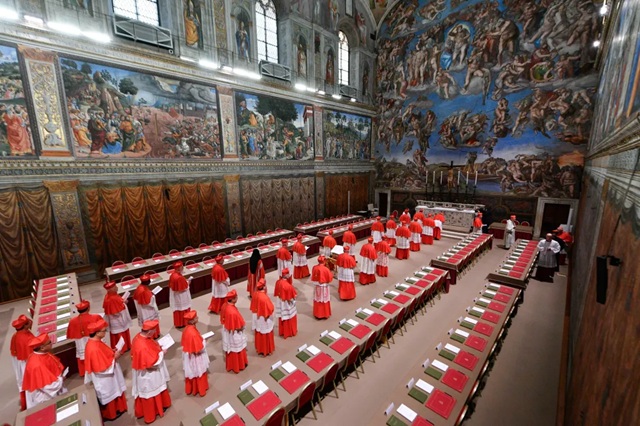
The dark plume appeared more than two hours after all 133 cardinal-electors processed into the famed 15th-century chapel, marking the solemn beginning of the election to choose a successor to Pope Francis, who resigned earlier this year due to health reasons. With chants of the Litany of the Saints and an oath of secrecy, the cardinals formally commenced what observers are calling the most complex conclave in half a century.
Once seated beneath Michelangelo’s awe-inspiring frescoes, the traditional command “Extra omnes” (“Everyone out”) was issued by Archbishop Diego Ravelli, the Vatican’s master of ceremonies, clearing the chapel of all non-voting participants. In a further effort to ensure total confidentiality, the Vatican had earlier disabled its phone network, jammed outside signals, and required over 100 staff members—ranging from security personnel to housekeepers—to swear an oath of secrecy on pain of excommunication.
In the first vote, the 133 cardinals, hailing from 70 countries and reflecting a record level of global representation, wrote names on paper ballots, which were then counted, sewn together, and burned with special chemicals to produce the black smoke indicating no consensus had been reached.
The opening round was not expected to yield a result, as it rarely does. Instead, it sets the tone for subsequent ballots—two in the morning and two in the afternoon—where alliances form and support begins to consolidate around leading candidates.
This conclave is notable for both its scale and diversity. With 20 cardinals appointed just last year and first-time representation from nations such as Haiti, Myanmar, and Malaysia, the assembly embodies Pope Francis’s efforts to globalize the Church’s leadership. European dominance has waned, with Asian and African voices playing an increasingly prominent role. Notably, Italian is no longer the common language in many discussions, underscoring the shifting dynamics.
Vatican analysts describe this conclave as the hardest to predict in decades. “The college of cardinals is unpredictable and fragmented,” said Vatican expert Marco Politi. “This conclave may take longer to reach a decision.”
Despite this uncertainty, Italian Cardinal Pietro Parolin, the Vatican’s Secretary of State, remains a frontrunner. According to Italy’s Corriere della Sera, he received an estimated 50 votes in the first ballot—well short of the 89 needed for a two-thirds majority, but enough to establish early momentum.
The next rounds of voting begin Thursday. While previous conclaves have resolved quickly—Pope Benedict XVI in four ballots and Pope Francis in five—experts caution that this conclave’s unprecedented global makeup may lead to a lengthier process.
Until white smoke rises, the world will continue to watch and wait for the Church’s 267th pontiff to emerge.