In a piece evocative of a grandmasters’ duel, The Financial Times recently reflected on the enduring rivalry between two of America’s most formidable Cold War strategists: Zbigniew Brzezinski and Henry Kissinger. More than just a contest of ideas, their clash carved out divergent visions for U.S. foreign policy during one of the most pivotal eras in modern history—and its echoes still reverberate in today’s geopolitical tumult.
Imagine Muhammad Ali warming up before Kinshasa’s “Rumble in the Jungle” or Bobby Fischer preparing for his legendary 1972 chess match against Boris Spassky. That’s the level of drama and stakes that framed the Brzezinski-Kissinger rivalry. Their ideological battle shaped U.S. policy not only toward the Soviet Union but also laid the groundwork for modern America’s approach to Russia, China, and beyond.
Though Kissinger may have won the spotlight—achieving near-mythical celebrity status—Financial Times columnist Edward Luce argues that Brzezinski “won their Cold War dispute on points.” While Kissinger pursued a strategy of détente with the Soviet Union, banking on stability through balance, Brzezinski viewed the USSR as a brittle empire built on suppressed nationalities—an empire destined to collapse under its contradictions.
Their contrasting upbringings etched their worldviews. Kissinger, a Jewish-German refugee, arrived in the U.S. just before the Nazi annexation of Czechoslovakia, his family later devastated by the Holocaust. Brzezinski, son of a Polish diplomat, left Europe days after Hitler’s seizure of the Sudetenland. One sought order in a chaotic world; the other justice from a world that had betrayed his homeland.
Yet both men shared a profound sense of historical fragility and the importance of sustained global engagement—traits sorely lacking in today’s polarized Washington. Kissinger once remarked that, as immigrants, they knew “the fragility of societies” and “the transitoriness of human perceptions.” It is this long view of history, as Luce writes, that made them “viziers of modern geopolitics.”
Their approaches to China were also landmark. Kissinger, via his secret diplomacy, opened the door to Nixon’s 1972 Beijing visit. Brzezinski, as Carter’s national security adviser, followed up by deepening ties with Deng Xiaoping. Though they differed on execution—Kissinger favored balance among the superpowers; Brzezinski leaned toward confronting Soviet hegemony—both understood the geopolitical leverage China provided in tilting the global power axis.
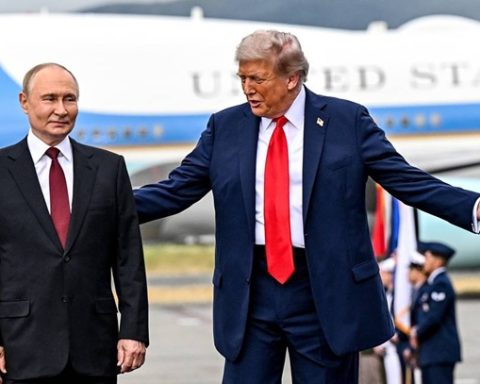
In many ways, their legacy is tested by today’s crises, particularly the war in Ukraine. Both would likely have recoiled at Donald Trump’s suggested concessions to Russia and the optics of his Oval Office snub of President Zelenskyy. They would have recognized that peace must be negotiated from strength, not supplication.
Late in life, the pair almost swapped positions. Brzezinski proposed a neutral Ukraine in 2014, while Kissinger—long skeptical of NATO expansion—supported Ukraine’s NATO bid after Russia’s 2022 invasion. Whether this reversal stemmed from evolving views or pragmatic optics (Kissinger, after all, ran a global consulting firm), it showed how the geopolitical board continued to shift beneath their feet.
Yet neither man would have sanctioned today’s strategic vacuum. As Luce notes, their era boasted thinkers of intellectual boldness and diplomatic weight—qualities absent in Trump’s transactional world of backroom deals and viral interviews. Where Kissinger conducted diplomacy as theater and Brzezinski as combat, their successors operate more like campaign operatives than statesmen.
Brzezinski died in 2017, Kissinger in 2023. In his final note to Brzezinski’s family, Kissinger confessed to being “surprised how bereft” he felt. Despite years of barbed exchanges and opposing tactics, they had shared something deeper: a cause. “I felt as if a sustaining pillar of the structure of the world I cared about had disappeared,” Kissinger wrote.
Their friendship may have been fraught, but their legacy is unified in its magnitude. As the Financial Times reminds us, the world was far more interesting—and far more stable—with these two heavyweight strategists in it. And as America continues to navigate an increasingly multipolar world, the intellectual and moral clarity of Brzezinski and Kissinger remains sorely missed.