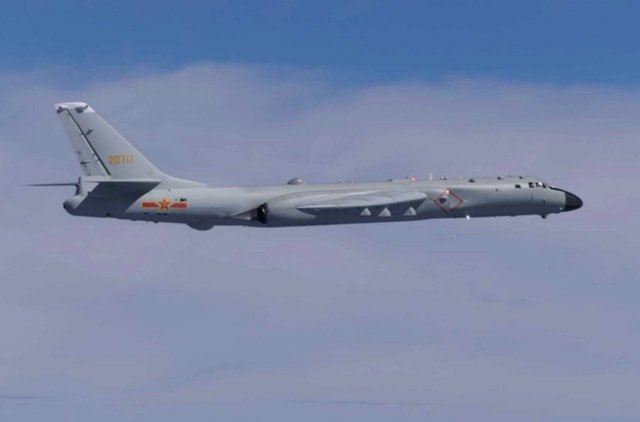
China and Russia have conducted another joint strategic air patrol over the Sea of Japan, East China Sea and western Pacific, prompting Japan and South Korea to scramble fighter jets as regional military activity intensifies. The operation, involving long-range bombers and fighter aircraft from both countries, came as the United States and Japan moved ahead with plans to expand a network of land-based missile systems across the first island chain.
China’s Defense Ministry said the patrol demonstrated the two countries’ “resolve and capability to jointly safeguard regional peace and stability.” The mission marked the 11th joint strategic air patrol between the Chinese and Russian air forces and involved multiple aircraft, including Chinese H-6 bombers, Russian Tu-95 bombers, Russian Tu-142 patrol aircraft, Chinese J-16 fighters and a Russian Su-30 fighter jet.
Japan’s Defense Ministry said it monitored the movements of the aircraft from Saturday morning through the afternoon and scrambled fighter jets in response. According to Japan, some of the bombers flew through the Miyako Strait near Okinawa Prefecture before entering the western Pacific south of Shikoku and later returning along the same route.
South Korea also deployed fighter jets after more than 10 Chinese and Russian military aircraft entered its air defense identification zone. Seoul said the aircraft did not violate South Korean airspace.
The latest patrol follows previous joint bomber activities that have raised concerns in Tokyo. Japanese Defense Minister Shinjiro Koizumi previously described repeated Chinese-Russian bomber flights around Japan as an expansion of military activity and called them a security concern.
The air patrol comes as Washington and Tokyo deepen cooperation on a new missile posture designed to strengthen deterrence against China. The planned deployment of the U.S. Typhon midrange missile system in Japan, combined with Marine Corps anti-ship and air-defense systems, is creating a distributed network of strike and defensive capabilities across the region.
The Typhon system is expected to provide the ability to launch Tomahawk cruise missiles and SM-6 multirole missiles from land-based positions. With a range of about 1,600 kilometers, Tomahawk missiles would provide the alliance with a land-based strike option capable of reaching parts of China’s eastern coastline and military facilities from locations along the first island chain.
The decision to store Typhon equipment in Japan after major exercises represents a shift from previous practice, where such systems were withdrawn after training operations. Analysts say the move reflects a broader transformation in U.S. military strategy following the end of the 1987 Intermediate-Range Nuclear Forces Treaty, which had restricted American ground-launched missile deployments but did not apply to China.
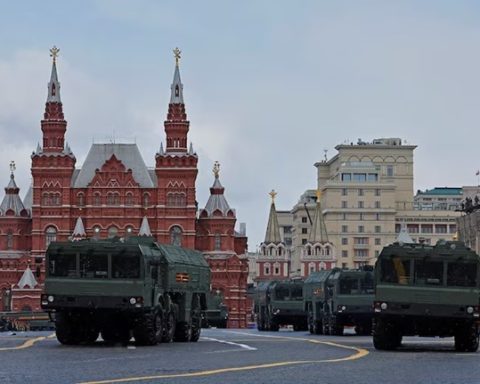
China built a large conventional missile arsenal during the years when the treaty constrained U.S. capabilities. The emerging U.S.-Japan missile network is intended to reduce that advantage by creating more dispersed and mobile forces that are harder to target.
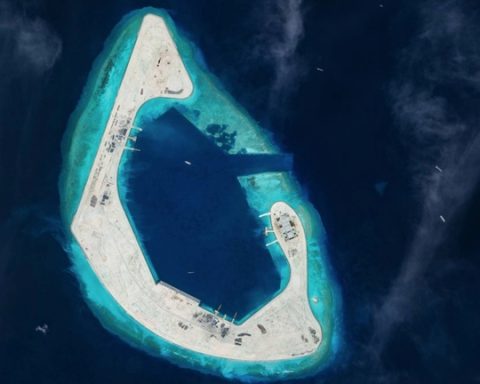
The United States is also expanding similar capabilities in the Philippines, where recent military exercises included the first firing of a ground-launched Tomahawk from Philippine territory and the deployment of Marine Corps anti-ship missile systems near the Luzon Strait.
However, analysts noted that the new missile architecture remains limited compared with China’s existing capabilities. Additional launchers, missile supplies and political agreements would be required for a larger operational effect. Local opposition, particularly in Okinawa, also remains a challenge due to concerns that hosting missile systems could increase the risk of becoming a target during a conflict.
The growing military activity reflects a wider strategic competition across the Indo-Pacific, where China-Russia cooperation and U.S.-allied defense preparations are increasingly shaping the security environment. The deployment of new missile systems and expanded air operations are creating what analysts describe as a changing balance of uncertainty across the region.