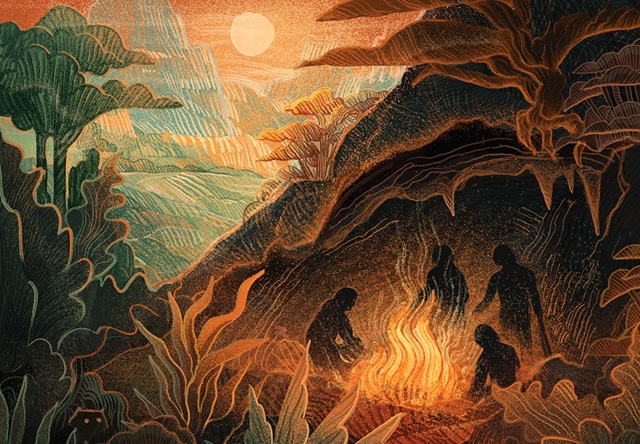
Fifteen years after a tiny finger bone unearthed in Siberia launched one of the most surprising chapters in human evolutionary science, researchers are still unraveling the mystery of the Denisovans — an ancient human lineage that once ranged across Asia and left a lasting mark on modern genomes. First identified not from traditional skeletal features but from DNA extracted from a small fossil in Denisova Cave, these elusive humans have forced scientists to rethink long-held beliefs about our species’ origins and interbreeding with other hominins.
The discovery began in 2008, when a well-preserved bone fragment was recovered in Denisova Cave in southern Siberia. It yielded high-quality DNA that shocked researchers by revealing a new population distinct from both modern humans and Neanderthals. The announcement in 2010 marked the first time a new human lineage had been defined entirely through genetics. The sequencing of the nuclear genome soon followed, revealing that Denisovans were a sister group to Neanderthals and had once been widespread, with traces of their DNA still found in populations across southeast Asia and the Pacific.
That realization sparked a global hunt. If Denisovans had truly spread so widely, where were their bones? Over the past decade and a half, a handful of fossils — a jawbone in Tibet, a skull in China, a molar in Laos, and a mandible dredged off Taiwan — have been linked to this ghost population with varying degrees of certainty. Protein analyses and comparative morphology have helped support these identifications, but debates remain fierce. At the heart of the controversy lies a fundamental problem: few Denisovan fossils preserve both DNA and recognizable anatomical features, making it difficult to assign them a clear place on the human family tree.
The implications are profound. In high-altitude Tibet, a Denisovan gene variant helps modern people survive low oxygen levels. In the Philippines, the Ayta people carry the highest known levels of Denisovan ancestry. Their genetic legacy challenges the view that ancient humans were isolated species and reinforces the idea that our history is one of frequent migration and interbreeding.
Multiple competing species names have emerged to describe these ancient people. Some researchers argue that Denisovans belong to a newly defined species, Homo longi, based on the Harbin skull. Others reject that classification, proposing instead Homo juluensis, tied more closely to Denisova Cave, Baishiya Karst Cave in Tibet, and Penghu in Taiwan. But many experts caution against rushing to conclusions. Without more fossils containing both genetic and morphological data, naming the Denisovans definitively may be premature.
As Nature has reported in recent years, the Denisovan saga underscores the growing tension — and opportunity — at the intersection of ancient DNA research and classical archaeology. It also points to Asia as an unexpected epicenter of human evolution, challenging the long-standing Africa-centric view. Some scientists even suggest that the common ancestor of Neanderthals, Denisovans, and modern humans might have lived not in Africa, but somewhere in Eurasia, with later back-migration into Africa giving rise to Homo sapiens.
The Denisovans remain an enigma. Their skeletal record is fragmentary, and their story is told largely through genes rather than bones. Yet one thing is clear: they were diverse, adaptable, and deeply intertwined with the history of modern humans. As researchers continue to unearth and analyze new fossils, the Denisovans may yet reveal more secrets — and perhaps help answer one of the most fundamental questions in science: where did we come from?