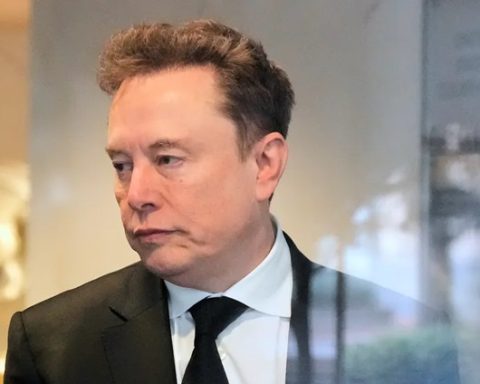
Errol Musk, the father of tech billionaire Elon Musk, has ignited controversy after publicly praising Russian President Vladimir Putin as a “very stable and pleasant man” during a high-profile appearance at a forum in Moscow. The event, titled Forum of the Future 2050, is organized by the Tsargrad Institute—a hardline nationalist group closely aligned with the Kremlin and its war effort in Ukraine.
Musk, 79, shared the stage with a roster of pro-Kremlin figures including Russia’s foreign minister Sergey Lavrov, former British MP George Galloway, and American conspiracy theorist Alex Jones. The event is heavily ideological, featuring sessions like “Russian Space: The Race for Mars” and “The Battle for Hearts and Minds: The Ideology of Sovereign Russia.”
The Tsargrad Institute, which hosted the two-day forum, is financed by Russian oligarch Konstantin Malofeyev, a vocal backer of Moscow’s invasion of Ukraine. The organization is led by Alexander Dugin, a far-right theorist often referred to as “Putin’s philosopher,” whose vision of a neo-imperialist Russia is gaining traction among some U.S. Republican circles.
Lavrov used the platform to accuse Britain of aiding “terrorist attacks” inside Russian territory, claiming the conflict in Ukraine is “a battle between good and evil” that Russia would ultimately win.
In his remarks, Errol Musk criticized Western media for spreading “complete nonsense” about Russia, echoing Kremlin rhetoric that paints the West as manipulative and hostile. He also weighed in on his son’s recent public spat with former U.S. President Donald Trump, calling Elon Musk’s comments a “mistake” due to exhaustion and stress. “Trump will prevail,” he said. “He’s the president, he was elected as the president. So, you know, Elon made a mistake, I think. But he is tired, he is stressed.”
The bizarre spectacle took a further surreal turn when Dmitry Medvedev, former Russian president and now deputy chair of Russia’s security council, jokingly offered to mediate between Trump and Musk. “We are ready to facilitate the conclusion of a peace deal between D and E for a reasonable fee—and to accept Starlink shares as payment,” Medvedev wrote on social media.
Despite Elon Musk’s outspoken support for “free speech absolutism” in the West, he has remained conspicuously silent on Russia’s own severe crackdown on dissent. The Kremlin continues to jail critics, censor independent media, and outlaw foreign organizations.
Just last week, the Russian government escalated its pressure on Western-linked institutions by declaring the British Council an “undesirable” organization. The ruling means that any association with the London-based cultural body—best known for administering English-language tests such as IELTS—could lead to criminal prosecution. Human rights advocates warn that Russian students taking the IELTS exam abroad could be imprisoned for up to five years under the new law.
The incident underscores growing alignment between fringe Western figures and Russia’s nationalist establishment, as well as the Kremlin’s persistent efforts to shape global narratives amid its ongoing war in Ukraine.
As the Musk name becomes increasingly entangled in global politics, critics are questioning whether the elder Musk’s comments will have wider implications—not just for his son’s business dealings, but for the perception of Western tech elites abroad.