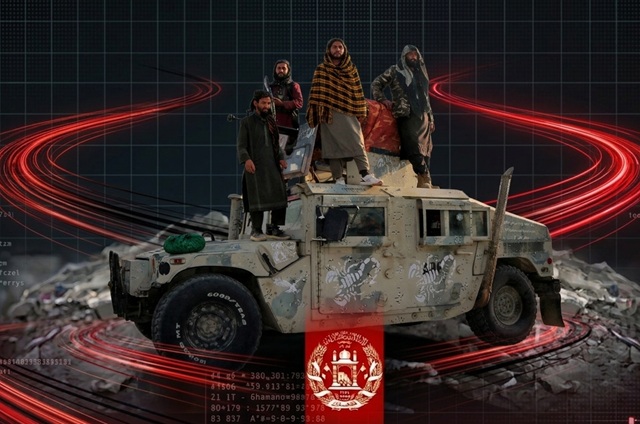
On March 16, 2026, Yaqub Ebrahimi, the former Traffic Commander of Ghor Province was killed in the Kandiwal area of Firuzkuh city, the capital of Ghor Province, while heading towards a mosque.
On January 7, 2026, Taliban executed Yousuf Qomandan, a former Commander loyal to Marshal Abdul Rashid Dostum, shooting him in the head in the Khwaja Du Koh District of Jawzjan Province.
On December 20, 2026, a former officer, Naser, was beheaded by unknown individuals in the Rada-e Wekha area of the Wakhan District of Badakhshan Province. His decapitated body was later recovered from the Yaftal District of the province.
On November 12, 2025, a former soldier, Wahid, was murdered on the Sark-e-Sherkat Road, and his body was later found in the Mal-Bazaar area of Takhar Province.
On October 25, 2025, Kameen Jan, the bodyguard of Dawood Dawood, the former commander of the 303 Pamir Zone in northern Afghanistan, was killed by unidentified gunmen in the Chashma Garmak area of Farkhar District in Takhar Province.
On September 22, 2025, Abdul Rashid, a former National Directorate of Security (NDS) soldier was killed after being tortured by the Taliban in the Nasi District of Badakhshan Province. After the Taliban takeover, he fled to Iran, but was forcibly deported a few months ago.
More than four years after the Taliban promised a “general amnesty,” for former government employees and Security Force (SF) personnel of the earlier regime, the killings still continue. To maintain a public façade, Taliban officials publicly reiterate their ‘commitment’ to the amnesty. For instance, on 26 June, 2025, Taliban Minister of Interior, Sirajuddin Haqqani, reaffirmed Taliban’s commitment to the general amnesty for individuals affiliated with the former government its SFs, stating that no one has permission to “raise a hand against anyone’s rights”. In reality, however, there is no respite from the killings, arbitrary arrests and torture.
According to data collated from the United Nations Assistance Mission in Afghanistan (UNAMA) reports on Human Rights, from August, 2021 to December, 2025, 259 veterans have been killed; 189 tortured and 605 arrested.
Moreover, as reported on July 17, 2025, more than 200 former Afghan soldiers and Police officers have been identified and killed by the Taliban since personal data belonging to Afghans who worked with British forces was leaked. For identifying, tracking, torturing, and eventually killing these individuals mentioned in the data breach, a special Taliban unit, Yarmok 60, was assigned. On July 16, 2025, UK Defence Secretary, John Healey acknowledged the potentially fatal consequences of the 2022 data leak and confirmed that his government could not rule out harm to former Afghan allies.
The killing of the former SF personnel is mostly crude and exemplary in nature, with dead bodies often bearing torture marks. For instance, in December 2023, the Taliban killed a former soldier of the previous government in the Imam Sahib District of Kunduz Province, and put his body on display for several hours. These soldiers and officers are often executed without trials, beheaded, strangled, dismembered, shot, or abducted, tortured and killed.
These killings have occurred across all 34 provinces, with no province entirely free of documented cases. However, according to UNAMA, most of the killings have taken place in Kabul, Kandahar, Balkh, Helmand, Badakhshan, Takhar, Kunduz, Paktika and Takhar provinces.
One of the primary reasons behind these killings is raw revenge. Taliban fighters and local commanders view these officers as “traitors” who killed their fellow fighters and defended what they call an “infidel-backed” republic. Therefore, they want to completely erase such elements to build their pure Islamic Emirate. Consequently, Taliban intelligence units scan old government records, torture confessions, and use community informants to track former SFs by extracting names of their former colleagues. Family members are also abused and threatened by the Taliban to make them reveal the whereabouts of those in hiding. As reported in October 25, 2025, Taliban intelligence has been assassinating such targets and attributing the killings to “unidentified gunmen.”
Beyond revenge, these murders serve to crush any possibility of organized resistance against the Taliban regime. The Taliban fear that these experienced officers and soldiers could join anti-Taliban rebel groups, especially the National Resistance Front (NRF), and spark uprisings from exile. Country Reports on Human Rights Practices for 2024, published by the United States Department of State, observed that former government officials were arrested or detained on accusations of affiliation with NRF. Indeed, many such soldiers and officers did join NRF, as confirmed on May 22, 2024, by Ali Maisam Nazary, Head of Foreign Relations for NRF: “After the fall of the previous government, remnants of the Afghan National Security Forces joined the NRF…”
The ongoing killings and torture have created an atmosphere of persistent tyranny, forcing many former SF members to live in hiding or attempt to flee the country. These deaths are not random crimes but a deliberate strategy to rewrite Afghanistan’s story, leaving behind shattered families and a generation of survivors who once wore uniforms, now stained with the blood of betrayal, disgrace and endless fear.