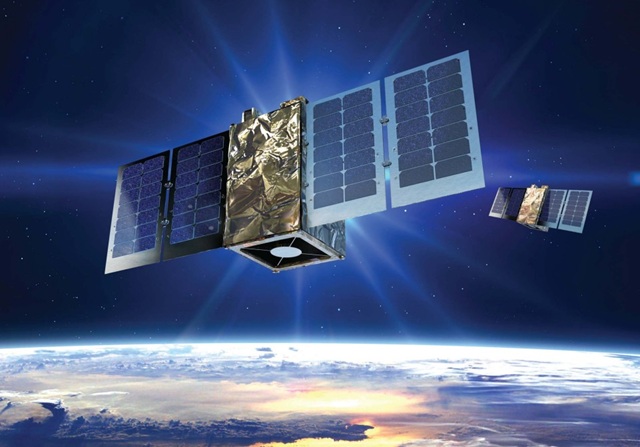
Brussels is exploring the creation of a new military satellite network as concerns grow over the reliability of US intelligence-sharing, particularly after President Trump’s recent pause in support for Ukraine. The system would provide Europe with independent geospatial intelligence, helping detect military threats and coordinate defense operations.
According to Financial Times, EU defence and space commissioner Andrius Kubilius confirmed that the European Commission is assessing an expansion of its satellite capabilities to reduce dependence on US-provided intelligence. The proposed network would operate in low Earth orbit, offering more frequent updates than the Copernicus system, which currently generates images every 24 hours. Commercial technology could allow for military tracking updates every 30 minutes.
The initiative is part of a broader EU defense strategy, which includes IRIS², a European broadband satellite network, and the completion of the Govsatcom program linking national defense systems. Brussels is also offering €150 billion in loans to member states and allowing exemptions from fiscal rules to free up an additional €650 billion for defense spending. The plan may enable EU-wide procurement of weapons, potentially including purchases from Ukraine to support its economy while securing lower-cost armaments.
Kubilius stressed that Europe remains vulnerable in key defense areas such as missile defense, airlift capacity, and air-to-air refueling. He suggested that a collective missile defense system—estimated to cost €500 billion—would be more effective than individual national efforts, though final decisions would rest with EU member states. The move signals a growing push for European strategic autonomy as transatlantic ties face new uncertainties.