European Council President Charles Michel has urged the European Union to adopt a more respectful and less condescending tone in its international partnerships as it seeks to counterbalance the growing influence of Russia and China on the global stage. In an interview with the Financial Times, Michel admitted that the EU often appears self-assured in its worldview, potentially alienating other countries by imposing its values and standards without sufficient sensitivity to their perspectives.
Michel noted a “reflex” within the EU to “lecture” when communicating with developing nations that have strategic, trade, or political agreements with the bloc. He argued that this approach risks undermining the EU’s diplomatic efforts. “We are not always very good in terms of communication, in terms of explanation, in terms of talking with them and showing a certain respect,” he remarked.
Michel highlighted specific instances where EU policies could be seen as overly prescriptive. One example is the language used to enforce fishing regulations on non-EU countries, which, he said, can sound “humiliating.” The EU uses terms like “yellow card” and “red card” to issue warnings or sanctions, which Michel suggested could be rephrased to avoid projecting a sense of dominance.
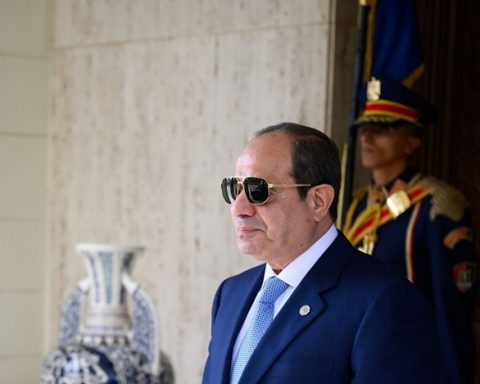
The comments come as leaders from around the world gathered in Kazan, Russia, for the 16th BRICS Summit. Among the attendees were presidents from Egypt, the UAE, and Turkey—countries with close ties to the EU in both economic and military realms. Michel suggested that these leaders’ presence at BRICS was a sign that nations close to the EU are exploring diverse global alliances, which the EU must recognize if it hopes to remain an attractive partner.
Michel’s remarks underscore the need for the EU to adopt “a new approach” to retain its influence among nations seeking broader economic and security options. He emphasized that if the EU doesn’t fill the diplomatic “vacuum,” other powers like Russia and China are prepared to do so.