by Our Diplomatic Affairs Editor
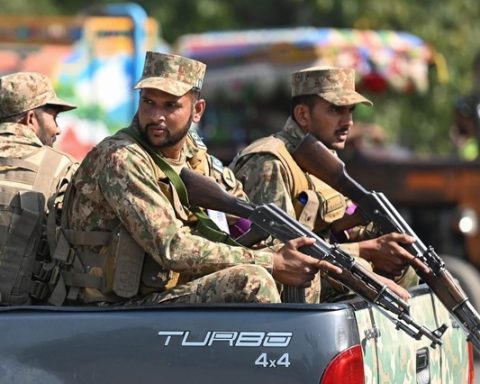
The promotion of Field Marshal Syed Asim Munir Ahmed Shah yesterday, 20 May 2025—the first such elevation since Muhammad Ayub Khan in 1959—revives a fraught chapter in Pakistan’s history. It is not just a rank or title; it is a loaded symbol of the military’s enduring dominance over civilian governance, and a stark reminder of the perils that come when the uniform supersedes democracy.
Ayub Khan’s reign, often sanitized as a period of progress, in truth represents a cautionary tale of authoritarianism disguised as development. He famously proclaimed, “I am not afraid of elections. I am afraid of the people who vote in them.” This revealing admission encapsulates a regime that crushed popular will even as it built dams, roads, and industrial hubs. His ‘Basic Democracies’ initiative, praised in official accounts as grassroots governance, was little more than a façade designed to neuter democratic participation and cement military control over the civilian sphere.
Under Ayub’s watch, Pakistan staged one of the most consequential diplomatic gambits of the 20th century: Henry Kissinger’s secret trip to Beijing via Pakistan in 1971. This move thawed Sino-American relations but came at a terrible cost—allowing Islamabad to cloak the military’s brutal crackdown in East Pakistan (now Bangladesh) behind the curtain of Cold War politics. As one intelligence officer bluntly put it, Pakistan became both a “courier of global diplomacy and the custodian of genocide.” The orchestrated violence in the east was not a failure of Ayub’s successors alone but rooted in the institutional framework he had established—a framework that prioritized military supremacy and allowed impunity to flourish.
The consequences of Ayub’s rule extended far beyond East Pakistan. The 1965 war with India, lauded domestically as a triumph, in reality revealed the hollowness of his military strategy. The subsequent Tashkent Agreement was a diplomatic humiliation that shattered public confidence. Meanwhile, political dissent was ruthlessly suppressed: press freedoms curtailed, opposition leaders jailed, and legal instruments like Section 144 wielded to silence any challenge to military rule.
Yet Ayub’s legacy is a paradox. His tenure saw Pakistan’s economy grow and cities like Karachi and Lahore blossom into modern hubs. His technocratic vision propelled a brief era of prosperity, creating an illusion that economic progress could substitute for political freedom. But beneath the gleaming surface lay festering inequalities, disenfranchisement, and a polity robbed of its voice. Ayub’s Pakistan was a gilded cage—one where the trappings of development masked systemic decay.
Fast forward to 2025, and the figure of Field Marshal Munir enters this fraught narrative. Unlike Ayub, whose self-promotion was unilateral, Munir’s elevation came with civilian endorsement—but in Pakistan, such endorsements often mask the reality that the military remains the true centre of power. His rise follows a sharp military engagement with India, declared a strategic victory but which deepened Pakistan’s economic woes and entrenched the military’s role in politics and governance.
Munir’s public statements stress humility and tribute to the armed forces, echoing familiar rhetoric. But the challenge he faces is profound: how to wield the mantle of power without replicating the fatal flaws of his predecessor? Ayub’s delusions of invincibility, his conflation of centralized control with national progress, and his brutal suppression of dissent offer stark lessons in what not to emulate.
Today’s battles extend beyond conventional warfare. Cyber threats, hybrid conflicts, and information manipulation shape Pakistan’s security landscape. Munir must navigate these complex realities with diplomatic skill and strategic restraint, resisting the temptation to equate military dominance with national salvation.
The institutional landscape remains deeply compromised. Civilian governments are often puppets, the judiciary and media oscillate between compliance and coercion, and political parties function within a system rigged by military patronage. The true struggle in Pakistan is not between political ideologies but between militarized statecraft and genuine constitutional civilianism.
Yet hope flickers in the country’s youth—a digitally connected, politically aware generation yearning for change. For Pakistan to emerge from its self-imposed ‘hellhole,’ it must dismantle the entrenched belief that martial rule is the path to stability. The military must retreat from economic and political arenas and focus on its constitutional role: defense, not dominion.
The legacy of Ayub Khan—a man who believed “people only respect authority when it walks with a firm step”—is a warning. The future demands a new kind of authority: one that walks humbly, respects pluralism, and embraces democratic norms.
Field Marshal Syed Asim Munir Ahmed Shah stands at a crossroads. He can either replicate the mistakes of the past—cementing military overreach and deepening Pakistan’s institutional rot—or he can steer a course toward reform, subordinating military power to civilian supremacy and fostering a truly democratic state.
The lessons of history are clear and uncompromising. For Pakistan to transcend its perennial crises, it must evolve from a garrison state into a republic that genuinely respects the voices of its people. Munir’s record will be defined not by his epaulettes, but by his willingness to confront the ghosts of the past and shape a future where military might serves, rather than subverts, the nation.