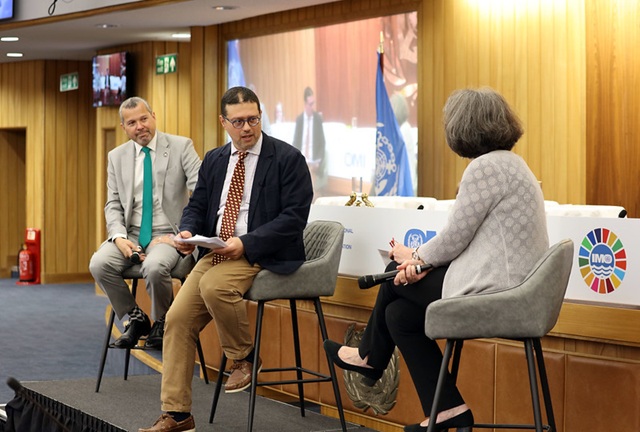
In a joint statement made at the International Maritime Organization (IMO) Headquarters, top global maritime bodies have renewed their commitment to ensuring the fair treatment and legal protection of seafarers. The event brought together senior figures from the IMO, International Labour Organization (ILO), International Chamber of Shipping (ICS), and International Transport Workers’ Federation (ITF), who united in their message: seafarers must not face criminalization or abuse as a consequence of performing their professional duties.
Participants emphasized the importance of upholding human rights and dignity for seafarers, particularly when they are detained in connection with alleged crimes. Recalling the IMO/ILO Guidelines on Fair Treatment of Seafarers, the leaders urged countries and maritime stakeholders to uphold due process and ensure that seafarers are repatriated swiftly and fairly. They warned that the continuing issue of unfair criminalization not only impacts the lives of seafarers but also undermines confidence across the maritime industry.
IMO Secretary-General Arsenio Dominguez stressed the indispensable role seafarers play in global trade, highlighting the need for collective efforts to enhance legal protections and ensure their well-being. “Global trade depends on the people—the seafarers—who are onboard ships day in, day out. The well-being of seafarers must remain a shared global priority,” he said.
Ms. Corinne Vargha, Director of the International Labour Standards Department at the ILO, called for broader ratification and enforcement of the Maritime Labour Convention (MLC). She underscored the necessity of sensitizing prosecutors and judges to the specific nature of seafarers’ work. “ILO remains committed to use all the mechanisms at its disposal to support seafarers faced with these dreadful situations,” she affirmed.
Thomas Kazakos, the newly appointed Secretary General of the ICS, echoed these sentiments and pledged continued collaboration with IMO, ILO, and ITF. He described strengthened industry cooperation as “vital to safeguard our seafarers against unfair criminalisation,” stressing that seafarers should not become scapegoats in maritime legal disputes.
ITF General Secretary Stephen Cotton warned of a “growing crisis” of seafarer criminalization that demands urgent, coordinated action. He emphasized the need to transition from policy to implementation and challenged stakeholders to enforce the existing guidelines. “The power to protect seafarers lies in our joint voice. With the IMO, ILO, ICS and ITF united – we can drive the change that seafarers need and deserve,” Cotton stated.
The event included firsthand accounts from seafarers and stakeholders in the shipping, port, and supply chain sectors. These testimonies highlighted the personal and professional toll that criminalization and abandonment can have on maritime workers.
Participants also discussed the recently adopted IMO/ILO Guidelines on Fair Treatment of Seafarers Detained in Connection with Alleged Crimes, which aim to ensure seafarers are protected from arbitrary detention, coercion, and legal uncertainty. The guidelines, endorsed by the IMO Legal Committee (LEG 112) in April, advocate for fair legal proceedings and continued access to wages, medical care, and repatriation rights during any legal disputes.
Looking ahead, the maritime community called for concrete actions to reinforce legal protections. These include training programs for judicial authorities to handle maritime cases effectively, stronger coordination between governments and industry, and active support from insurers in providing legal and welfare coverage for seafarers.
The discussion also addressed the broader implications of seafarer criminalization on global logistics. Disruptions to crew changes and increased reputational risks to maritime operations were cited as consequences of inadequate legal safeguards. Companies were encouraged to adopt clear protection protocols and invest in awareness and welfare initiatives across their networks.
Ultimately, there was strong consensus that seafarers—recognized as essential workers—must never be left to shoulder the costs of detention, abandonment, or legal uncertainty. As global maritime leaders reiterated, protecting the rights of those at sea is not just a moral obligation but a necessity for the continued stability of international trade.