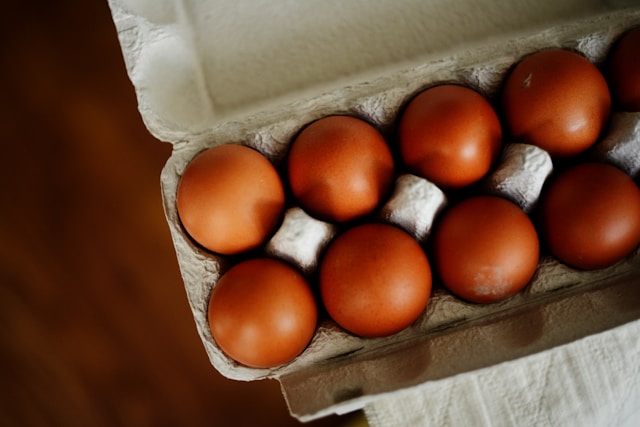
In a twist laden with irony, U.S. President Donald Trump recently touted a drop in egg prices just as he unveiled a new round of protectionist tariffs—moves designed to curb America’s trade deficits. But according to Financial Times reporting, the very decline in egg prices Trump celebrated was made possible by a surge in egg imports from two key trade partners: Turkey and Mexico.
While the president’s rhetoric focused on defending American production, data from the U.S. Census Bureau and the Department of Agriculture (USDA) tells a different story—one of global cooperation rather than isolation.
Earlier this year, America faced a crisis in its breakfast staple due to ongoing outbreaks of highly pathogenic avian influenza (HPAI), which severely limited domestic egg production. At one point, even Waffle House—famous for never closing—had to pause egg-based menu items. Prices spiked dramatically, reaching as high as $8 per dozen in some markets.
To fill the gap, Turkey and Mexico stepped up. In February, egg imports from these countries skyrocketed—up more than 551% in volume compared to January, and over 400% year-on-year, according to USDA data. Turkey accounted for 60% of these imports, Mexico 40%. The value of the imports soared by 328% month-on-month and 450% compared to the year before.
“Overall imports of shell and egg products exploded in February,” the USDA noted in its latest egg-market report. While table egg imports surged, imports of some processed egg products like liquid yolk and whole eggs dropped, due to slowed trade with Canada and Vietnam.
Ironically, even as the U.S. imposed only a modest 10% tariff on Turkish imports (due to its relatively small trade deficit), these imports became crucial in easing domestic egg shortages. Meanwhile, it’s unclear whether Mexico’s egg exports fall entirely under USMCA trade protections, but their contribution was vital nonetheless.
As the Financial Times points out, this situation offers a powerful reminder of why international trade remains critical—not just for sourcing exotic products like diamonds or bananas, but for protecting domestic markets against supply shocks in everyday staples. Disease outbreaks like bird flu can disrupt local production overnight, and without trade, consumers bear the brunt in the form of soaring prices.
There’s also a broader lesson about market dynamics. While avian flu was the headline driver, analysts argue that monopoly power in the egg industry and the structure of factory farming also played a role in the spike. Whatever the causes, Americans were faced with tough breakfast math—and trade helped soften the blow.
In a final twist of irony, Canada—the home of skincare brand The Ordinary, jokingly suggested as a future egg-supplier—actually imported nearly $97 million worth of U.S. eggs in January and February alone, flipping the narrative of who’s saving whom.