India’s economic rise was expected to uplift millions, but for rural women, it has created an era of silent struggle. As men migrate to distant cities in search of work, their wives are left behind to manage farms and households, marking a deep societal shift that economists warn could lead to a “lost decade” for rural women. While official statistics boast of rapid growth, on the ground, women in villages like Parsauni, Bihar, are trapped in agriculture with little hope of economic mobility.
According to government data, nearly half of India’s workforce remains in agriculture, and instead of declining as expected, this number has held steady since the pandemic. Increasingly, farming has become women’s work. In 2024, two-thirds of women in the workforce were employed in agriculture, compared to just one-third of men. “We need a policy so that people can exit agriculture into good jobs,” said Amrita Datta, a professor at the Indian Institute of Technology in Hyderabad. “Unfortunately, we are stuck.”
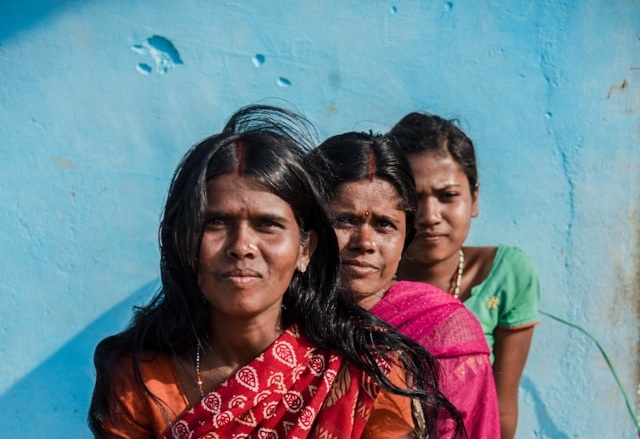
For women like 27-year-old Geetanjali Devi, the reality is stark. Despite holding a history degree, she spends her days tending to crops and managing fertilizers while her husband, like most men in her village, works in construction over 1,000 miles away in Kerala, earning just $8 a day. “We figure out some way to do it without the men,” Geetanjali said. Her sister-in-law, Karishma, echoed the sentiment, recalling the loneliness and struggles of living without her husband. “We have to try not to think about missing them,” she said. “If we don’t let them leave, how will we earn?”
The Washington Post highlights the growing divide between rural couples, as daily phone calls offer little comfort in the face of prolonged separation. Their husbands, crammed into hostel rooms in urban centers, struggle with unstable jobs in the informal sector, unable to secure the salaries needed to bring their families with them. Meanwhile, manufacturing—once seen as a key path to economic growth—has shrunk for the first time in independent India’s history, failing to provide alternatives to agriculture.
India’s economic boom masks a deeper crisis: a lack of stable, well-paying jobs. More than half of India’s working-age population remains outside the formal economy, leaving families dependent on subsistence farming and remittances from low-wage laborers in distant cities. The government’s response has largely been welfare handouts, which economists argue fail to address structural issues. Santosh Mehrotra, an economist, describes the situation as a “revolution of rising expectations” gone wrong. “They want to work, but there are no jobs,” he said.
As the sun sets in Parsauni, families gather around crackling fires, waiting for the rare visits of their husbands and fathers. For now, the women continue to plow fields, raise children, and navigate the economic uncertainty that defines their reality. “We are neither here nor there,” Geetanjali said, summing up the plight of an entire generation of rural women left behind by India’s growth story.