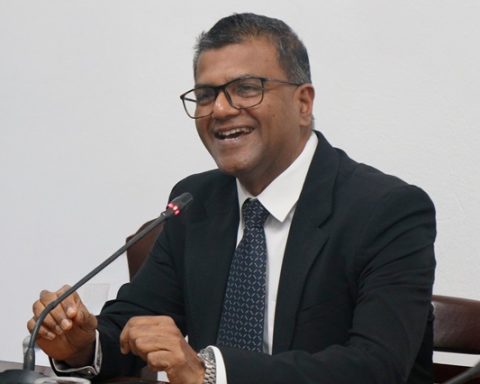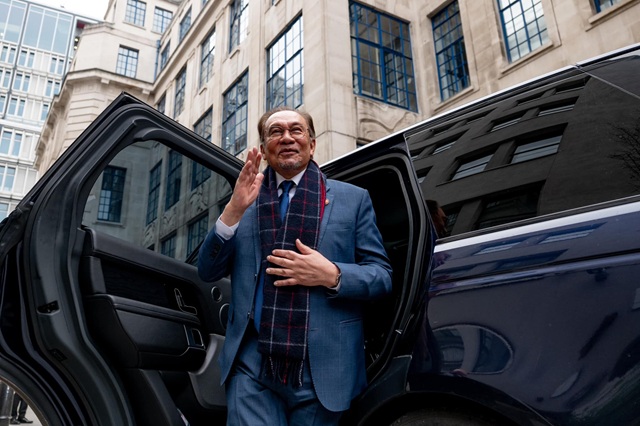
In an interview with the Financial Times, Malaysia’s Prime Minister Anwar Ibrahim sought to reassure the global community about the future of international trade under the incoming Trump administration. While acknowledging the inevitable “initial shock” of new tariffs and protectionist policies, Anwar expressed confidence that the global trading system would stabilize over time, emphasizing that the long-term benefits of trade interdependence would ultimately outweigh short-term disruptions.
“I think you can expect some initial turbulence or uncertainty, but after five or six months, you stay the course,” Anwar said, adding that “reason will probably prevail.” He emphasized that major U.S. companies and conglomerates have significant interests in foreign trade and investments, making it unlikely that prolonged trade barriers would be sustainable.
Anwar’s comments come as Donald Trump prepares to take office for a second term, with many in Asia concerned about potential economic fallout from his proposed high tariffs. Despite these anxieties, Anwar, who has spoken with key leaders such as China’s Xi Jinping and the UAE’s Mohammed bin Zayed, argued that the “US wants to protect its own interests, but in the long term, trade barriers wouldn’t help.” His diplomatic stance reflects a belief that global commerce, while temporarily disrupted, would eventually resume its course.
A Shift in Regional Power Dynamics
Anwar also pointed to the shifting balance of power in Southeast Asia, where the U.S. is seen to have lost ground to China due to diminished engagement. “China in that sense takes a more positive attitude,” he explained, noting the growing presence of Chinese officials in Malaysia and the increasing Chinese investments in infrastructure projects. Anwar suggested that the U.S. had diverted its focus elsewhere, particularly with the ongoing conflict in Ukraine, and had reduced its active involvement in Asia.
“Maybe they are focused on Europe, I don’t know. But certainly, they have reduced placing importance on the region,” he told the FT. This observation underscores Malaysia’s growing ties with China, a trend that has raised concerns among ASEAN (Association of Southeast Asian Nations) partners, particularly regarding the contentious South China Sea disputes. While Malaysia maintains a delicate balance in its relations with both Washington and Beijing, Anwar acknowledged that his government has shifted closer to China in recent years.
Navigating Tensions in the South China Sea
Anwar’s stance on the South China Sea was measured, highlighting Malaysia’s position as a key player in regional security. Although Malaysia has avoided confronting China directly, Anwar underscored his country’s efforts to engage diplomatically while taking a firm stand on its territorial claims. He also pointed to Malaysia’s leadership role in ASEAN, where tensions over China’s assertiveness are felt by many member states.
When asked whether ASEAN under his leadership would adopt a tougher stance toward China, Anwar replied, “Why do we need to be tough? We disagree on many foreign policy issues with the U.S. but we want them to be an important ally. Similarly with China, I don’t think it’s a matter of being tough against a strong, big neighbor.”
Reflections on Western Engagement and Trust Deficits
In the same interview, Anwar lamented the “trust deficit” in Southeast Asia toward Western powers, particularly in light of their stance on issues like the Gaza conflict. He accused Western nations of hypocrisy, having supported Israeli military actions in Gaza while promoting democracy and human rights in Asia. Anwar argued that the West had offered little practical support to the region, focusing mainly on trade and investment without addressing deeper geopolitical concerns.
On domestic issues, Anwar also defended his decision to ease the jail conditions of former Prime Minister Najib Razak, convicted in connection with the 1MDB scandal. Anwar, who endured his own political imprisonment in the past, justified the move by highlighting that while he could not forgive corruption, the focus should be on recovering stolen funds rather than retribution.