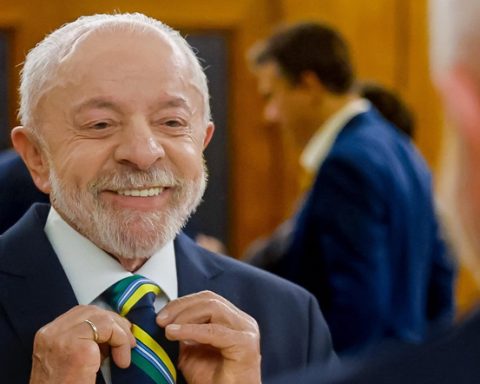

The homecoming of Thuingaleng Muivah, the supremo of the National Socialist Council of Nagaland-Isak Muivah (NSCN-IM), to his native village, Somdal in Manipur’s Ukhrul District, on October 22, 2025, after five decades, marks a moment of deep symbolic and political resonance in the history of the Naga movement. The 93-year-old leader’s return is, however, a reflection on the long course of Naga politics, rather than a turning point in it. It underscores the endurance of the Naga political question within India’s federal and ethnic mosaic. No formal offer of renewed peace talks has accompanied his visit, even as he has reiterated the long held NSCN-IM position that a separate flag and constitution were non-negotiable conditions for any enduring settlement. The significance of this visit, consequently, will remain primarily symbolic, serving as a carefully choreographed reaffirmation of the NSCN-IM’s continued relevance, rather than any concrete policy breakthrough.
Muivah’s inability to visit Manipur for nearly 50 years was rooted in political tension. An earlier attempt in 2010 was blocked by the then Manipur government, fearing unrest over Naga integration demands. NSCN-IM seeks to establish a sovereign “Nagalim,” uniting ‘all’ Naga-inhabited areas across India’s Northeast and parts of Myanmar. The blockade led to violent clashes at Mao Gate on the Nagaland-Manipur border, resulting in the loss of civilian lives and deepened inter-ethnic divides. By contrast, the peaceful reception of his 2025 visit reflects a calmer, more accommodating political atmosphere. This shift, however, signals restraint and maturity among stakeholders, rather than any substantive political shift.
At Somdal, Muivah was welcomed by large gatherings in traditional attire, marking the event as one of community pride and cultural solidarity. Among the Tangkhul Nagas – Manipur’s largest Naga tribe – Muivah remains a respected figure, symbolising their political and historical legacy. Local organisations, village councils and church groups coordinated the event, underscoring social cohesion within Tangkhul society. The occasion’s broader meaning lay in its affirmation of the NSCN-IM’s continuing social base, even though its political momentum has waned amid leadership fatigue and internal divisions.
Muivah’s visit comes as Manipur continues to recover from the ethnic violence between Meitei and Kuki-Zo communities that erupted in May 2023, leaving over 260 people dead, thousands displaced, and a de facto partition between the Meitei dominated Valley and the Kuki-Zo majority Hills. In this fragile setting, the Nagas have remained neutral throughout the Kuki-Meitei conflict – a calculated stance that has enhanced their political leverage. This neutrality has made both rival communities eager to engage Naga actors, each seeking their goodwill or restraint. The more measured and calm reception of Muivah’s visit may, therefore, be partly explained by this new dynamic – where both Meitei and Kuki-Zo groups see strategic value in maintaining cordial ties with the Naga leadership.
Addressing the gathering in Ukhrul, Muivah reiterated the NSCN-IM’s long-held position that the recognition of the Naga national flag and constitution remains “non-negotiable.” He accused the Indian government of deviating from the spirit of the Framework Agreement and reaffirmed that any settlement must uphold both the 2015 Agreement and the Amsterdam Joint Communiqué of 2002. His statement was less an announcement of any new direction than a restatement of the NSCN-IM’s consistent stance. He further warned that attempts to divide the Naga people from within could derail the hard-won unity achieved through decades of negotiation, and urging them not to lose faith in the long political struggle.
Reactions to Muivah’s visit from radical elements have been mixed. Hardline Meitei groups such as the Arambai Tenggol and Meitei Leepun maintained silence, viewing the event as an internal Naga matter. Certain Kuki organisations, including the United Kuki Liberation Front (UKLF), Zomi Re-Unification Organization (ZRO), and Kuki Tribal Union under NSCN-IM (KTU/NSCN), meanwhile, privately voiced concern that renewed Naga prominence could weaken their own demands for Hill autonomy, although they welcomed Muivah’s visit. Yet, the absence of major controversy or unrest indicates that Muivah’s return, while significant in sentiment, has not altered existing political alignments.
Manipur’s six Naga-inhabited districts – Tamenglong, Chandel, Ukhrul, Kamjong, Noney, and Senapati – form a vital part of the Naga geographic and cultural continuum. Muivah’s visit underscores this enduring sense of shared identity, though its implications remain largely symbolic.
Thuingaleng Muivah’s return to Somdal can thus be best understood as an act of remembrance rather than renewal – a moment of reflection on a long and unresolved journey. It reaffirms the persistence of the Naga political question without signalling transformation. In a region still healing from ethnic division, his homecoming resonates as a gesture of continuity and endurance, a reminder that the Naga struggle continues to seek recognition, perhaps no longer through confrontation, but through collective memory and political patience.