From the time of Sir Hugh Willoughby, the Tudor adventurer whose life ended in the frozen wastes of northern Russia, brave men have perished attempting to establish a trading route to China via the Northeast Passage. This week, however, Willoughby’s long-held dream edges closer to reality.
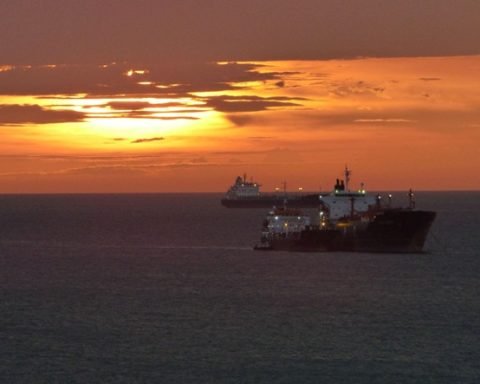
On Wednesday, the Istanbul Bridge, a Chinese-owned container ship, will set sail from Zhoushan port in eastern China for Felixstowe, east Suffolk, inaugurating the first regular commercial sailing route directly from China to Western Europe over the Arctic “top route.” The vessel, carrying 4,900 containers, is expected to complete the non-stop journey in just 18 days—less than half the typical 40-day voyage via the Indian Ocean. China has hailed the development as a “new chapter in the evolution of global shipping.”
The route, however, carries more than commercial significance. It falls squarely within the security spheres of Russia and China, bypassing traditional maritime choke points monitored by the US Navy. Despite global warming making the Arctic navigable in summer months—with icebreaker assistance—it is unlikely to handle more than a few hundred ships annually, far fewer than the 20,000 to 23,000 vessels that typically pass through the Suez Canal each year.
The Istanbul Bridge, a 294-meter Liberian-flagged vessel operated by Haijie (Sea Legend), has spent the past week collecting its cargo along China’s eastern seaboard. After departing Zhoushan, it will head north through the Bering Strait. From Felixstowe, containers will continue to Rotterdam, Hamburg, and finally Gdansk, Poland.
Both Russia and China have explored greater utilization of the northern passage, historically dominated by oil and gas transport from Murmansk to China. The Istanbul Bridge will invert that flow, carrying manufactured goods westward. With the Suez Canal disrupted by conflict in Gaza and Yemen, and rail routes affected by the war in Ukraine, Arctic alternatives are increasingly attractive, albeit limited.
Sir Hugh Willoughby’s 1553 expedition, commissioned under Edward VI, ended in tragedy. Lacking navigational experience, he and his crew became stranded on Russia’s Kola Peninsula, ultimately succumbing to carbon monoxide poisoning. The retrieval mission sank on its return, though his diary survived, informing future attempts at the elusive northern route.
As Times UK reports, centuries after Willoughby’s death, the Arctic passage finally offers a glimpse of what he sought—a high-stakes corridor linking China and Europe, shaped as much by ambition and history as by climate and geopolitics.