OpenAI has introduced a new pay-for-access tool called deep research, which compiles cited, multi-page reports in minutes, potentially revolutionizing how scientists conduct literature reviews. While many researchers are impressed with its ability to synthesize vast amounts of information, others caution that it still has significant limitations.
According to Nature, the tool, launched on February 2, builds on OpenAI’s o3 large language model (LLM) and integrates web search capabilities, making it a step toward AI “agents” capable of complex reasoning. Scientists who have tested it find it useful for drafting literature reviews and identifying gaps in research. Immunologist Derya Unutmaz, granted free access to ChatGPT Pro for medical research, called the tool’s outputs “extremely impressive” and even suggested that AI-written reviews could replace traditional human-authored ones.
However, not all experts are convinced. Kyle Kabasares, a data scientist at the Bay Area Environmental Research Institute, remarked that AI-generated reviews still require substantial refinement. Similarly, Mario Krenn, a researcher at the Max Planck Institute for the Science of Light, pointed out that AI lacks the ability to generate new scientific ideas—a hallmark of true research.
Despite these concerns, OpenAI has tested deep research against rigorous benchmarks, including Humanity’s Last Exam (HLE) and the GAIA benchmark, where it outperformed leading AI models in multi-step reasoning tasks. However, some experts argue that existing benchmarks may not fully capture AI’s potential for generating useful long-form scientific content.
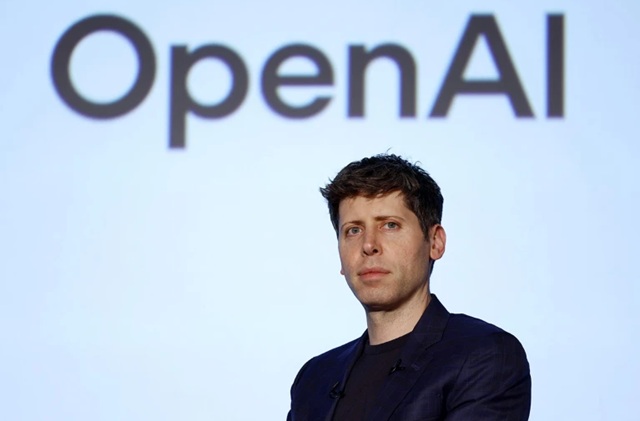
A major limitation of both OpenAI’s and Google’s research tools is their inability to access paywalled journal articles, a challenge that Unutmaz describes as a “major issue” for scientific progress. OpenAI CEO Sam Altman has acknowledged this problem and suggested that solutions may be explored in the future.
As AI-generated research tools evolve, they promise to accelerate the review process and help researchers navigate vast scientific landscapes. However, as Nature highlights, their current limitations mean that human oversight remains crucial, ensuring accuracy, credibility, and true scientific discovery.