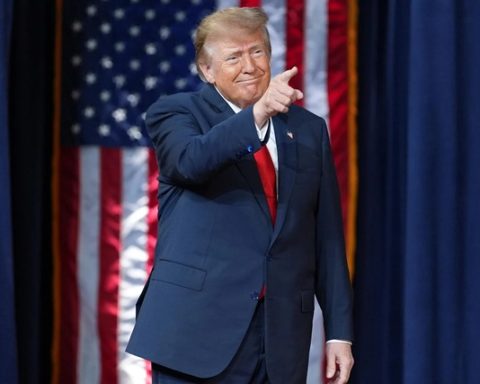
Mr President,
This letter is neither a routine diplomatic overture nor a rhetorical exercise in grievance. It is a carefully considered appeal issued by the editorial team of the Sri Lanka Guardian, compelled by a moral obligation to speak plainly—on behalf of millions whose voices are routinely muted by domestic dysfunction and global indifference.
At this pivotal moment, as your administration prepares to conclude the 90-day pause on reciprocal tariffs and implement a new matrix of trade penalties, we urge you to assess Sri Lanka’s position not only through the abstract metrics of policy but also through the very real suffering of a nation in crisis.
The people of our country are not represented in the sterile communiqués of our politicians or the curated briefings of our diplomats. We do not know what they have conveyed to your administration. But we know what they have failed to do: tell the unvarnished truth.
Sri Lanka is not an economic adversary. It is not an emerging threat in manufacturing competitiveness. It is not even remotely close to posing a challenge to the United States in trade asymmetry. It is a small, distressed economy still reeling from the aftershocks of sovereign bankruptcy—a nation trying, often fumbling, to inch away from the edge of economic annihilation.
When our economy collapsed, it wasn’t simply a fiscal failure. It was a human disaster. Ordinary people queued for kilometres to obtain basic necessities—milk powder, gas, fuel, medicine. Some died in those lines. Others were broken quietly under the weight of indignity. The nation convulsed with spontaneous protest. An entire political dynasty was unseated by public will. And yet, despite the change in faces, the old culture—the insidious machinery of incompetence, greed, and opportunism—remains deeply embedded in our institutions.
Our politicians, for the most part, are skilled not in statesmanship but in survival. They posture in public and capitulate in private. Their core competencies lie not in consensus-building, but in performance—performing outrage, performing reform, performing loyalty, all in service of their own continuity. Meanwhile, our bureaucrats navigate governance like an internal game of chess, each move designed to preserve their positions and privileges rather than to advance the interests of the people they are ostensibly paid to serve.
Worst of all, perhaps, are our diplomats. Many have mastered the fine art of career insulation—lobbying for personal advancement, securing visas and residencies for their families, and treating foreign postings as opportunities for permanent escape rather than national service. They are not emissaries of a wounded people. They are custodians of their own exits.
In this void of credibility, we, as a journalistic institution rooted in civil society, feel compelled to speak plainly. The tariff rate currently hovering over Sri Lankan exports—reported at a staggering 54%—is not merely burdensome. It is existentially threatening. It will obliterate the few functional manufacturing sectors we have left. It will deter fledgling entrepreneurs. It will dismantle jobs in industries already teetering on collapse, particularly in apparel and rubber—sectors disproportionately reliant on access to the U.S. market.
We understand, Mr President, that your administration is not operating in abstraction. You have made clear your doctrine: reciprocal tariffs for non-reciprocal trade practices. This is a coherent principle. It seeks to protect American workers and punish those who exploit asymmetries. But reciprocity, in its most meaningful form, must also account for capability and context. Sri Lanka did not build a mercantilist empire on the back of American generosity. We are not flooding your markets with subsidised excess. Our average citizen cannot afford two meals a day, let alone engage in strategic trade advantage.
You, Sir, have long positioned yourself as a champion of the ordinary American. A man who governs not for the coastal elites but for the truck drivers, the factory workers, the small business owners. We ask you to extend that same compassion, that same clarity, to the ordinary Sri Lankan—the garment factory worker in Katunayake, the tea plucker in Nuwara Eliya, the single mother running a backyard cottage industry in Galle.
We ask you not for charity, but for breathing room.
Let us be clear: this is not a request orchestrated by our political class. They are not the ones who will suffer under the weight of punitive tariffs. They have offshored their wealth, their children, and their loyalties. This is a plea from the ground, from a population exhausted by betrayal, burdened by debt, and desperate for an opportunity—not to prosper wildly, but to survive honourably.
Your courage in reshaping global trade is well documented. You have shown that you are unafraid to renegotiate long-held assumptions, to demand fairness, to reject stale orthodoxy. It is in this spirit that we appeal to you. Exercise your discretion. Let the tariff applied to Sri Lankan exports reflect not a bureaucratic formula, but a humane calculation.
There is power in magnanimity. Strength is not diminished by mercy—it is defined by it. The implementation of the lowest possible tariff bracket for Sri Lanka will not upend American industry. But it could fortify an entire nation’s recovery. It could serve as a symbol that even amidst strategic competition and economic nationalism, there remains space for calibrated justice.
We have suffered. We have endured pain no statistic can capture. And still, we rise—imperfectly, haltingly, but earnestly. Allow us the dignity of that effort. Allow us the market access that could prevent relapse into failed-state status. Let this be your signal that reciprocity includes the wisdom to distinguish between those gaming the system and those simply trying to remain within it.
The history books will recount this era not only in numbers and treaties, but in decisions that cut against the grain of indifference. This is one such decision.
With restrained hope and measured urgency,
The Editorial Team | Sri Lanka Guardian | 5 July 2025