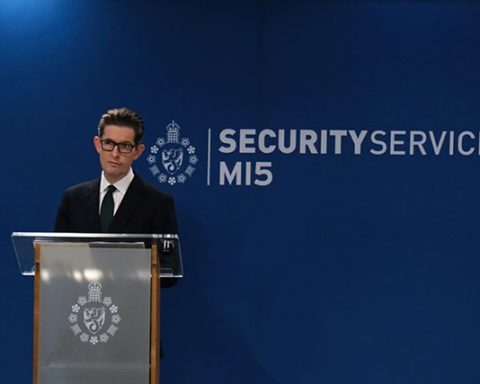
The growing alarm over Chinese intelligence activity in Britain — intensified by recent reports in The Times UK about agents targeting MPs on LinkedIn — mirrors the lived reality of one political asylum seeker in London, who says suspected operatives of the Chinese Communist Party have followed him, questioned him and monitored his movements across the UK ever since he began speaking publicly for a democratic China.
He arrived in Britain in 2021, hopeful that the UK would be a safe place to rebuild his future and continue his advocacy. Instead, he found himself living in a state of vigilance, convinced that CCP agents were embedded everywhere — in universities, local councils, businesses and even healthcare networks. Their purpose, he says, is not only to track the activities of pro-democracy dissidents abroad but also to quietly feed information back to Beijing. For him, the consequences have been personal. After gaining political asylum in 2023 and beginning his legal training in London, he became increasingly vocal about human rights abuses in China, and with that visibility came a series of chilling encounters.
One of the most unnerving moments occurred earlier this year after he delivered a talk in parliament on transnational oppression. Later that evening, while at the Grafton Arms in Westminster with journalists, he noticed a young Chinese man wearing a baseball cap standing at the bar, staring directly at them. Only then did he realise that the man and his companion had been sitting in a concealed booth, positioned perfectly to observe the group while remaining out of sight of the pub’s CCTV. He and his friends felt instantly unsettled. Within hours he had filed a report with the police, and another member of the group later discovered they were being followed on the journey home by an individual they believed to be Chinese. Days later he found himself at Brixton police station giving a statement. By mid-November, he was meeting national security officers at Charing Cross, including a member of the Metropolitan Police’s Counter Terrorism Command and, he believes, an MI5 official.
According to the officers, it was entirely possible the individuals he had encountered were covert CCP operatives. The placement away from CCTV, the timing of their arrival, and their behaviour all raised suspicions. Yet the officials also admitted they had historically not focused heavily on the suppression of Chinese dissidents in the UK, though that was now beginning to change. They questioned him extensively about harassment by Chinese authorities, about how dissidents are monitored, about the tactics used to pressure them into silence and why so few cases had been brought forward. His answer was simple: fear. Chinese nationals in Britain worry that any complaint — even a private comment — might be reported back to Beijing by fellow students, co-workers or community members who are quietly aligned with the CCP.
His own experiences on campus reinforced this fear. While studying law at York University, he encountered a fellow Chinese student who interrogated him with invasive questions about his hometown, his family’s location, the school he attended and the exact date he left China — yet refused to share any information in return. Other Chinese Christians in the student group reported similar grilling. He suspected the individual was collecting information, and reported it to the university, but heard nothing back. In that moment, he realised British campuses — often assumed to be safe spaces — could be dangerous for dissidents.
He stresses that his case is far from isolated. Several Chinese students who attended a masked pro-democracy protest outside the London embassy in 2022 were arrested when they returned to China, questioned in detail about their participation. With their identities hidden during the demonstration, he believes someone infiltrating the group must have reported them. He also points to recent findings, highlighted by The Times UK, about Sheffield Hallam University staff being threatened by Chinese security officials over their Xinjiang research — work the university later abandoned under pressure. To him, it is a disturbing pattern: the reach of the Chinese state extending deep into Britain, unchecked.
The dissident explains that he never intended this life. His plan had been simple — study law in the UK and return to China to work at a firm. Instead, as more of his friends were arrested or disappeared for political activism, he realised he could never return. The sacrifice weighs heavily. He does not know if he will ever again see his parents or grandparents. He fears they may be targeted for his actions. Yet he insists he must continue. Remaining silent, he says, is exactly what the CCP wants.
What he hopes is that the British public recognises the scale of the threat — a threat described increasingly by security experts and journalists, including those at The Times UK. As long as agents remain embedded in institutions across the country, he warns, dissidents will live in fear and the wider public will remain unaware of the invisible pressure undermining free expression. For him, speaking out is the only defence left against a state that has already taken so much.