In 2024, Sri Lanka saw a significant rise in religious persecution, particularly targeting Muslims, as Hindu and Buddhist nationalist groups, along with government actions, escalated threats, intimidation, and coercion against religious minorities. How did this unfolding situation impact the country’s religious landscape, and what role did the state play in facilitating such hostility? According to the latest report from the U.S. Commission on International Religious Freedom (USCIRF), Sri Lanka’s religious freedom environment continued to deteriorate, particularly affecting Muslims and Christians. “In Sri Lanka, Hindu and Buddhist nationalist groups targeted Muslims throughout the year with threats, intimidation, and coercion,” report accused.
Why is Sri Lanka on the Special Watch List?
The USCIRF placed Sri Lanka on its Special Watch List for 2024 due to persistent and severe violations of religious freedom. The Sri Lankan government, together with local authorities, was found to be complicit in discriminatory actions targeting religious minorities. These actions were often justified under the pretext of protecting Buddhist cultural heritage, but the consequences were felt by minority communities, who faced ongoing land expropriations, denial of access to places of worship, and increased surveillance and harassment.
How did the Sri Lankan government contribute to the persecution?
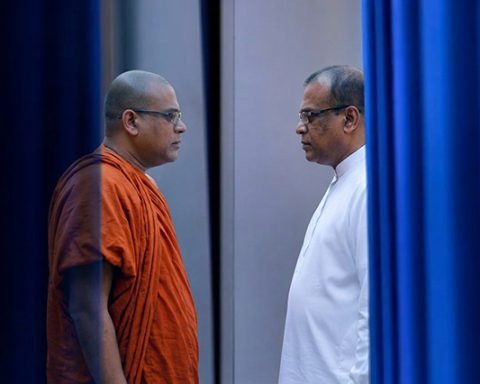
Throughout the year, the Sri Lankan government, in collaboration with the Ministry of Buddhasasana, Religious, and Cultural Affairs (BRCA), Buddhist monks, and the military, continued to expropriate land from religious minorities in the northern and eastern regions, claiming that these actions were meant to protect Buddhist cultural sites. In one notable incident in February, the government declared 11 Buddhist temples as sacred sites, increasing the total number to 142. This action further entrenched Buddhist dominance in areas traditionally home to Tamil Hindu and Muslim communities. In March, the military escorted Buddhist monks to a Hindu temple in Vavuniya, declaring it an ancient Buddhist site, and detained Tamil Hindus for 10 days after they participated in a religious festival at the site. Protests erupted following their detention, indicating widespread discontent over government actions.
Why are religious minorities facing challenges in practicing their faith?
Religious minorities, particularly Muslims and Hindus, continued to struggle with the operation and registration of their places of worship. After a five-year suspension, the government’s Department of Muslim Religious and Cultural Affairs announced in August that new mosque registrations would be permitted. However, the Ministry of BRCA introduced new regulations mandating the registration of all religious institutions, regardless of belief, and empowered authorities to raid any “unregistered” places of worship. The vague justification behind these actions, including claims that these unregistered sites were involved in religious conversions, led to an increase in harassment, surveillance, and even raids targeting religious centers across the country.
What role did nationalistic groups play in these incidents?
Nationalist groups, including Hindu organizations like Siva Senai and Buddhist groups such as Rudra Sena, continued to stoke hostility and promote anti-Muslim and anti-Christian rhetoric. These groups organized protests, spreading derogatory messages about religious minorities, which further fueled a culture of intimidation and fear. The head of Sri Lanka’s Sectoral Oversight Committee on National Security, in May, made alarming comments about Muslims, stating that “brainwashed Muslims” needed to be forcibly rehabilitated, which only added to the stigmatization of the Muslim community. Online hate speech and inflammatory rhetoric targeting religious minorities also proliferated across various platforms, including social media, where the government appeared either unwilling or unable to address such discriminatory behavior.
What laws and policies exacerbated the situation?
Several pieces of legislation passed in 2024 worsened the religious freedom environment in Sri Lanka. The controversial Online Safety Bill, passed in January, criminalized online statements deemed to “outrage religious feelings.” This bill’s broad language gave the government significant power to censor religious expression and restrict free speech. Despite a few amendments in August, the law continued to threaten religious expression and peaceful dialogue. Additionally, the proposed amendments to the Anti-Terrorism Act (ATA), which replaced the 1979 Prevention of Terrorism Act (PTA), gave the state expanded authority to search, arrest, and detain individuals under a broad definition of terrorism. Such provisions were likely to disproportionately impact religious minorities, especially those who were peacefully practicing their faith or engaging in protests.
Why did the international community express concern over these developments?
The United States, along with other international stakeholders, raised concerns about the deterioration of religious freedom in Sri Lanka. The USCIRF recommended that Sri Lanka be placed on the Special Watch List due to its increasing religious intolerance. Despite these concerns, U.S. diplomatic engagements with Sri Lanka, such as those involving Assistant Secretary of State for South and Central Asian Affairs Donald Lu and the Fifth Session of the U.S.-Sri Lanka Partnership Dialogue, focused primarily on economic cooperation and governance. Notably, discussions on religious freedom and the protection of minority rights appeared to be sidelined, with no substantive action taken by the United States to address the ongoing persecution of religious minorities in Sri Lanka.
What were the specific challenges faced by Muslim and Christian communities?
For Muslims, 2024 marked the fifth anniversary of the 2019 Easter Sunday attacks, which targeted churches and hotels in Colombo, Negombo, and Batticaloa. While authorities stepped up security at religious sites during the anniversary period, Muslims continued to face harassment and discrimination. In June, 70 Muslim women from Zahira College had their exam results withheld because they wore religious head coverings, with authorities baselessly claiming that the headscarves could conceal Bluetooth earpieces. This incident highlighted the continued discrimination against Muslims in various sectors of society. Christians, on the other hand, faced increasing harassment and hate speech, especially from nationalist groups and certain government officials who openly expressed disdain for religious minorities.
What measures did the government take regarding Muslim marriage laws?
Another area of concern for religious minorities was the government’s stance on the Muslim Marriage and Divorce Act (MMDA), which governs family matters for Muslims. Although critics argued that the MMDA did not provide equal protection for Muslim women, the government decided not to amend the law. The decision underscored the government’s reluctance to address gender inequality and religious rights within the Muslim community.
How did Sri Lanka’s approach to religious freedom affect its international relations?
Despite growing international concern, Sri Lanka’s response to religious freedom violations remained largely unchanged in 2024. The government’s continued focus on Buddhism as the dominant religion in the country and its actions against religious minorities drew widespread criticism, especially from human rights organizations. The U.S. government, while fostering strong bilateral ties through investments and dialogues, was urged to address religious freedom issues more directly in its discussions with Sri Lanka. The USCIRF’s recommendation to place Sri Lanka on the Special Watch List highlights the ongoing need for international pressure to safeguard the rights of religious minorities.