Editorial
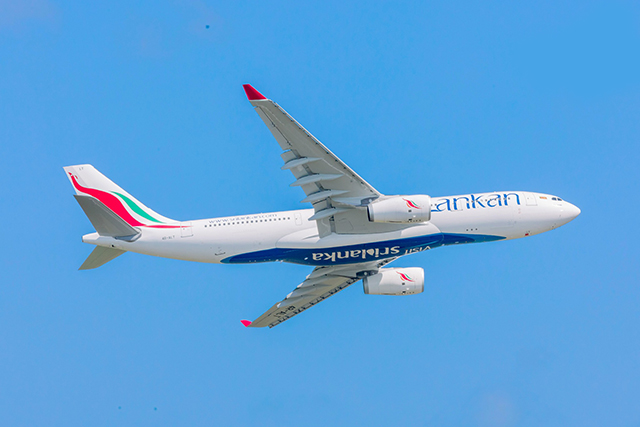
On a sultry afternoon, under the cracked sky of a country disfigured by generations of theft and mediocrity, a decades-old Airbus A330-200 took a slow, theatrical descent into Katunayake. It flew lower over Colombo like a ghost of ambitions long dead, its overhauled engines growling through the suffocating air, while crowds gathered below in religious fervour — not to protest, not to question, but to celebrate. Yes, celebrate. Blessings were uttered, oil lamps lit, conch shells blown, cameras flashed, and ministers smirked like messiahs.
This, we are told, is a national achievement. A refurbished aircraft, leased at extortionate cost, arriving in a nation that can barely afford paracetamol in government hospitals. We have stopped pretending we are a developing country. We are now a tragicomedy — a satire written by thieves, directed by clowns, and performed by an audience too traumatised to laugh.
What sort of nation throws a religious ceremony for a second-hand plane? What deranged psyche applauds its arrival while paying three times its actual worth because of the corruption of previous governments? And let’s be clear — this is not some abstract budgetary oversight. This is blood-sucking fraud, perpetuated across regimes by suits who wore patriotism like a mask while robbing the public blind.
Minister Bimal Rathnayake — himself no stranger to the theatre of politics — reluctantly admitted in Parliament that the country is bleeding USD 800,000 every single month as a penalty for a fraudulent Airbus deal cooked up during the Rajapaksa era and carelessly mishandled during Ranil Wickremesinghe’s tenure. The contract was poisoned from the start — a grotesque mixture of kickbacks, nepotism, and cover-ups — and instead of dismantling the fraud, the next administration simply reshuffled it. Now, to cap it off, we’re leasing yet another aircraft at USD 275,000 per month while simultaneously paying for the one that never arrived.
If Dante were to write The Divine Comedy today, he’d carve a fresh circle in hell for Sri Lankan politicians, where demons wear ministerial suits and count Airbus payments in endless loops.
This is the audacity of post-war Sri Lanka. We don’t punish corruption. We institutionalise it, celebrate it, and bless it with pirith.
There are no consequences. The architects of these frauds are not only free but revered — they run for office, build monuments, give speeches, and wag fingers on television. Meanwhile, the average citizen — robbed of fuel, food, and future — is told to tighten belts and “support the nation.” What nation? The one that auctions its morality to the highest bidder? The one where cronyism is called policy and theft is baptised as economic strategy?
Let us be clear: this is not about a plane. This is about a population so thoroughly broken that we now mistake humiliation for honour. We’ve descended into the realm of ritualised failure — where every scandal is repackaged as progress, where every theft is a “legacy issue,” and where every act of national degradation is masked with cheap cultural symbolism.
And make no mistake: this farce in the skies was not mere incompetence. It was theatre — meticulously planned, obscenely funded, and cynically marketed to a people whose memories have been eroded by propaganda and daily survival. There was choreography in the descent. There were cameras positioned to catch the wheels touching the tarmac as though history had landed.
But history didn’t land. Duplicity did.
The same politicians who bankrupted our economy, stashed public wealth offshore, lied through teeth and ballot boxes — they are now the ones blessing this arrival as a turning point. Turning point toward what? Bankruptcy 2.0?
Our airline, once a modest symbol of national pride, is now a flying debt trap, loaded with bad leases, inflated procurement contracts, and staffed by political appointees whose only qualification is servitude to power. SriLankan Airlines is no longer an airline. It is a monument to systematic plunder.
This month, Sri Lanka’s trade deficit ballooned to USD 717.5 million. Imports rose by 17.5%. Export growth is limping. But amidst this economic hemorrhage, what did we decide to do? Import more cars. Import another aircraft. Hold another thamāśa.
We are an economy in reverse. A nation sprinting backward. Every other country in the region is talking about AI, digitisation, climate resilience. We are lighting incense sticks for a plane that’s been flying since the early 2000s.
This is not development. It is devolution. This is not pride. It is performative delusion.
How long can we go on like this?
Do nations rot slowly? Or do they collapse all at once?
In Sri Lanka, we are experiencing both: a slow, calculated rot at the hands of an unpunished elite and a sudden collapse witnessed by a public too disoriented to scream. We have no functioning mechanism for accountability. The legal system has atrophied. The Auditor General’s reports are read like bedtime stories, never actioned. Commissions are formed only to forget. Investigations launched only to distract. No prosecutions, no convictions. Only noise, followed by silence, followed by repetition.
We’ve entered the age of aesthetic governance — where symbolism has replaced substance, and distraction is the preferred political currency.
So here’s the question that every citizen must now face without flinching:
Are we truly this gullible?
Or have we simply given up?
A plane arrives. We cheer. A billion rupees disappear. We shrug. A scandal erupts. We scroll. A minister lies. We yawn. This is the cycle now. The rituals of a failed republic.
And so, to the politicians behind this aerial charade: you may have fooled the cameras, but history won’t be kind. And to the people of this nation — we must now decide whether we continue to dance beneath the debris of our own undoing or finally, irrevocably, say: enough.
Because if this is what we’ve become — a nation that blesses stolen planes while paying ransom for others never received — then perhaps the plane should not have landed. Perhaps it should have kept flying — far, far away from this spectacle of ruin.