by Our Diplomatic Affairs Editor
In 2020, Pakistan’s Minister for Parliamentary Affairs, Ali Muhammad Khan, suggested that Donald Trump be awarded the Nobel Peace Prize for brokering the Israel–UAE deal. At the time, many dismissed it as diplomatic theatre, an attempt to flatter a superpower president known for his erratic whims. But now, in 2025, Pakistan has taken this absurdity a step further—formally nominating Trump for his alleged role in “easing” South Asian tensions. This is not simply a tribute; it is theatre of the absurd masking a far more calculated manoeuvre: the quiet dismantling of SAARC and the emergence of a new bloc that doesn’t include India.
SAARC—the South Asian Association for Regional Cooperation—has been dead in all but name for nearly a decade. Once hailed as a platform for economic and cultural unity, it is now a museum piece, crippled by India’s cold disdain and Pakistan’s constant provocation. Its last full summit was in 2014. In the decade since, the organisation has rotted under the weight of bilateral mistrust and India’s implicit belief that it can dictate the terms of regional engagement. The problem is not just India–Pakistan tensions. It is India’s unspoken assumption that regional harmony is possible only on its terms.
And that assumption is cracking.
Behind closed doors, consultations among Bangladesh, Nepal, Sri Lanka, and even Bhutan are quietly acknowledging what was long whispered in diplomatic corridors: India has acted less like a benevolent big brother and more like a regional landlord. For many of the smaller South Asian nations, India’s size is no longer a comfort—it’s a looming presence that stifles genuine collaboration. The long-touted “shared destiny” of South Asia now feels like an illusion scripted in New Delhi, where India imagines itself the rightful owner of regional loyalty.
This illusion is being punctured—and China, with Pakistan in tow, is handing out the needles.
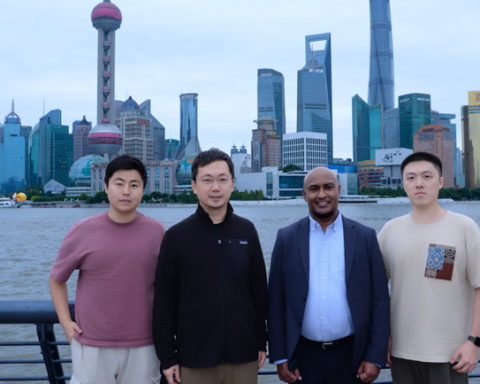
A recent meeting in Kunming, China, reportedly involving Pakistan, Bangladesh, and other SAARC members, marks the beginning of a seismic shift. The stated goal is to build a nimble, apolitical alternative to the paralysed SAARC. But the real intent is to create a bloc that frees smaller nations from the gravitational arrogance of Indian foreign policy. It is not a new SAARC—it is a rebuke to the old one.
What makes this initiative more potent is that it’s not entirely driven by coercion or desperation. It is rooted in real resentment. Many smaller South Asian countries have long felt India speaks of regionalism while practicing exceptionalism. When India slaps export bans on essential goods to Nepal, blocks supplies to Bhutan under the guise of strategic concerns, or patronises Bangladesh on internal security, it sends a clear message: New Delhi views the region not as a collective but as a hierarchy—with itself permanently enthroned at the top.
In this hierarchy, dissent is betrayal, and independence is inconvenience.
And yet, India remains perplexed when these very nations turn to China for investment, infrastructure, and even security dialogue. But what is China offering that India has not? The answer is simple: respect through transactions. Beijing’s model is blunt—money for loyalty, ports for access, roads for partnership. But at least it does not come cloaked in the hypocrisy of “shared values” while constantly undermining sovereign agency. Smaller states increasingly view China not with naïve trust but with strategic clarity: better to deal with a transactional hegemon than a sentimental bully.
Pakistan, of course, has its own motivations. With SAARC irrelevant, it gains nothing from continuing to play in India’s shadow. Its all-weather friendship with China provides both geopolitical backing and economic lifelines. The China-Pakistan Economic Corridor has turned Gwadar into a quasi-Chinese outpost. But Pakistan is now pushing something bigger: a regional bloc where China is the patron, and India is the pariah. For Islamabad, it’s not just about SAARC’s failure—it’s about rewriting the regional script.
This is not without danger. A bloc shaped by China and legitimised by Pakistan could very well become a mechanism for Beijing’s long game: economic dominance wrapped in diplomatic silk. The smaller countries joining this initiative must ask themselves—are they escaping one master only to serve another? But even as this question looms, it does not absolve India of the central cause behind this drift.
New Delhi must come to terms with a bitter truth: regional trust cannot be built through dominance. You cannot lead if your neighbours feel coerced. You cannot preach unity while weaponising geography, trade, and history against smaller partners. And you certainly cannot expect loyalty from countries whose dignity you continuously undermine.
India has spent the last decade talking about being a “Vishwa Guru”—a global teacher. Yet it has failed the first test of leadership: earning the confidence of its closest neighbours. Instead, it has relied on its market size as leverage, its military strength as insurance, and its historical grievances as justification. But none of these guarantee influence. In fact, they breed quiet rebellion.
As Sri Lanka drowns in debt, Nepal navigates political whirlpools, and Bangladesh outgrows donor dependency, these countries want cooperation based on equality, not proximity. They do not want to be told that India is their natural ally—they want to be shown. And when India fails to deliver, they do what any rational actor would do in a multi-polar world: hedge.
China sees this vacuum not as a challenge but as an opportunity. It steps in with cheques and concrete. It whispers promises of multilateralism while building bilateral dependencies. But it does not insult its partners with lectures. This is the model India refuses to understand, and this refusal may cost it the very region it claims to lead.
The Kunming gathering was more than a meeting—it was a mirror. And in that mirror, India must see what it has become to its neighbours: not the pivot, but the problem.
This is not to say that China or Pakistan offer a noble alternative. But perhaps nobility is no longer the currency of regionalism. Perhaps it never was. What the new alignment offers is not virtue—but leverage. And in a world exhausted by stalled multilateralism and unkept promises, leverage is the new diplomacy.
If India continues to mistake fear for respect and control for cooperation, then it must be ready to watch its regional dreams dissolve—replaced by a bloc where it no longer has a seat, and perhaps not even a say.
Does this mean the age of illusions is truly over? Has the era of recalibration begun? If so, should we be prepared for a long, uncertain road ahead?