The United States would defeat China in a military conflict over Taiwan if war broke out today, according to the top US commander in the Indo-Pacific. However, he warned that America’s strategic edge is under growing threat as Beijing rapidly expands its military capabilities, reports the Financial Times.
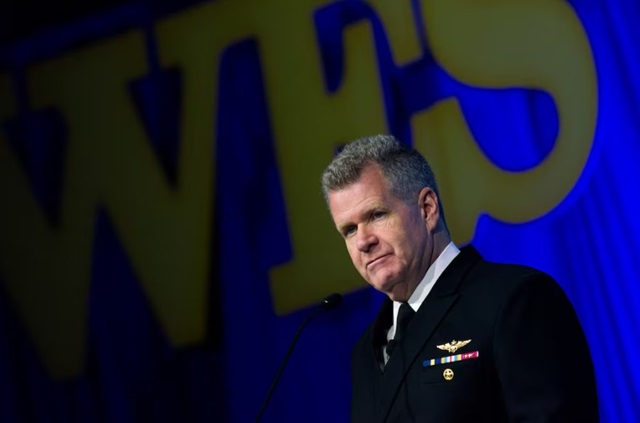
Speaking at the McCain Institute’s annual Sedona Forum in Arizona on Friday, Admiral Samuel Paparo said, “The United States will prevail in the conflict as it stands now, with the force that we have right now.” But he cautioned that the current advantage may not last. “Our trajectory on … really every force element that is salient is a bad trajectory.”
Paparo, who has led the Indo-Pacific Command for the past year, emphasized that US strengths remain in areas like undersea warfare, space, and counter-space capabilities. However, he noted China’s accelerated military production, with the People’s Liberation Army (PLA) outpacing the US in building submarines and warships — producing two submarines annually for every 1.4 made in the US, and six combatant ships for every 1.8 American vessels.
These concerns come amid intensifying PLA activity around Taiwan. Since taking command, Paparo has observed a dramatic increase in Chinese military exercises, which he described as simulating the full spectrum of operations against Taiwan — from seizing small islands to a maritime blockade or a full-scale invasion.
“You hear the metaphor ‘boiling the frog’… It’s a rapid boil,” Paparo said, echoing the warning of his predecessor, Admiral John Aquilino, who described China’s strategy as gradually raising military pressure to normalize its presence and reduce the West’s sense of urgency.
Paparo added that the PLA is extending its reach deeper into the Pacific. In February, Chinese warships conducted live-fire drills off the coast of southeast Australia before circumnavigating the continent for the first time. “They’re stretching their legs… They are becoming a global force, bit by bit,” he said.
Reflecting on the advice he received upon assuming command, Paparo revealed that Aquilino warned him he might be the one to face a war with China over Taiwan: “He said … this could happen on your watch.”
According to US intelligence, Chinese President Xi Jinping has instructed the PLA to be prepared for an invasion of Taiwan by 2027, although it is understood as a readiness goal rather than an intent to act in that specific year. “This is not a go-by date. It’s a be-ready-by date,” Paparo clarified.
He noted that the PLA had already met some 2027 targets, particularly in its rocket forces and satellite constellations supporting intelligence, surveillance, and reconnaissance capabilities.
Ultimately, Paparo said, whether China chooses to act will depend on several variables: its confidence in its military readiness, its assumptions about Taiwan’s ability to resist, and “the capability, will and probability of allied assistance to Taiwan.”
When asked whether the American public would support a military response, Paparo cited history: “People are always saying America will never get in a fight. But it’s not the track record.”