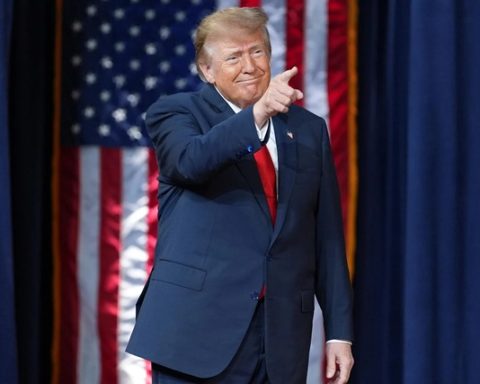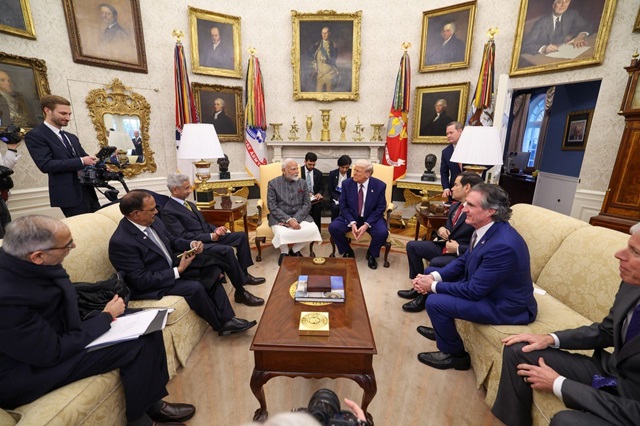
US President Donald Trump has forced India’s hand on trade, pressuring Prime Minister Narendra Modi to lower tariffs that have long shielded the country’s economy. In response, India is now advancing trade negotiations with the US, UK, and EU, signalling a potential shift in its traditionally protectionist policies.
India’s Commerce Minister Piyush Goyal recently met US officials in Washington to discuss a bilateral trade deal aimed at avoiding Trump’s threat of reciprocal tariffs. While Trump claims India has agreed to cut tariffs “way down,” US Commerce Secretary Howard Lutnick has indicated that a deal hinges on India increasing defence purchases and further tariff reductions.
As Financial Times reports, this pressure has prompted India to accelerate its free trade talks with the UK and pledge to finalise an agreement with the EU within the year. Analysts suggest Modi’s government recognises the need to reshape India’s trade relations with the West in light of shifting global dynamics. However, New Delhi remains cautious, particularly in sectors like agriculture, where high tariffs protect millions of Indian farmers.
Despite signing FTAs with Australia, the UAE, and EFTA in recent years, Modi has also imposed new tariffs to support his “self-reliant India” initiative. While India has made symbolic tariff cuts on bourbon whiskey, luxury cars, and Harley-Davidson motorcycles—addressing Trump’s long-standing complaints—more substantial trade liberalisation remains politically sensitive. The US-India trade deficit stands at $45 billion, and Indian tariffs on agricultural goods remain significantly higher than America’s, creating friction in negotiations.
Agriculture is a particular flashpoint. India’s dairy industry, shielded by tariffs of 30-60%, previously led the country to withdraw from the Regional Comprehensive Economic Partnership (RCEP) in 2020. Modi’s government has faced fierce resistance from the farming sector, with past protests forcing rare policy reversals. Analysts warn that while India may agree to zero tariffs on industrial goods, agricultural trade liberalisation will be a delicate issue.
Beyond tariffs, the US is expected to push India on government procurement access and data regulations—controversial topics for a nation keen to maintain economic sovereignty. With Washington pressing for a swift deal, India faces tough choices as it navigates the complexities of trade liberalisation and domestic political realities.