Taiwan’s semiconductor industry has become a focal point of renewed political tensions after former Taiwan leader Tsai Ing-wen visited the United States and delivered a speech at Stanford University highlighting the island’s role in global technology supply chains and artificial intelligence. In an editorial published by China’s state-run Global Times, the visit was condemned as an attempt to exchange Taiwan’s industrial advantages for political support from Washington, with the newspaper accusing Tsai and the Democratic Progressive Party (DPP) of placing their political interests ahead of the livelihoods of Taiwan’s residents.
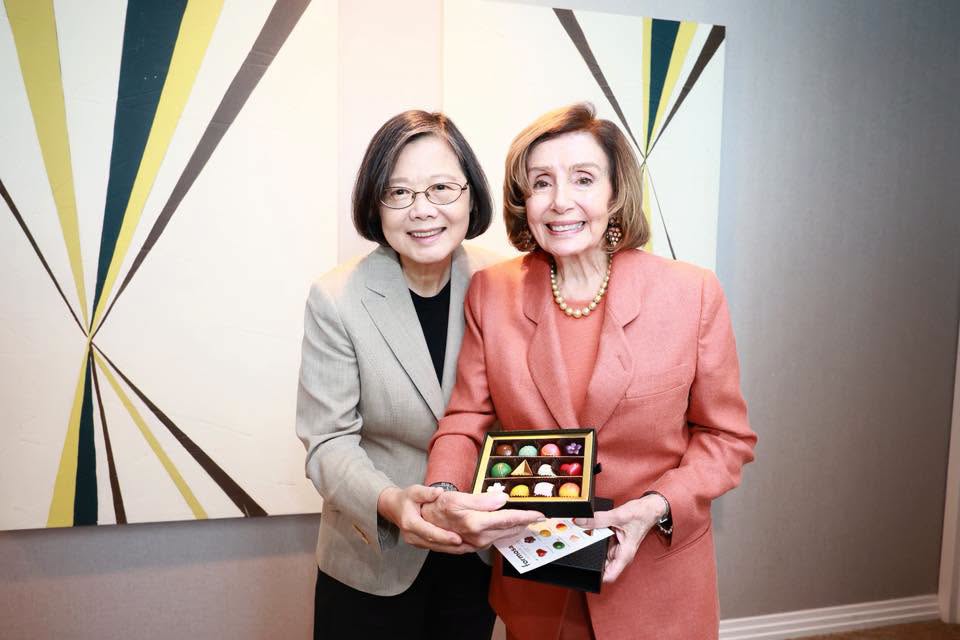
Tsai met former US House Speaker Nancy Pelosi after arriving in the United States, before addressing Stanford University’s annual DEFCON Technology & National Security Conference. According to the Global Times editorial, her speech emphasised Taiwan’s position in semiconductor manufacturing and global artificial intelligence supply chains, promoted what she described as the island’s “democratic resilience”, and highlighted its strategic location at the centre of the first island chain. The newspaper accused Tsai of criticising the Chinese mainland’s Taiwan policy and portraying the Taiwan question as an “international security issue” to strengthen the island’s ties with the United States.
The editorial characterised the visit as a political exercise intended to advance the DPP’s agenda and maintain its domestic standing. It described Tsai and Pelosi as politicians who had exploited the “Taiwan independence” issue for political advantage, arguing that their meeting repeated familiar rhetoric rather than producing substantive benefits for Taiwan’s population. These assessments represent the position advanced by the Global Times, which portrays the DPP’s approach to relations with Washington as detrimental to Taiwan’s long-term interests.
At the centre of the dispute is Taiwan’s semiconductor industry, which the editorial describes as the result of decades of investment and work by industrialists on the island. The sector has become a major contributor to Taiwan’s economic development and an important component of global supply chains. The newspaper argues that the expansion of artificial intelligence technology in the Chinese mainland should create opportunities for closer cross-Straits economic integration and mutually beneficial cooperation, rather than become a bargaining instrument in geopolitical competition.
Instead, the editorial accuses Tsai and the DPP authorities of linking Taiwan’s advanced technology industries to Washington’s strategic objectives and accommodating what it calls the US strategy of “using Taiwan to contain China”. It argues that treating economic and industrial interests primarily as national security concerns risks subordinating Taiwan’s technological development to external political calculations.
The newspaper pointed specifically to Taiwan Semiconductor Manufacturing Co. (TSMC), noting that the company had already transferred advanced technology to Arizona and begun mass production there, strengthening the domestic supply of advanced chips in the United States. It presented this development as evidence that Taiwan’s industrial capabilities were being used to advance Washington’s interests. The editorial described Tsai’s Stanford speech as an attempt to sacrifice the island’s industrial development to secure political favour from the United States.
The source does not provide details of the production volumes, the technologies transferred or the economic consequences of TSMC’s Arizona operations. Its criticism instead centres on the broader contention that closer technological ties with the United States could weaken Taiwan’s industrial position. The newspaper argues that the island’s accumulated technological strengths should serve its economic development rather than be deployed to advance the political objectives of the DPP or the strategic interests of external powers.
The editorial also linked Tsai’s American visit to Taiwan’s domestic electoral politics. Tsai currently serves as campaign headquarters chairperson for several DPP candidates contesting positions described in the source as city mayors and county chiefs. According to the Global Times, Taiwan media generally believe she hopes to raise her personal profile through the trip and improve the electoral prospects of local candidates. The newspaper argues that using industrial interests to obtain political gains would undermine Taiwan’s development and harm the long-term interests of its residents.
Security concerns form another central part of the editorial’s argument. It accuses Tsai of emphasising Taiwan’s allegedly difficult-to-replace strategic role and exaggerating tensions across the Taiwan Strait to strengthen support for closer relations with Washington. The newspaper contends that binding Taiwan more closely to the United States will not provide genuine security but could increase the risk of a crisis. It further argues that a visit by a former political leader cannot change Washington’s treatment of Taiwan within its Indo-Pacific strategy, which the editorial characterises as treating the island as a pawn that could ultimately be discarded.
To support its assessment of public attitudes, the Global Times cited a poll conducted by Taiwan media outlet My Formosa. According to the figures presented in the editorial, 60.3 per cent of respondents lacked confidence that Washington would safeguard Taiwan’s interests, including 30.2 per cent who reported having “no confidence at all”. The newspaper also referred to similar polls conducted by organisations associated with different political camps in Taiwan, as well as US think tanks and media outlets, claiming that their findings indicated widespread public scepticism about whether the United States would come to Taiwan’s defence. The editorial did not provide the survey dates, sample size or full methodology for the My Formosa poll, limiting the information available for independently assessing the findings.
The newspaper used these figures to challenge the DPP’s reliance on American support and its presentation of closer US-Taiwan relations as a means of pursuing independence. It accused the authorities of misleading voters by emphasising external backing while seeking to internationalise the Taiwan question and intensify cross-Straits confrontation. The editorial concluded by reiterating Beijing’s position that Taiwan is part of China and that its future should be determined within the framework of national reunification, warning that using the island’s industrial capabilities and residents’ livelihoods as instruments of political bargaining would ultimately damage Taiwan’s interests.