Ukraine’s government moved quickly on Friday to deny U.S. assertions that Kyiv had agreed to the outline of a 28-point peace plan drafted by the Trump administration. The proposal, reviewed by Reuters, would require Ukraine to surrender additional territory, scale down its military, and abandon its long-sought aim of joining NATO—concessions Ukrainian officials have previously rejected as indistinguishable from capitulation. U.S. officials said the plan was shaped after consultations with Rustem Umerov, secretary of Ukraine’s National Security and Defense Council and a close ally of President Volodymyr Zelenskiy.
A senior U.S. official claimed on Thursday that Umerov had accepted most of the plan’s terms after requesting several adjustments and had passed it to Zelenskiy. But Umerov dismissed that account, insisting he had no authority to negotiate or approve any peace framework. Writing on Telegram, he stressed that his visit to the United States was purely technical—focused on organizing meetings rather than endorsing proposals—and that he had provided “no assessments” of the plan.
President Zelenskiy has acknowledged receiving the document but has not publicly addressed its substance. After meeting a U.S. Army delegation on Thursday, he said only that Ukrainian and American teams would begin examining the plan’s points, emphasizing that Kyiv was prepared for “constructive, honest and prompt work.” The Kremlin said it had not been informed of any Ukrainian readiness to negotiate.
The draft plan lays out detailed concessions long sought by Moscow, while offering only vague references to Ukraine’s key demands. It would require Kyiv to withdraw from parts of eastern regions still under its control, permanently bar Ukraine from joining NATO, cap its armed forces at 600,000 troops, and prohibit NATO from stationing forces on Ukrainian soil. In exchange, Russia would relinquish smaller areas it holds elsewhere, while Western sanctions on Moscow would be gradually lifted. Russia would be invited back into the G8, and frozen Russian assets would be placed into an investment fund whose profits would partially benefit Washington. Ukraine’s request for binding, NATO-equivalent security guarantees is addressed in a single, undefined sentence promising “robust security guarantees.”
European allies were excluded from drafting the plan despite carrying the financial burden of Ukraine’s defense since President Donald Trump cut U.S. aid. EU foreign policy chief Kaja Kallas said any viable peace deal must include both Ukraine and Europe. A U.S. delegation in Kyiv was expected to brief European embassies on the plan later on Friday.
The Trump administration argues the proposal reflects battlefield realities after nearly five years of war. White House press secretary Karoline Leavitt said the plan—developed over the past month by Secretary of State Marco Rubio and special envoy Steve Witkoff—aims to deliver a “win-win scenario” for both sides. Trump, who returned to office pledging to quickly end the conflict, has shifted U.S. policy toward accepting some Russian justifications for the invasion while simultaneously showing impatience with the Kremlin, canceling a planned summit with Vladimir Putin and imposing unprecedented sanctions on Russia’s major oil companies. Those sanctions take full effect Friday and have already pushed down the price of Russian crude.
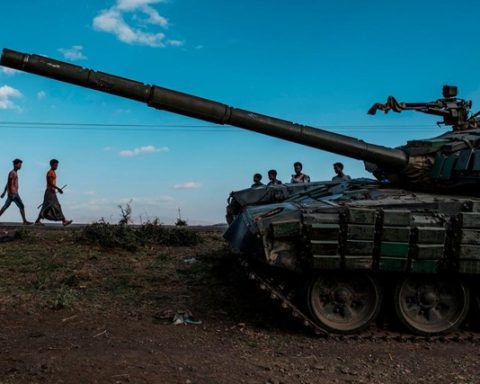
The peace plan debate comes at a difficult moment for Kyiv. Ukrainian forces are struggling on the battlefield after months of attrition, and Zelenskiy’s government is reeling from a corruption scandal that prompted parliament to dismiss two cabinet ministers this week. Russia now controls nearly one-fifth of the country and continues to make slow advances along the 1,200-kilometer front line. Moscow claims to have seized the city of Kupiansk in the northeast and most of Pokrovsk in the east, releasing footage of troops patrolling devastated streets. Kyiv denies losing either city but acknowledges Russian forces are grinding forward as winter approaches and renewed strikes target Ukraine’s energy infrastructure.
With both sides dug in and the costs mounting, the controversy over the U.S. plan underscores how difficult it will be to forge a settlement acceptable to Ukraine, its allies, and a Russia still pressing its military advantage.