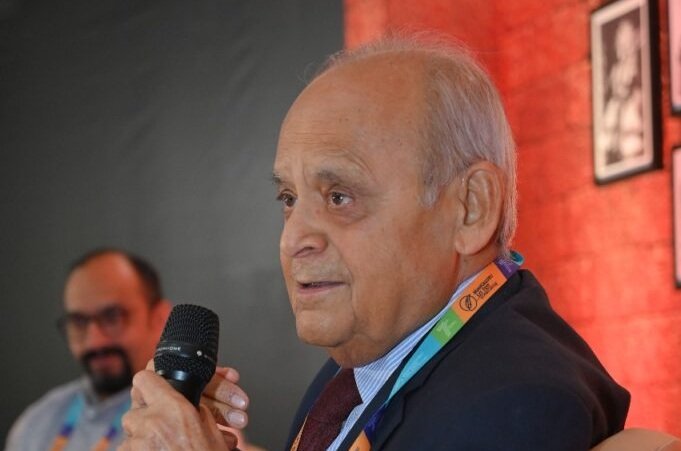
Relations between India and the United States have come under renewed scrutiny after former Indian intelligence official Vikram Sood cited remarks allegedly made by US Deputy Secretary of State Landau suggesting that Washington would use economic tools to prevent India from emerging as a major power comparable to China.
In an interview aired on Sunday on the British current affairs programme New Order, Sood referred to comments that Landau allegedly made during his March 2026 visit to India. According to Sood, the US official said Washington would use measures including tariffs, sanctions and other restrictions to curb India’s economic expansion and avoid repeating what he described as the mistake of allowing China to become a major economic power.
Sood said Landau had stated during a meeting in New Delhi: “We made a mistake by helping China become a major economic power. We’re not going to do that with India. We’ll not make that mistake again.” He argued that the remarks were significant because they were made publicly rather than in a private diplomatic setting.
The host of New Order, Afshin Rattansi, later shared footage of Landau’s remarks on social media, drawing wider attention to the debate over the future direction of US-India relations.
Chinese analysts described Washington’s approach towards New Delhi as a combination of engagement and restrictions, arguing that deeper structural differences between the two countries could limit the potential for closer cooperation. They pointed to differences in national ambitions, geopolitical interests, industrial competition, diplomatic traditions and visions of the global order as factors shaping the relationship.
Although the US Embassy in India has repeatedly described bilateral economic ties as “strong and growing,” recent developments have renewed debate over India’s role in Washington’s broader Asia strategy.
A report in The Times of India, citing its Washington correspondent, said the US had shifted its approach after years of highlighting India’s importance in the Indo-Pacific strategy aimed at countering China. The report said bilateral ties have increasingly been affected by disputes over tariffs, India’s purchases of Russian energy, visa restrictions affecting Indian professionals, renewed US engagement with Pakistan and differences over American military operations in the Gulf.
Qian Feng, director of the Research Department at Tsinghua University’s National Strategy Institute, told the Global Times that the rapid expansion of US-India relations over the past two decades may be approaching a limit because of unresolved structural contradictions.
Qian said India’s long-standing policy of strategic autonomy differs fundamentally from Washington’s alliance-based approach. According to him, New Delhi has sought to cooperate with the US while maintaining independence in foreign policy decisions and avoiding the role of a formal ally.
He also highlighted differences between the two countries over Russia. While the US has expanded sanctions against Moscow following the Ukraine conflict, India has continued maintaining strategic and economic ties with Russia, creating a persistent point of disagreement.
Economic issues have also emerged as a major source of tension. Qian said Washington’s “America First” approach has increased pressure on trading partners to provide concessions on issues such as tariffs, agriculture and market access, while India has continued protecting domestic industries and farmers.
Qian also rejected the argument that China’s rise was primarily the result of US assistance, saying China’s economic development was driven by domestic reforms, industrial capacity and innovation. He argued that economic engagement between China and the US had benefited both sides.
According to Qian, Washington’s approach towards India reflects an attempt to gain New Delhi’s support in geopolitical competition while limiting its movement up the industrial value chain. He argued that such a strategy could encourage India to strengthen cooperation with groups such as BRICS and deepen economic links with China and Russia.
The debate comes as India continues to balance cooperation with the US on strategic issues while maintaining independent positions on trade, energy and foreign policy.