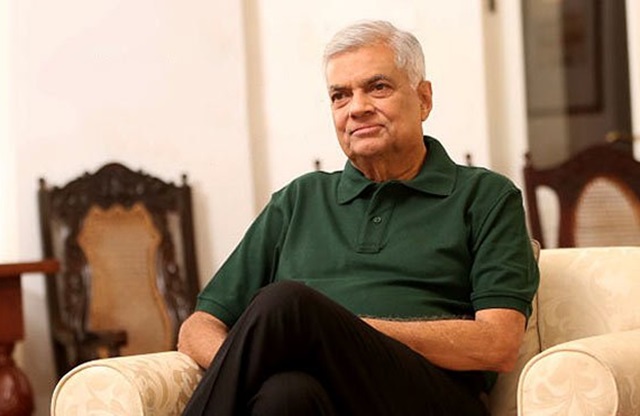
President Ranil Wickremesinghe has initiated steps to hand over power as the country awaits the final results of the closely contested presidential election. With no candidate securing the required 50% majority, the Election Commission has begun counting second preference votes between the two frontrunners, Anura Kumara Dissanayake of the National People’s Power (NPP) and Sajith Premadasa of the Samagi Jana Sandhanaya (SJB).
Election Commission Chairman R.M.A.L. Ratnayake announced that all other candidates, except for Dissanayake and Premadasa, are disqualified from the race. Second preference votes from their supporters will now determine the final outcome.
In the meantime, President Wickremesinghe has instructed the President’s Secretary to make necessary arrangements for a smooth transfer of power once the results are finalized. He has returned to his private residence in Colombo as the nation awaits the appointment of its new president.
In the 42-year history of Sri Lankan presidential elections, Ranil Wickremesinghe stands out as the only major candidate who failed to win the presidency through a public vote, having been defeated multiple times.
Despite running in three presidential elections, Wickremesinghe ascended to the presidency in 2022 with the support of ruling party parliamentarians, led by his political rivals, the Rajapaksas.
The United National Party (UNP), which he represented, lost the 2020 general election, leaving Wickremesinghe as its sole National List Member of Parliament. He had previously served as Prime Minister six times and as Leader of the Opposition for six terms.
Wickremesinghe first entered Parliament in 1977 at the age of 28, following a sweeping victory for the UNP. During his early political career, he held several ministerial positions under Presidents J.R. Jayawardene and Ranasinghe Premadasa. His tenure as Minister of Education was marked by controversy over the “Education White Paper.”
He became Prime Minister for the first time in 1993, and subsequently served under different administrations in 2001, twice in 2015, again in 2018 after a political crisis, and in 2022 after Mahinda Rajapaksa’s resignation.
In 1994, he was passed over as the UNP’s presidential candidate after the assassination of Gamini Dissanayake, whose widow, Srima Dissanayake, contested the election but was defeated by Chandrika Bandaranaike Kumaratunga. Wickremesinghe then became Leader of the Opposition for the first time.
He contested the 1999 presidential election but lost to Kumaratunga, securing only 42.7% of the vote. In 2005, he lost again, this time by the narrowest margin in Sri Lankan presidential history, with Mahinda Rajapaksa winning by just 180,786 votes. Low voter turnout in the Jaffna and Wanni districts was considered a critical factor in his defeat.
Wickremesinghe opted not to run in the next three presidential elections. Instead, he supported other candidates, including General Sarath Fonseka in 2010 and Maithripala Sirisena in 2015, both of whom ran against Mahinda Rajapaksa. Sirisena successfully unseated Rajapaksa in 2015.
In 2019, there was internal hesitancy within the UNP over its presidential candidate. Sajith Premadasa ran but lost to Gotabaya Rajapaksa.
After the 2020 general election, where the UNP secured just one parliamentary seat, Wickremesinghe was sworn in as Prime Minister in 2022, following Mahinda Rajapaksa’s resignation. Later that year, after Gotabaya Rajapaksa fled the country and resigned amid nationwide protests, Wickremesinghe was elected president by a parliamentary vote, securing 134 votes, with the majority coming from the Sri Lanka Podujana Peramuna.
Under his leadership, Sri Lanka entered into a staff-level agreement with the International Monetary Fund (IMF), and part of the country’s international bondholders agreed to debt restructuring.