A new museum in San Francisco’s historic Chinatown is creating a space for Chinese LGBTQ artists whose experiences have often remained unseen, marking what organizers describe as the world’s first museum dedicated to Chinese queer art and culture.
The Out Museum opened in late May 2026 with a rainbow-ribbon cutting ceremony held between Asian American Pacific Islander Heritage Month and Pride Month. Founded by activist and artist Xiangqi Chen, the bilingual museum aims to preserve and present the stories of LGBTQ people from China and the Chinese diaspora through art.
For Chen, the museum represents a dramatic shift from the restrictions she faced while pursuing LGBTQ activism and artistic work in China. After leaving her home country, she found a public platform for her work in San Francisco’s Chinatown, a community with deep Chinese immigrant roots.
“Here in San Francisco Chinatown, I continued my journey and met so many like-minded community members and friends,” Chen said through an interpreter. “It kind of actually encouraged me and gave me lots of strength to do what I know is my mission, my calling.”
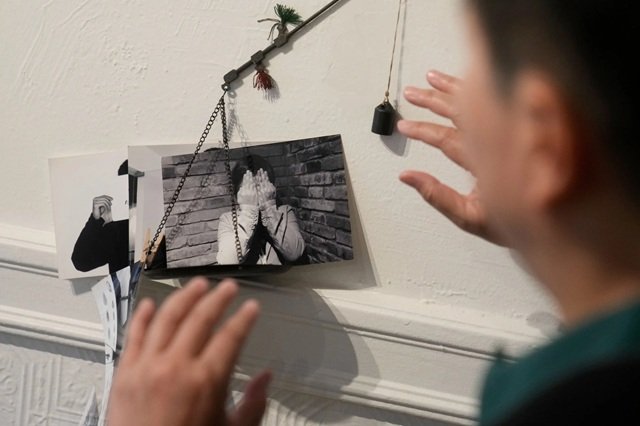
The museum is located across from the Chinese Historical Society of America Museum and currently operates only on Saturdays in a single-room space featuring fewer than a dozen artworks. Organizers hope to expand both its exhibitions and operating schedule as support grows.
Chen first proposed the idea of the museum while still living in China, launching a Kickstarter campaign six years ago that attracted more than 2,000 supporters. However, she believed the project would likely not be possible in China.
In 2022, Chen travelled to the United States as a visiting scholar at Georgetown University. Her work gained wider recognition in San Francisco in 2024 after she participated in an exhibition at the Asian Art Museum, leading to a residency with the Chinese Culture Centre of San Francisco.
Jenny Leung, executive director of the centre, said the organization was proud to serve as an incubating space for the Out Museum prototype.
The museum’s opening exhibition features photography, zines and interactive installations created by artists from China and the Chinese diaspora. One installation invites visitors to use thread to trace their personal journeys of self-discovery.
Hong Kong-born artist Dixon Ngai contributed a hand-painted Chinese porcelain wine pot inspired by the Cantonese opera Di Nu Hua, or “The Flower Princess.” He said the museum provides a rare opportunity for Chinese queer artists to share experiences that are often overlooked by mainstream media.
The museum has also received unexpected support from older Chinese immigrant communities in California, including both LGBTQ visitors and allies.
Chen said she was deeply moved by responses from visitors, including a transgender man who shared his experience of immigrating to the United States in the 1970s to access gender-affirming care and a mother who reached out after connecting with her gay adult son.
“She later emailed me saying that she’s so grateful for all the events the art museum has organised,” Chen said. “Her son came out to her, and she’s very proud of her son, and she wants to express gratitude.”
Author and activist Helen Zia, who serves on the museum’s advisory board, said the project highlights the growing visibility of Chinese, Chinese-American and Asian-American LGBTQ communities. She recalled that attitudes within parts of the Chinese community had been far more hostile in the past, including protests against same-sex marriage in Oakland’s Chinatown in 2008.
Zia said the museum’s presence sends a message of recognition through art and personal stories.
“See our humanity,” Zia said. “Here’s the beautiful art that we create and imagine and contribute to the world.”
Chen’s journey reflects broader differences between LGBTQ life in mainland China and the United States. While homosexuality was removed from China’s official list of mental disorders in 2001, same-sex couples still cannot marry or adopt children, and public LGBTQ advocacy remains limited.
Chen previously operated a grassroots centre for lesbians in Shanghai, but she left China after authorities increased restrictions on LGBTQ activist spaces during the Covid-19 pandemic. She said queer art exhibitions that once existed under certain conditions became increasingly difficult to organize.
“From 2013 to 2015, that kind of art exhibition by queer artists could exist, but only if you didn’t explicitly show or tell the audience that your work or yourself identify as queer or LGBTQ,” Chen said. “But not nowadays.”
Artists involved with the museum said the environment in San Francisco has provided greater freedom to express their identities and experiences.
“Here in San Francisco, in California, we enjoy the air of freedom, there are equal human rights, there is security,” Ngai said. “So, we are very proud to be ourselves.”