Editorial
Joseph Robinette Biden Jr. commonly known as Joe Biden, whose presidency may be remembered as one of the most glaring failures in American political history, is now preparing to depart the White House. Yet, his final days in office have set both the nation and its global reputation ablaze. As the embers of Ukraine smoulder amidst the wreckage of a disastrous U.S. intervention—one that now echoes the sentiment, “If we can’t win, we will sabotage everything”—the president has ignited another fire, this time striking at the very heart of American justice.
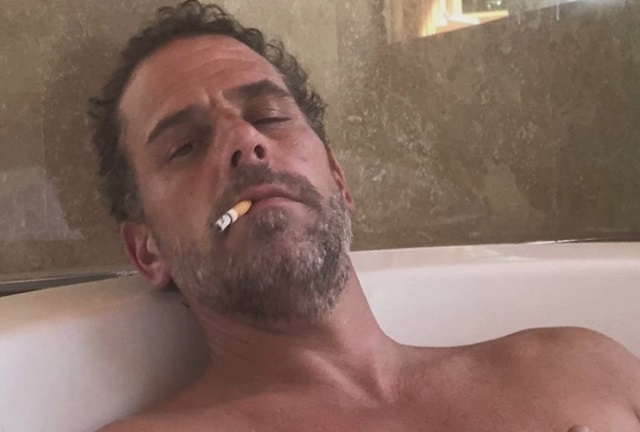
On Sunday, Joe Biden did what no other American president has dared: he issued a full presidential pardon for his son, Hunter Biden, convicted of tax evasion and lying about his drug use when purchasing a firearm. This marks the first time in U.S. history that a sitting president has pardoned their own child, an act so audacious that it casts a long shadow over the very concept of equal justice under the law.
The power to pardon, enshrined in the Constitution, was intended as a mechanism for mercy and justice—a means to correct wrongful convictions, temper harsh punishments, or heal the wounds of division. Presidents have historically wielded it in ways both honourable and controversial. Abraham Lincoln, for instance, used his authority during the Civil War to pardon soldiers sentenced to death for desertion, believing that many were driven to flee by despair rather than cowardice. Similarly, Gerald Ford’s pardon of Richard Nixon in the aftermath of Watergate was framed as an act of national healing, though it was widely criticised as shielding the powerful from accountability.
Other presidents have been less judicious. Bill Clinton famously pardoned financier Marc Rich, a fugitive billionaire who had fled the country to avoid tax fraud charges. Rich’s pardon, granted on Clinton’s last day in office, sparked outrage due to Rich’s political connections and hefty donations to the Democratic Party. Donald Trump, too, faced fierce criticism for issuing pardons to loyalists such as Michael Flynn and Steve Bannon, raising accusations that he used the power as a personal reward system rather than a tool for justice.
Yet, even within this chequered history, Joe Biden’s decision stands alone. Never before has a president exercised the pardon power to shield their own child from the consequences of criminal conduct. Hunter Biden, long a subject of public scrutiny for his questionable business dealings and personal behaviour, faced federal charges for failing to pay taxes and falsifying a gun purchase form. Though his plea deal collapsed under legal and political pressure, the charges themselves were serious—offences for which many Americans have faced severe consequences.
Biden’s justification for the pardon is deeply troubling. In his statement, he claimed, “No reasonable person who looks at the facts of Hunter’s cases can reach any other conclusion than Hunter was singled out only because he is my son.” While it is true that political motivations likely amplified Hunter’s legal troubles, this does not absolve him of responsibility. The president’s assertion that Hunter was treated differently holds weight—but not in the way he intended. Hunter was treated with leniency and afforded opportunities that the average citizen could never hope to receive.
The president’s intervention undermines his own repeated promises to remain impartial in his son’s legal matters. Just months ago, Biden assured the public he would not interfere with the Justice Department, claiming he trusted the process. This pardon not only contradicts those assurances but also confirms the worst suspicions of his critics: that the powerful use their positions to insulate themselves and their families from accountability.
This isn’t merely a domestic embarrassment; it’s an international liability. Consider Ukraine, where the U.S. has poured billions of dollars into supporting a government mired in allegations of corruption. Hunter Biden’s ties to Burisma, the Ukrainian energy company where he held a lucrative position despite lacking relevant expertise, have already tainted perceptions of U.S. involvement. The president’s pardon only deepens scepticism about whether American foreign policy is driven by principle or self-interest.
But it’s not only the damage done to international perception that should be of concern. The pardon is a flagrant demonstration of the selective application of justice within the U.S. system. For the wealthy and politically connected, justice is a tool for convenience. It bends and shifts depending on the person wielding it. For ordinary citizens, the system is merciless, handing out harsh punishments for infractions that, in other contexts, would barely raise an eyebrow. For Hunter Biden, the system bends over backward to make sure his privilege keeps him out of prison. His plea deal, initially negotiated to avoid jail time, unravelled only due to political pressure, a pressure that ultimately played a pivotal role in the final outcome: a pardon that only reinforces the idea that the powerful play by different rules.
The pardon also exposes the glaring hypocrisy of the American judicial system—one that has long served the interests of the elite while prosecuting the poor and disenfranchised to the fullest extent of the law. In Hunter Biden’s case, leniency is not an exception but the rule for those with connections, money, and power. The rules of justice in America are not just flexible—they are outright malleable. What’s worse, they are no longer even trying to hide it.
Biden’s act of pardoning his son is not an isolated instance; it’s a symptom of a much larger, deeply ingrained culture of impunity within the American political elite. Look at how both major political parties operate—the Democrats and Republicans alike, when faced with scandals involving their own, have managed to dodge accountability time and again. The ruling class thrives on this system, understanding that, in the end, their family and allies are shielded from the full consequences of their actions, while the rest of the population suffers under the weight of draconian laws. The current justice system is not there to serve the American people; it is there to preserve power, wealth, and influence for those who have already amassed it.
This pardon, rather than an act of compassion or mercy, is a declaration that the rules of justice no longer apply to those at the top. Hunter Biden’s pardon is a blatant display of nepotism, a decision rooted not in justice, but in the preservation of power. As a father, Joe Biden may have acted out of a sense of loyalty to his son, but as a president, he has demonstrated that the system is no longer blind to power, wealth, and connections. It is blind to justice, and that is a dangerous reality for the American public.
For the millions of Americans who still believe in the myth of equal justice under the law, Biden’s pardon has shattered that illusion. The justice system, in its current form, does not stand for fairness or integrity. It stands for one thing and one thing only: power. And when that power is threatened, as in the case of Hunter Biden, it will be protected at any cost.
As Biden’s presidency nears its end, this pardon may well become its defining act. It encapsulates the failures of a justice system that no longer serves the people it was designed to protect. It reveals a political culture where loyalty to family and party outweighs loyalty to the principles of fairness and accountability. And it leaves a nation already fractured by partisanship to grapple with the unsettling reality that justice in America is anything but blind.